Showing posts with label SMA. Show all posts

Wednesday, July 13, 2016

My Energy Storage System - DIY ESS - has been running with Solar for 3 Years now and saved me 800 EUR

On July 7, 2016, my home made Energy Storage System, named DIY ESS, has been running fine for 3 full years :)


Link from July 7, 2013 : http://www.myelifenow.com/2013/07/uni-solar-pvl-sma-inverter-finished.html


After several months of building and testing it back in 2012 & 2013, I finally had my Solar panels connected to a working SMA inverter and I have been storing my Surplus Solar Enegry ever since ...
(Solar panels install had been done several before that http://www.myelifenow.com/2012/10/solar-panels-installation-13-uni-solar.html)


During these last 3 years I had no breakdown what so ever, and absolutely no LiFePO4 Battery pack problem using it 24/7 (8 CALB CA180FI prismatic cells)


Today, few days after, it shows that I saved 577 EUR but you have to add 220 EUR approx. that were not taken into account during the first months (Wattson Anywhere portal data gathering came later)
For more details on my last 500 EUR update in April : http://www.myelifenow.com/2016/04/diy-ess-update-500-eur-of-savings.html
So the total savings as of today is 577 + 220 = 797 EUR, almost 800 EUR :)


I also sold few kits online to people around the world during the same period and it is still available here : http://www.diyesskit.com

I will continue using it until I have a Tesla Energy Powerwall installed later .... and the beauty of it is that all the of the shelf components used in it will be sold and bring me a good part of my money back ;)


Links:
http://wattson.energyhive.com/dashboard/diyesskit
http://www.ustream.tv/channel/chris75sf


Sunday, July 20, 2014

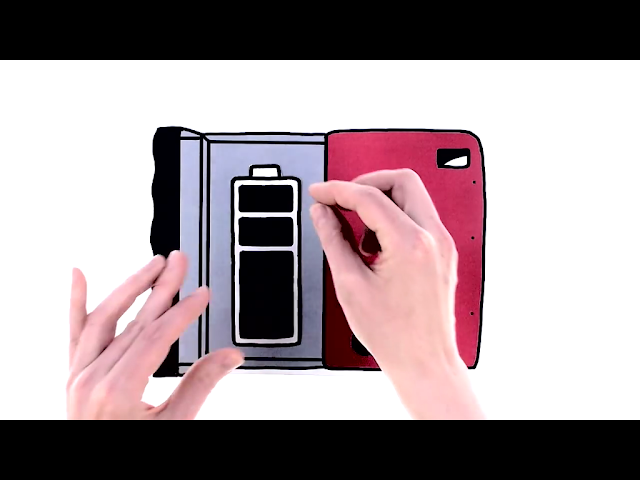
SMA's Energy Storage System : Installation of the Sunny Boy Smart Energy

One year after revealing it to InterSolar Europe and winning a price for it, SMA just posted a video for the installation of their ESS - Energy Storage System - named Sunny Boy Smart Energy on their US Youtube Channel

As you probably remember it features a rather small battery pack of 2kWh only and has to be installed along with their Sunny Home Manager


" The current SMA Tech Tip shows how quickly and easily the new Sunny Boy Smart Energy can be installed as part of the SMA Integrated Storage System.

The Sunny Boy Smart Energy combines a modern photovoltaic inverter and a storage system and is, along with the Sunny Home Manager, one of the core components of the simplest storage solution currently available for residential applications.

Our colleague Jan explains how it works in the new video.

Happy watching. "


Thursday, February 20, 2014

Enphase Q4: Solid Quarter With Record PV Microinverter Revenue and Margin


Microinverter pioneer Enphase Energy (ENPH) posted its first (non-GAAP) quarterly profit as a company. The firm just announced financial results for the fourth quarter of 2013.

The company posted its first quarterly operating profit of $0.4 million (on a non-GAAP) basis and a GAAP operating loss for the fourth quarter of $1.6 million.

The company also reported record-breaking Q4 revenue of $67.1 million and gross margin of 32.1 percent. The stock is trading at $7.58 (up 4 percent) and starting to show some life. The company shipped 485,000 units (amounting to 107 megawatts) this quarter, up 30 percent year-over-year.
Milestones for Q4
Exceeded 100 megawatts shipped in a single quarter for the first time, up 30 percent year-over-year
Shipped 485,000 microinverters in Q4
Passed 5 million microinverters shipped since 2008
The company exited the year with a total cash balance of $38.2 million

For the full year 2013, total revenues were $232.8 million representing 355 megawatts (AC) or 1.6 million microinverters. GAAP gross margin for the year was 29.0 percent and GAAP net loss for the year totaled $25.9 million.
Guidance for Q1
Enphase expects revenue for the (seasonally soft) first quarter of 2014 to be within the range of $54 million to $57 million
Fourth-quarter margin is expected to be within the range of 30 percent to 33 percent

Enphase CEO Paul Nahi said, "We ended 2013 with a breakthrough fourth quarter. We posted the highest revenue in our company's history, shipping over 100 megawatts for the first time in any quarter, while our record gross margin marks the first time we have exceeded 30 percent in any quarter."

Nahi again suggested that he has not seen "meaningful competition" from SMA or any other microinverter vendor. He views the current competition as string inverters.

Enphase just added Richard Mora, the COO of Landis+Gyr, to its Board of Directors.

GTM Research notes that over half of U.S. home solar systems used microinverters or DC optimizers in 2013. Learn more in the latest GTM Research microinverter and DC optimizer report.


Here's an incomplete list of competitors and aspirants in the microinverter sector:
SMA is still the dominant inverter company in a volatile, consolidating $7 billion market. SMA "is now shipping the [SMA microinverter] to the U.S. market."
SolarBridge is a microinverter maker in the business of AC modules, getting to market in partnership with module makers.
ReneSola is delivering 10,000 units per month in the U.S., according to Brian Armentrout, the firm's marketing director.
Enecsys VP Kevin Bushby claims Enecsys has 160,000 microinverters worldwide through distributors and in cooperation with module makers.
Power-One, acquired by ABB, has a microinverter offering.
Petra Solar has installed over 170,000 AC modules.
Altenergy Power Systems has shipped more than 100,000 microinverters, with the majority going to the Australian residential market, according to a spokesperson from the firm.
Chilicon Power has just started building microinverters for its first large design win of 170 kilowatts (680 modules) in Simi Valley, California, according to a release.
SPARQ Systems is partnering with Solartec Mexico, a solar panel manufacturer, to deploy solar on 1,000 "small homes" with PV modules using SPARQ's microinverters.
CyboEnergy builds a "mini-inverter" with per-module-MPPT for four modules.
The firm iEnergy has been shipping into the U.S. market since late last year.
Involar, LeadSolar, and Samil Power also build microinverters.

Within the greater module-level panel electronics market, Enphase and SolarEdge (SolarCity is a customer) are the dominant players, with Tigo ranking third, according to GTM Research's MJ Shiao.


ENPH data by YCharts


Source: GreenTech Media

Thursday, October 3, 2013

SMA Sunny Boy 240-US Micro Inverter - How to Install

Ben Castillo from SMA America takes us through the easy installation process of the New SMA Sunny Boy 240-US Micro Inverter


"The Solar Academy demonstrates the simple installation of the Sunny Boy 240-US micro inverter and the innovative Multigate XT communications solution."


Sunday, August 25, 2013

Energy Management with SMA Smart Home

An older video from SMA at InterSolar Europe in 2012, but quite instructive on their vision of Solar Energy use at home, and already talking about their idea of Lithium-ion Battery embedded in a Grid Tie Inverter ....


Interview with Andreas Umland, Director Strategic Product Management, about SMA Smart Home at the Intersolar Europe 2012.


Saturday, August 17, 2013

SMA to Part Ways with Windy Boy Inverters


SMA will withdraw from the small wind turbine industry at the end of 2013 at which time production of the Windy Boy inverter will cease. We spoke to Volker Wachenfeld, Executive Vice President in the Hybrid Energy Solutions division, about the reasons and what the new markets of the future will be.


Volker, what are the reasons for withdrawing from the small wind turbine industry?

Volker: Unfortunately, changes to the political landscape in important sales markets have caused the market for small wind turbines to collapse. The UK government, for example, has cut funding for wind power plants below 1.5 kW – the size typically used in domestic applications – so unfortunately, in some cases, it is simply no longer worthwhile for the customer. In Denmark, the subsidy model has been modified to the point where it is no longer worth it to operate small-scale wind turbines. There has been a clear downturn since 2010 and for this reason, we made the decision to pull out of this business area and to discontinue the Windy Boy, Windy Tripower and Windy Boy Protection Box protects.


Windy Boy – the inverter for small wind turbine systems – was one of SMA’s first products. Won’t it hurt a bit to say goodbye to it?

This has not been an easy decision. As an engineer, I am probably even more affected than others by the withdrawal from this area as it is very interesting in terms of system technology. It is really enjoyable to tailor wind turbine systems to the specific wind conditions of a location. Nevertheless, the bottom line is that these markets must also be lucrative for a company like ours, particularly when times are as tough as they are now for the solar industry. As a result, it makes sense for us to concentrate on important topics for the future. This also means that we have to be resolute in stepping back from business segments that are less promising.


How does this change impact projects that have already been planned with Windy Boy? Depending on the particular site, the approval processes and certification for wind energy systems can take a very long time.

For this reason, we informed our customers right away that we would be phasing out the products gradually throughout the year. This gives our customers the opportunity to stockpile an appropriate supply of inverters and corresponding system technology. And we will of course continue to offer related services.


So the customers have already been informed, how did they react?

Of course, customers were not exactly thrilled. After all, we were the only supplier in this fragile market to offer products from large-scale production of PV technology that were tailored to the requirements of small wind turbine systems. The quality we offered was undoubtedly above average for the market segment. On the other hand, we noticed that this market was becoming increasingly fragmented with more and more smaller manufacturers offering very specialized systems, all with their own special requirements that needed to be met by inverter manufacturers. Even if the market volume trend in the segment we are interested in had declined in recent years, a shift toward more diversified system suppliers was evident. This type of supplier is also capable of operating successfully in a smaller market, whereas some of the larger plant manufacturers have reduced their involvement. This environment particularly tends to favor highly specialized electronic start-ups, which are a great deal better at fulfilling the customers’ very specialized requirements than large-scale manufacturers like us.


You have addressed some important topics for the future. What is on SMA’s agenda?
One of the really hot topics at the moment is energy management. In order to manage the energy transition, we need intelligent solutions that help us exploit renewable energies preferably on-the-spot. For the market here in Germany, we are developing system solutions for increased self-consumption. The aim is for photovoltaic systems operators to be able to use as much as possible of the solar energy generated on their roof for their own consumption. This will help them save on costs associated with buying electricity. And, on an international level, we see tremendous potential in the area of industrial photovoltaic diesel hybrid systems. By this, we mean the use of photovoltaics to supplement existing diesel systems. This will allow operators of large-scale industrial systems to save diesel costs and reduce CO2 emissions.


So how do photovoltaics and diesel systems fit together?
Actually, they complement each other perfectly. With the aid of solar energy, the power output from diesel systems can be reduced. And by the way, this topic is not all that new at SMA. Most conventional PV systems for rural electrification have an integrated diesel generator that takes over the energy supply when there is little sunlight. In large-scale industrial plants this situation is reversed. Instead of the diesel system being used to supplement photovoltaic output, photovoltaics supplement the diesel. This field combines our core competencies in the areas of off-grid electrification and large-scale PV power plants. The combination of rising diesel prices and falling prices for PV system technology means that this development is already a commercially attractive alternative for industrial large-scale consumers in off-grid but sun-rich regions. SMA’s first system was installed at the end of 2012 in Thabazimbi, South Africa. Since then, we have been working on PV diesel hybrid projects all around the world – in South Africa, Australia and India. Two additional projects have already been sold. Out of approximately 500 gigawatts worldwide of installed power from diesel generators, there’s a potential of approximately 50 gigawatts that could benefit from being supplemented with photovoltaics.


Volker, thanks a lot for the interview.


Source: SMA Sunny. The SMA Corporate Blog


Friday, August 16, 2013

What Does Self-Consumption of Solar Power Mean?

It’s a good idea to use self-generated solar electricity: you can save money and make yourself independent from rising electricity prices.

But what do I have to do to be able to operate the washing machine with solar power?

SMA's view:


Saturday, August 10, 2013

SMA SPS - SECURE POWER SUPPLY on SMA Sunny Boy 3000TL US 4000TL US 5000TL US

"If the Sun is Up and the Grid is Down ..."

Here is a short video of the great feature SMA inverters can offer: the SPS for Secure Power Supply

Usually, on all inverters, in case of a power outage, a mandatory feature is the automatic cut off of production to protect grid workers from electric shock

If the grid is down and your solar roof is still in the sun, you can now have the inverter keep producing on dedicated outlets controlled by a switch that triggers this function on the system... What a great idea !


Tuesday, August 6, 2013

SMA Solar Technology Circuit Board Assembly at SMA's German Factory

The making of SMA inverters circuit boards at their factory in Germany


ABOUT SMA
Energy that Changes

SMA Solar Technology AG is a global leader in the development, production and sales of PV inverters and, as an energy management group, offers innovative key technologies for future power supply structures. SMA is represented in all important photovoltaics markets in 19 countries on four continents. The company has a staff of over 5,500 and reached a sales volume of EUR 1.7 billion in 2011.

Inverters are the heart of every PV plant
Technologically, the inverter is the most important component of a PV plant. It converts the direct current generated in the photovoltaic cells into alternating current compliant with the grid requirements -- for self-consumption or feed-in to the power distribution grid. As an intelligent system manager, it also monitors both the PV array and the power distribution grid. SMA inverters already perform important grid management functions, which are becoming increasingly important as electricity production from renewable sources grows. SMA has been developing leading technological solutions and pioneering trends in this area for years and is driving future-oriented topics. For instance, these include intelligent energy management at a household level, grid integration of solar power and connecting storage facilities for more effective use of renewable energy.

For all Performance Classes and Plant Sizes
SMA has an extensive range of products, which offers the right inverters for all module types and plant sizes; for small residential systems as well as large scale plants, grid-connected installations as well as stand-alone and backup systems all over the world. Plant monitoring and visualization products as well as energy management solutions complete the portfolio.In addition to this, SMA customers worldwide benefit from comprehensive services: from support in installation and commissioning of PV plants to quick and uncomplicated device replacement service in Germany and worldwide, and the free SMA Service Line for technical questions. The company also provides training for plant planners, installers, electrically qualified persons and anybody interested in solar power in seminars as part of the SMA Solar Academy.

SMA has received numerous awards for its product solutions and exceptional corporate culture. In 2011 and 2012, the company achieved first place in the German "Great Place to Work®" competition in the category for companies with over 5,000 employees.

Please Share this Post if you Liked it !

Please Share this Post if you Liked it ! Thanks !
Related Posts Plugin for WordPress, Blogger...