Showing posts with label demand response. Show all posts

Sunday, December 21, 2014

Reposit Power : Store Solar Energy & Trade it with Grid

A Canberra-based company is to introduce new technology that it says could help turn electricity markets on their head – by allowing households to buy and sell electricity on the market.

The buying and selling of electricity has hitherto been the province of large or specialised companies such as electricity retailers. But Reposit Power says that homes and businesses can and should be able to trade electricity with the help of battery storage, and production facilities such as solar panels.


Reposit Power plans to install battery storage in six homes around Canberra to run a six-month pilot of its technology, known as GridCredits. The Australian Renewable Energy Agency is contributing $445,000 to the $900,000 project.

Reposit Power says GridCredits is a world-first energy storage program that will put consumers in the driving seat and will "transform the grid forever."

Spokesman Luke Osborne says the technology will allow households to "buy low and sell high" – adding a new layer of possibilities to homes that have solar and storage. He says this will enable some households to virtually eradicate their bills and still remain connected to the grid by doing what the retailers do – maximising their earnings on the market.


"A lot of what retailers do is buying services from peaking power stations. Consumer with storage and solar panels can provide the same services themselves," Osborne told RenewEconomy in an interview.

"What we are doing is when it makes sense – households can be a seller, and then buy electricity at a low price."

Reposit Power is interested in using similar technology for wind farms and solar farms and for large businesses. "This is the alternative to going off-grid – households can be energy independent, at the same time as making the whole grid cleaner," Osborne says.

"Networks should be a platform for trading and exchange of electricity, so tariffs should be structured to encourage this, not to prevent it, or that will accelerate the death spiral of the grids.

"This is about households being able to go head to head with the major companies."


Reposit Power hopes to be able to broaden its rollout by mid next year, when this initial program is complete, and when it has convinced the Australian Energy Market Operator that households or businesses can be a "reliable source of power", as AEMO requires.

ARENA CEO Ivor Frischknecht said the new technology would allow consumers to gain more value from their rooftop solar PV installations. He said that one in five houses now use solar power.

"This substantial rise has made it vital to find solutions to better manage how residential solar systems operate in our electricity grids," Frischknecht said.


"Reposit's GridCredits system can control and store solar energy. This gives consumers access to their own power overnight and at peak times, reducing their demand on the grid.

"It also allows energy to be sold back into the grid by placing bids into the market, turning residential properties into micro power plants."

Frischknecht said that storage would help network operators manage demand more effectively by delivering stored power into the grid at peak times, and Reposit's technology will also help smooth out the variable delivery of solar energy.

This in turn would allow more renewables to be connected to the grid.

Reposit Power was co-founded by energy industry veteran Dean Spaccavento and scientist Lachlan Blackhall. The company says the two "shared a vision for allowing consumers to trade their electricity while contributing to a safe and cost-effective grid."


Source: Renew Economy

Sunday, November 9, 2014

Energy Storage Will Soon Be in Every Home


As solar energy becomes more common we may need energy storage to help stabilize the grid. Image source: SolarCity


Within the next 25 years every home will not only be connected to the electric grid, they'll have their own energy storage system that will keep the lights on in a power outage and help make energy more efficient for everyone to use.

That may seem like a wild concept but some of the most forward thinking companies in energy predict that energy storage will soon be accompanied with every solar energy system in the U.S. With as fast as the residential solar industry is growing it's only a matter of time before a battery box may be hanging in your basement.

Storage solutions are here
Companies have been testing storage solutions for years but they're finally starting to see the light of day in the consumer market. SolarCity (NASDAQ: SCTY ) has launched an energy storage solution for the home and a commercial offering with the help of Tesla Motors(NASDAQ: TSLA ) . The system isn't meant to be a way to go off-grid but it'll keep the refrigerator working and the lights on in a power outage.

SunPower (NASDAQ: SPWR ) has introduced a similar small storage system and is offering it in new homes built by KB Home (NYSE: KB ) . Like SolarCity, the goal isn't to allow homeowners to go off-grid, but storage will instead be used for backup power in case of emergencies.


Inverter maker Enphase Energy (NASDAQ: ENPH ) jumped into the game this week with an AC battery that's meant to be an easy to install addition to residential and commercial solar projects. Enphase is making the product modular so more than one battery can be put in a home, and it's supposed to allow for smarter energy storage for nighttime or high consumption usage instead of just drawing energy from the grid.


SolarCity's commercial energy storage solution, built by Tesla Motors


Why energy storage is the future of energy
These energy storage solutions may seem like small steps but they're part of a much larger move into making distributed energy production smarter and more efficient. Right now, homes and businesses that have solar systems are pushing power to the grid or drawing from the grid at unpredictable times, forcing utilities to run spinning reserves and putting strain on the local distribution network. If built properly, even small energy storage systems can smooth out the load on the grid and make the entire network more efficient.

As the cost of solar power comes down the industry will grow to nearly every home and I think these energy storage solutions will become a standard offering as part of a solar system. As that critical mass is reached, storage will become even more important as a way to stabilize the grid, even with small storage systems. That's why I think it's only a matter of time before we all have energy storage systems.

Where to make money in energy storage
Companies are rushing to get into energy storage but the winners may not be who you think. Batteries are already a commodity product around the world and most energy storage systems are using lithium ion batteries that are essentially plug and play in the market.

Instead, the companies integrating batteries and solar systems will be the big winners long term. For example, SunPower's energy storage solution is also the solar system's inverter, turning DC solar electricity into AC power we use in the home. This full solution is where the value is added, not just in the batteries.

SolarCity is doing something similar, although it isn't yet an inverter manufacturer. But as Tesla Motors builds out its Gigafactory and batteries become a more common offering I would be surprised if they didn't start making inverters with energy storage included.

This is also the strategy Enphase Energy is taking, being the point of contact for the grid, energy storage, and the solar system.

Energy storage will be another important tool in the kit for solar companies in the future and those who can integrate it effectively will be a step ahead of competitors. As SunPower and SolarCity add energy storage look for them to continue to be big winners in this space but keep an eye on Enphase Energy. It is moving into more of an energy management role and that's a better way to add value to this space than just supplying a commodity product like inverters to the market.

$8 Billion Rival STICKS It to Google
Chances are you’ve never heard of this company. Despite the fact that it’s following, step-by-step, the same exact formula Google created almost 15 years ago… And Baidu successfully followed 10 years ago. This company is dominating in a country with over 140 million people, 88 million of which are about to get online in a big way. Click here to discover the whole story and stock behind the final stage of the Internet land grab.


Source: The Motley Fool

Wednesday, April 30, 2014

New York orders Utilities to focus on Local Generation & Storage


California issued a storage mandate and settled its net metering debate last year. Texas is in the process of overhauling its ancillary services market. Minnesota has set a value-of-solar tariff. But all of that is small potatoes compared to the market transformation for electric distribution utilities that New York just announced.

New York's Governor Andrew Cuomo has asked his public state commission and chairman of energy and finance, Richard Kauffman, to fundamentally shift utility regulation to meet the needs of a more distributed, consumer-focused energy system.

"The existing ratemaking structure falls far short of the pace of technology development that defines many parts of our economy," Audrey Zibelman, chair of the New York Public Service Commission, said in a statement. "By fundamentally restructuring the way utilities and energy companies sell electricity, New York can maximize the utilization of resources, and reduce the need for new infrastructure through expanded demand management, energy efficiency, renewable energy, distributed generation, and energy storage programs."

While most states are grappling with net metering, standby and demand charges, New York's PSC has laid down the gauntlet in a proposal, Reforming the Energy Vision. The report calls for an overhaul of the regulation of the state's distribution utilities to achieve five policy objectives:
  • Increasing customer knowledge and providing tools that support effective management of their total energy bill
  • Market animation and leverage of ratepayer contributions
  • System-wide efficiency
  • Fuel and resource diversity
  • System reliability and resiliency
The PSC acknowledges that the current ratemaking procedure simply doesn't work and that the distribution system is not equipped for the changes coming to the energy market. New York is already a deregulated market in which distribution is separated from generation and there is retail choice for electricity. Although that's a step beyond many states, it is hardly enough for what's coming in the market.

"One key outcome of the transformation is to address the Commission's stated objective to make energy efficiency and other distributed resources a primary tool in the planning and operation of an interconnected modernized power grid," the report states.
The PSC is the first to admit that the system is broken. The bulk power system is oversized to meet the demand of the few hours of peak demand every year; the transmission and distribution system has annual losses of nearly 9 percent; the commodity markets are inefficient; and there isn't adequate storage for electricity.

power-taggin-nyc_310_224

To rectify these and other issues in the market, the PSC is calling for utilities to become Distributed System Platform Providers. The DSPPs will upgrade the distribution network and then "create markets, tariffs and operational systems to enable behind-the-meter resource providers to monetize products and services." They will essentially become the purchaser and aggregator for distributed resources.
"It's time for the regulatory system to catch up with advances in clean energy, and New York is one of the first states to act. New York's re-evaluation of the utility business model will spur a future in which solar and wind power and energy efficiency can deliver grid resilience and reduce pollution," Cheryl Roberto, associate VP of clean energy for Environmental Defense Fund, said in a statement. "This is a move of national significance and should reverberate across the country."

Other key stakeholders in New York agree. A working group that came out of a recent Advanced Energy Economy forum, which includes Consolidated Edison, PSEG Long Island and New York Power Authority, concluded that a more competitive business model is needed, one in which benefits are redefined to capture consumer value, system resiliency and efficiency.
The first task for the DSPPs will be to eliminate peak, which the PSC has identified the best example of the value of modernizing the grid and its markets. Rather than set a storage mandate as California has, DSPPs will identify economic applications of storage and likely move toward time-based rates.

Ratemaking for the Future

As distribution utilities shift toward functioning as managers of distributed energy resources, they will need new ways to make money. The second part of the reformation will be an overhaul of the traditional rate of return using an annual rate case cycle, with a new focus on long-term (up to eight years) performance-based rates emphasizing results for customers and system efficiency.
The new rates could affect not just distribution system efficiency, but efficiencies within the utility. "The most effective outcome paradigm may be one that creates a network of incentives with an enterprise-wide effect," the PSC report states. "That is, any given employee or mission within the enterprise should be linked in some way to an outcome that, if achieved, will result in improved earnings."
New rates will likely be based much more on time, flexibility and controllability. Instead of flat rates, there will need to be "a greater unbundling" of products and services. The PSC is aware that the new results-based approach cannot come at the expense of the obligation to deliver reliable and affordable power, a challenge that is acknowledged in the report and will have to be addressed in the months ahead.

One model that New York state is looking at is the United Kingdom, where the regulatory body changed its ratemaking policies to encourage innovation and manage more decentralized energy assets.
The PSC hopes to move quickly, but even lightning speed for a state regulatory body could still prove to be relatively slow. The PSC expects to have "policy determination on issues relating to regulatory design and ratemaking in the first quarter of 2015," with the first status report coming this summer.
The gap between policy determination and implementation is unclear. The PSC states that "a reasonable and realistic sequence will be essential," and, among other factors, will depend on standardization of communications equipment to control distributed energy resources. Zibelman's role at the helm of the PSC could make a difference, as her experience in the private sector could help her accomplish real reform.

If the major electric utilities, such as NYPA, Con Ed and PSEG Long Island (formerly LIPA), are really on board, it could be one of the fastest-moving regulatory proceedings any state commission has ever seen for an overhaul of this magnitude. But even if stakeholders align, it will be a challenge to move the process forward as fast as innovation is happening at the grid edge. The stakes are huge, however, and the outcome could have impacts well beyond the Empire State borders.

"New York is now at the forefront of states looking to find answers to a rapidly evolving energy industry," Rory Christian, director of New York Clean Energy at EDF, said in a statement. "To be clear, this proceeding is not a destination, but a significant step toward a future where people have the option to play a greater role in how they use energy."


Sunday, February 23, 2014

DIY ESS Kit - General Presentation


After a year of successful Energy Storage at home, here is my very first Presentation of the system I designed from ground up ...


Here are the slide I made and commented for this video:


Visit my dedicated website here: http://www.diyesskit.com


Sunday, January 12, 2014

DIY ESS - Winter with some little sun

Here is a 7mn video shot last week end, in which you can see the automatic behavior of my DIY ESS during a mid day low sunlight day; The energy stored during the night at half rate is pushed in our house electric network to compensate our use


As usual each Wattson displays on the left, Solar + ESS Power, and on the right, home Net Power


Sunday, November 10, 2013

The $100,000 Battery That Could Help Hotels Save Bundles of Money


Two 54-kilowatt energy storage systems at the Mark Hopkins Hotel in San Francisco's Nob Hill will be able to supply 20 percent of the building's electricity demand.


When the big utilities lose a guy like Harry Hobbs, trouble lies ahead. Hobbs is the area director of engineering for Intercontinental Hotels in San Francisco, a man who has spent more than 30 years managing the energy demands of some demanding clients.

“The utilities have a 20th-century mentality,” says Hobbs. “If we’re going to address climate change we need 21st-century solutions.

What riles Hobbs is utilities’ approach to managing electricity supply and demand for big commercial customers like hotels. If a hotel’s energy consumption spikes—say on a hot day when guests all turn on their room air conditioners at once—the utility ratchets up the electricity rate they pay. To avoid these so-called demand charges—which can account for half of a monthly power bill—businesses can participate in programs that cut their bills if they allow their local utility take control of their air conditioners or lighting to reduce electricity use when the grid is overloaded.

Letting hotel guests who pay $300 a night sweat, however, is not an option. So Hobbs has pulled the plug on his utility by storing electricity in lithium-ion battery packs when rates are low for use when demand and prices rise. The battery and sophisticated software was built by a Silicon Valley startup called Stem and is another example of how technological innovation is upending utilities’ century-old stranglehold on power.

“We measure a business’ electricity usage and predict when there will be spikes in usage and make decisions on whether to charge or discharge batteries,” says Prakesh Patel, Stem’s vice president of capital markets and strategy, who notes that demand charges have risen 30 percent in the San Francisco Bay Area over the past three years.


That means Stem’s algorithms are constantly analyzing a customer’s power demand as well as other factors, such as weather patterns and past energy use, and then charging and discharging the batteries in tiny increments. Such fine-tuning keeps a customer’s utility bills down while minimizing wear and tear on the expensive lithium ion battery packs, which are similar to those found in electric cars.

“In the 21st century things should be down in real time,” says Hobbs. “I think this is a transformational technology that will be the key for many businesses to assist the utilities in a transition to stored energy system.”

Energy storage is particularly important if renewable energy is to become a mainstream source of electricity. As more wind and solar energy comes online, utilities will need to store that power to balance supply and demand on the grid when the wind isn’t blowing or the sun isn’t shining. (California regulators, for instance, approved a mandate last month that requires the state’s big utilities to install 1,325 megawatts of energy storage by 2020.)

For businesses like big box retail stores that increasingly are installing massive rooftop solar arrays, systems like Stem’s can maximize that investment by allowing them to store free electricity from the sun for use when demand—and rates—jump.

That’s a double-edged sword for utilities, depriving them of demand charges that help finance improvements to the transmission system but also helping them keep balance the grid and avoid blackouts or having to fire up a carbon-spewing fossil fuel power plant when demand suddenly spikes.

Intercontinental Hotels has run a trial with a 15-kilowatt Stem storage system for the past year, and though Hobbs would not discuss dollar savings he says he’s seen between a 17 percent and 30 percent improvement in his ability to manage demand. The hotel has 17 Stem systems on order and plans to install two 54-kilowatt battery packs at the Mark Hopkins in San Francisco, which would supply 20 percent of the hotel’s demand.

Patel says a 54-kilowatt system costs about $100,000, though California state incentives cover about 60 percent of that price. But thanks to a $5 million fund financed by Clean Feet Investors, Stem will offer customers no-money-down installation of battery storage in exchange for monthly fee paid out of the savings on utility bills. Such lease deals unleashed an explosion in residential solar systems and Patel expects to see a similar result in battery storage. Stem has orders for 6 megawatts’ worth of systems and Patel expects that to jump to 15 megawatts over the next year.

“We’ve known for some time that the traditional utility business model, which for over 100 years ago has served its purpose well, has come to an end,” says Jigar Shah, a Clean Feet founder.


Source: The Atlantic


More about the Hotel and Stem install on the DOE International Energy Storage Database: http://www.energystorageexchange.org/projects/356


Saturday, November 2, 2013

DIY ESS - Adjusting to Heat Pump Power Consumption while Heating the Apartment

Daily iPhone remote ESS follow up:

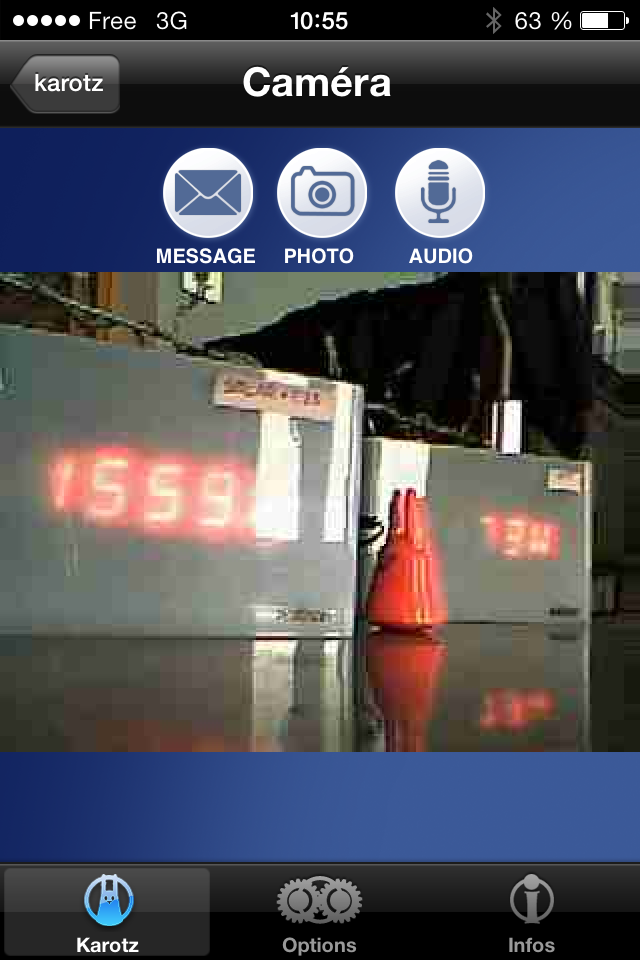
Shots of the 2 Wattson units, displaying Generated Power - Solar & ESS - on the left and Net Usage on the right, while our Daikin Heat Pump is heating up 

As a reminder, now in cold days, I use the Forced Charge Mode to charge the ESS at night when Electrcity is twice cheaper than during the day, and we use our stored Energy along with Solar during the day ... Capacity Shifting & Peak Shaving ... 


Here the heat pump is isung more and more Power - gradually - and the ESS is putting out more and more Power too, to compensate 

Heating stopped, and now the ESS will downgrade the Power Output 

And we are back to a Net Usage close to 0W - and slightly positive -

Graph details with Wattson Anywhere

Please Share this Post if you Liked it !

Please Share this Post if you Liked it ! Thanks !
Related Posts Plugin for WordPress, Blogger...