Showing posts with label gti. Show all posts

Wednesday, April 8, 2015

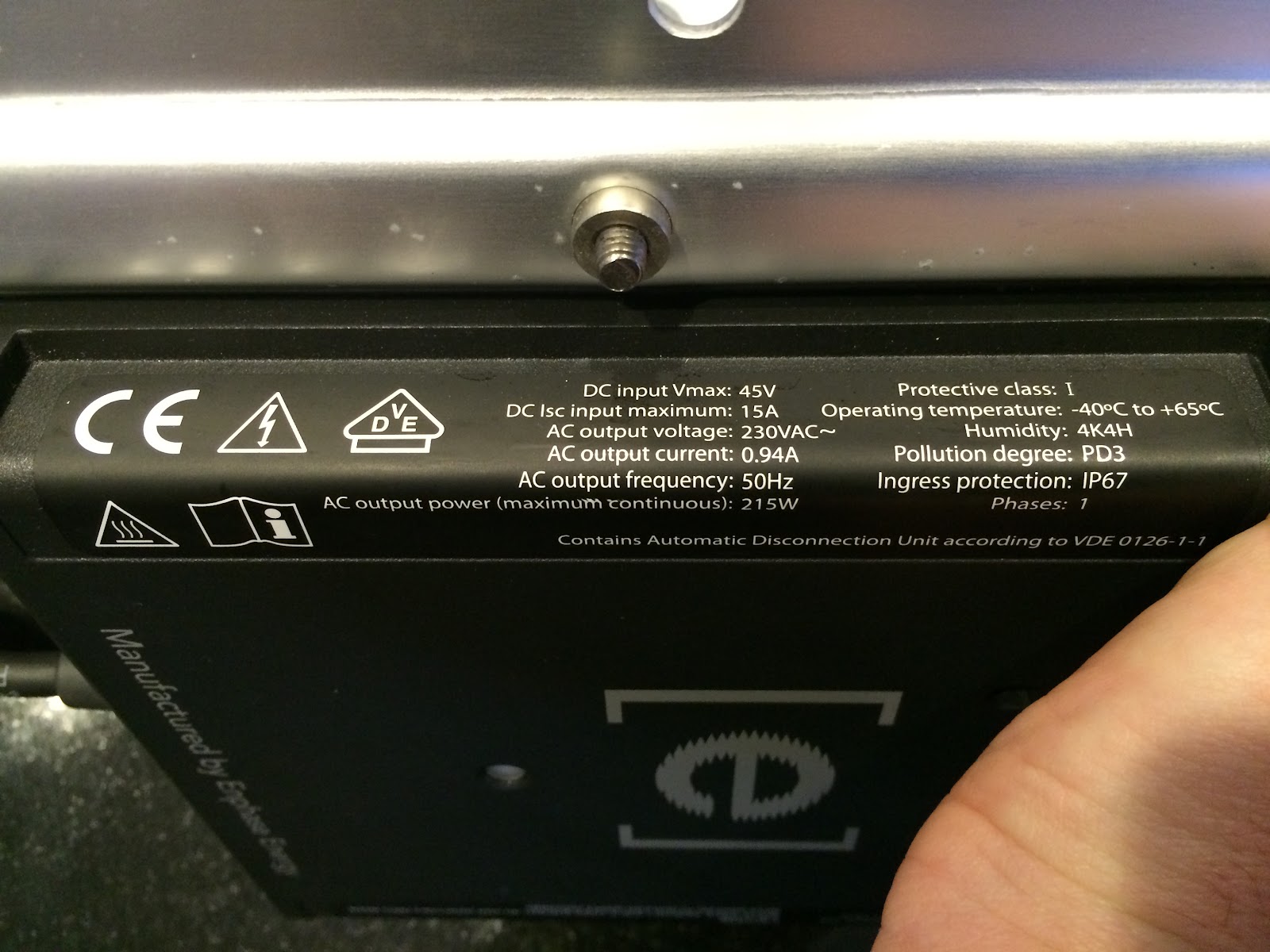
Enphase MicroInverter Startup LED State & Time

After replacing a Chinese made SUN-250G Grid Tie Inverter by an Enphase M215 in my Mini ESS, I realized that it takes more than 2 minutes for it to actually start pushing power into our home grid ...
That was a bit of a disappointement and I was wondering it is was normal, thinking the M215 would maybe take that much time looking for the Envoy Gateway - which I do not have - and waiting to connect to it before startup

Searching online today, I now know it is normal, reading through the Enphase Troubelshooting Guide :


The Chinese SUN-250G might not be the best small Grid Tie Inverter for efficiency but at least it starts within few seconds !

To adapt my DIY ESS and use Enphase M215 or M250 in the future I will then have to take this long startup time into consideration and rethink the way I fire up Inveters one after another, and I think I will have to leave their DC side ON at all times, since I also experienced that it takes them only 15 seconds to push power one the AC side is ON ....


So some more tinkering and testing ahead for the next version of my ESS, which will then be called: DIY ESS with Enphase :)


PS: The Enphase M215 is flashing Orange during normal operation, as I do not have any Envoy Gateway connected to it, but it does not matter to me

Monday, March 23, 2015

My Mini ESS with LEAF Batteries gets an Enphase M215 Micro Inverter ! and becomes my DIY AC Battery ;)


In a way this like getting my own Enphase AC Battery ;) well, sort of ...


If you recall, I have been testing 3 LEAF Battery Modules for 6 months, then put them into a 6-bottle wine crate along with a Charger and Grid Tie Inverter to make what I called a Mini ESS - Energy Storage System -

Since November 2014, it has been running 24/7, for more than 4 months, until last weekend when a strange smell caught my attention while it was pushing power back into our grid in the morning, after its usal night low TOU rate charge cycle; It must be a vented capacitor, leaking inside .... It happened on another of the SUN-250G grid tie inverter I am using since the beginning of my Energy Storage activities

During last week I stumbled across an ad for 18 used Enphase M215 - 2 years old - Micro Inverters at 79 EUR per piece, and decided to give it a try; I already did try to use them last year but realized the US version will not work in France (split phase/single phase & 60Hz/50Hz)

I got in touch with the seller, a professional in Solar and Wind, who was nice enough to deliver 2 units for free saturday morning at home; In our email exchange I learned that they need to have a profile flashed into them before they can operate, and this is done during their first comissioning via the Enphase Engage gateway, using power line communication


So the 2 units I got have this profile already inside and he told me they should operate just fine, once they have DC through their MC4 connectors and the grid with 230V AC on the other end of the Enphase Engage cable - which I already got last year, EU version -


I quickly took my Mini ESS downstairs, unscrewed the cover, and connected the Battery pack to the  DC side using crocodile clamps and MC4 connectors, plug the AC side to a wall outlet, through a wattmeter, and turned main switch to the GTI - Grid Tie Inverter - position


After a long 2mn and 20s, and different status LED colors, it started producing 235W :) ! which is normal but I was happy to have working units now, opening my Storage experience new horizons ...


After running fine for an hour or so, the external temprature is only reaching 32°C, no fan required, no noise (you have to put your ear onto it to ear something), it's just great !


It pushed a steady power for 3 hours or so ... nice !


Sunday morning: now let's swap the 2 GTIs and make this Enphase M215 fit inside the box


After trying different positions and measuring the length of DC wires, I cut them and soldered them to their MC4 connectors


Voila ! DC side is wired and fits inside the crate :)


This new layout will leave the 10A charger outside, and I decided to hang it in the back, less vibrations this way


After testing both Charging and Discharging, I put my Mini ESS back upstairs, next to its big brother in the living room, right in time before night rate kicks in ...


It charged during the night, and this morning pushed all this stored Energy back into our home grid for 4 hours in a row, helping the heat pump warm up the apartment and breakfast consumption


Notes: After realizing it takes the M215 2mn and 20s to initialize and start producing power and I was disappointed first, because it takes only few seconds for my SUN-250G to start doing the same! Thinking over this during the weekend I tried leaving the DC side ON, and it worked, now reducing the startup time to 15s, much better !
Also there might be the fact that I am not using the Envoy GAteway, and the M215 might be waiting, trying to connect to it before producing ...

Well I still have to learn about that part, but overall this is a huge step towards more Efficiency and this is key !


All about my 2 DIY ESS : http://www.myelifenow.com/search/label/DIY%20ESS 

Follow my 2 ESS units 24/7 livehttp://wattson.energyhive.com/dashboard/diyesskit

Sunday, July 20, 2014

SMA's Energy Storage System : Installation of the Sunny Boy Smart Energy

One year after revealing it to InterSolar Europe and winning a price for it, SMA just posted a video for the installation of their ESS - Energy Storage System - named Sunny Boy Smart Energy on their US Youtube Channel

As you probably remember it features a rather small battery pack of 2kWh only and has to be installed along with their Sunny Home Manager


" The current SMA Tech Tip shows how quickly and easily the new Sunny Boy Smart Energy can be installed as part of the SMA Integrated Storage System.

The Sunny Boy Smart Energy combines a modern photovoltaic inverter and a storage system and is, along with the Sunny Home Manager, one of the core components of the simplest storage solution currently available for residential applications.

Our colleague Jan explains how it works in the new video.

Happy watching. "


Saturday, April 12, 2014

Working on an Enphase version of my DIY ESS

I first wanted to keep this secret, but oh well, why not share this too;
I am - secretly - working on an Enphase wvvrsion of my DIY ESS, and the idea started maybe a year ago already, and last summer when the latest Enphase m250 came out, I really started looking for Enphase micro inverters, then stopped for financial reasons ...

But I am back with this idea and tried to get 2 m250 inverters from a big solar online store in the US, and ended up with 2 m215 - the previous generation - ; It was a packing error, and I got a partial refund, instead of shipping them back, so in the ned they were pretty cheap

Enphase m250 are not available yet in Europe yet, because of standards or regulatory reasons (?) but it should come here too, since the m215 did

So, after several weeks of waiting, shipping, wondering if I should return them, I decided to keep them and started really trying to use them last week end only


And since I am testing AESC / LEAF Battery Modules,  why not use them as a power source ?


I ordered 10 male and 10 female MC4 solar connectors, and here I am trying to figure out the polarities for the DC input of the Enphase m215 micro inverter


This piece leftover from my roof solar instal shows that this is really the positive lead, my contractor had it crimped with a red cable


Also I got this European version of the Enphase trunk cable, with 2 AC inlets (2 inverters, 2 inlets)


and I am planning on testing a first inverter on my AESC / LEAF Batteries, already in test and behaving perfectly here


Then I made 2.5mm2 testing cables, hooked them up to the SUN250 grid tie inverter that I am using with these AESC modules


I don't know if this will carry 10A of current, but we'll see, I don't want try crimp or solder my MC4 pins at this point


Here I am working on connecting the end of the trunk cable to AC, using a simple AC plug


Now, at the very end, when I tried to connect the AC m250 plug into the trunk cable inlet, I just couldn't  ...I tried several times and it was abnormally hard, and I eventually found out that these 2 connectors can not be connected into each other ! and there must be reason for this because there are inner small cams preventing this ....


Remember I have American micro inverters and European Trunk Cable ... So I had to stop right there, and went back on the web to try and see why and if this happened to others, but I haven't seen anybody with the same problem; I will order a European version of the m215 and compare the connector, I am sure it will be fine this time, but I still want to try and hook the US version to the European one, because this i just generating AC power with a voltage varying - adapting to the grid's constantly actually - from 205 to 250V
At this point, I just think only their pins are different, and Earth and Neutral are always the same ones, so the two others should give

240V between pin 3 and Neutral (pin 4)


240V between pin 1 and pin 3

and for 3 phase AC, these inverters are always hooked up the same way, on wiring diagrams I can see:

For French version, pin 1 feeding alternatively all 3 phases with Neutral on pin 4


For US version, pin 1 and pin 3 providing power to 2 phases alternatively ...

With all this information I should be able to make this US version works on French AC, probably using pin 1 and pin 3 on phase and neutral ... but we'll see this later .... Or maybe I will simply get European version of the Enphase m215 


Please Share this Post if you Liked it !

Please Share this Post if you Liked it ! Thanks !
Related Posts Plugin for WordPress, Blogger...