Showing posts with label SF. Show all posts

Tuesday, December 15, 2015

Nissan LEAF, the best selling EV on Earth is now 5 Years Old !

Remember: Olivier Chalouhi received the very first LEAF back on December 11, 2010 close to San Francisco
 Source: http://www.sfgate.com/bayarea/article/Redwood-city-man-gets-first-Nissan-Leaf-2453579.php

After 5 years of good services and 3 versions, 200,000 LEAFs have been sold worldwide, making it the best seeling EV ever


Its Battery Pack has held its promises with no incidents, no fire, and better than expected with almost no problems (I think Nissan replaced just a few packs over the 5 years, all covered under warranty); For a first EV, that is pretty good !


Now the latest version has a boosted Energy Density offering 30kWh instead of the original 24, in the same package and weight ...


I received mine among the first ones in France, 4 years ago, and it still is in great condition :) To me, it is a very reliable car, I used it mostly for commuting and going out with the family on week ends in Paris. I never regretted this purchase even if it was the most expensive vehicle I ever got

The future for the LEAf is what you see in this video below (Nissan IDS Concept)

Monday, February 9, 2015

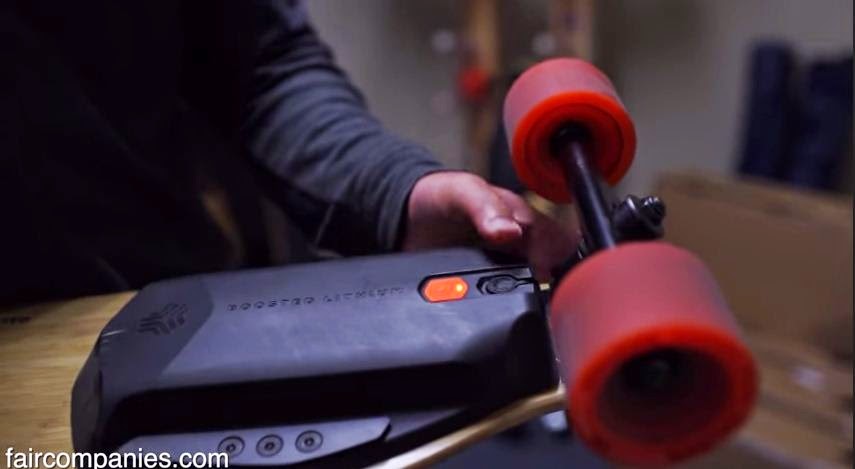
SF based Startup builds Amazing Electric Skateboards !


The hoverboard is finally being developed off-screen (though the prototype’s reliance on magnets means it’s not currently a transport solution), but there are boards on the market right now that nearly float up hill. Electric skateboards are piggybacking on the battery tech of electric cars to provide a powerful ride for even San Francisco style hills.

The founders of Boosted Boards (one of several electric skateboard startups) was founded by three robotics graduate students who wanted to get around the sprawling Stanford campus faster than their longboards could take them. They began to tinker with “really powerful motors for robotics”, were eventually mentored by a Tesla engineer and opened up shop in Silicon Valley to take advantage of the local EV tech.

The boards aren’t meant to replace skateboards, but the Boosted founders see them as an alternative to the car. “We know that most of our trips are under five miles so we know that a vehicle like this is going to be fine for most of these trips,” explains Boosted founder Matthew Tran. “The biggest advantage at this point is that it’s portable. In the city a lot of times I want to get around on CalTrain or a bus or just jump into an Uber and I can carry this board with me to any of those places.”

The boards are controlled by a Bluetooth handset, can reach speeds of 22 miles per hour, run 7 miles on a charge (1.5 hour recharge time), provide regenerative braking and weigh 13.5 to 15 pounds (depending on the model).


=> boostedboards.com


Drone footage: Betabrand http://www.betabrand.com/

Source & Original story: http://faircompanies.com/videos/view/...

Sunday, November 10, 2013

The $100,000 Battery That Could Help Hotels Save Bundles of Money


Two 54-kilowatt energy storage systems at the Mark Hopkins Hotel in San Francisco's Nob Hill will be able to supply 20 percent of the building's electricity demand.


When the big utilities lose a guy like Harry Hobbs, trouble lies ahead. Hobbs is the area director of engineering for Intercontinental Hotels in San Francisco, a man who has spent more than 30 years managing the energy demands of some demanding clients.

“The utilities have a 20th-century mentality,” says Hobbs. “If we’re going to address climate change we need 21st-century solutions.

What riles Hobbs is utilities’ approach to managing electricity supply and demand for big commercial customers like hotels. If a hotel’s energy consumption spikes—say on a hot day when guests all turn on their room air conditioners at once—the utility ratchets up the electricity rate they pay. To avoid these so-called demand charges—which can account for half of a monthly power bill—businesses can participate in programs that cut their bills if they allow their local utility take control of their air conditioners or lighting to reduce electricity use when the grid is overloaded.

Letting hotel guests who pay $300 a night sweat, however, is not an option. So Hobbs has pulled the plug on his utility by storing electricity in lithium-ion battery packs when rates are low for use when demand and prices rise. The battery and sophisticated software was built by a Silicon Valley startup called Stem and is another example of how technological innovation is upending utilities’ century-old stranglehold on power.

“We measure a business’ electricity usage and predict when there will be spikes in usage and make decisions on whether to charge or discharge batteries,” says Prakesh Patel, Stem’s vice president of capital markets and strategy, who notes that demand charges have risen 30 percent in the San Francisco Bay Area over the past three years.


That means Stem’s algorithms are constantly analyzing a customer’s power demand as well as other factors, such as weather patterns and past energy use, and then charging and discharging the batteries in tiny increments. Such fine-tuning keeps a customer’s utility bills down while minimizing wear and tear on the expensive lithium ion battery packs, which are similar to those found in electric cars.

“In the 21st century things should be down in real time,” says Hobbs. “I think this is a transformational technology that will be the key for many businesses to assist the utilities in a transition to stored energy system.”

Energy storage is particularly important if renewable energy is to become a mainstream source of electricity. As more wind and solar energy comes online, utilities will need to store that power to balance supply and demand on the grid when the wind isn’t blowing or the sun isn’t shining. (California regulators, for instance, approved a mandate last month that requires the state’s big utilities to install 1,325 megawatts of energy storage by 2020.)

For businesses like big box retail stores that increasingly are installing massive rooftop solar arrays, systems like Stem’s can maximize that investment by allowing them to store free electricity from the sun for use when demand—and rates—jump.

That’s a double-edged sword for utilities, depriving them of demand charges that help finance improvements to the transmission system but also helping them keep balance the grid and avoid blackouts or having to fire up a carbon-spewing fossil fuel power plant when demand suddenly spikes.

Intercontinental Hotels has run a trial with a 15-kilowatt Stem storage system for the past year, and though Hobbs would not discuss dollar savings he says he’s seen between a 17 percent and 30 percent improvement in his ability to manage demand. The hotel has 17 Stem systems on order and plans to install two 54-kilowatt battery packs at the Mark Hopkins in San Francisco, which would supply 20 percent of the hotel’s demand.

Patel says a 54-kilowatt system costs about $100,000, though California state incentives cover about 60 percent of that price. But thanks to a $5 million fund financed by Clean Feet Investors, Stem will offer customers no-money-down installation of battery storage in exchange for monthly fee paid out of the savings on utility bills. Such lease deals unleashed an explosion in residential solar systems and Patel expects to see a similar result in battery storage. Stem has orders for 6 megawatts’ worth of systems and Patel expects that to jump to 15 megawatts over the next year.

“We’ve known for some time that the traditional utility business model, which for over 100 years ago has served its purpose well, has come to an end,” says Jigar Shah, a Clean Feet founder.


Source: The Atlantic


More about the Hotel and Stem install on the DOE International Energy Storage Database: http://www.energystorageexchange.org/projects/356


Wednesday, October 9, 2013

The First LEAF Owner in the World was ... French, from SF Bay Area, Olivier Chalouhi

Already 3 years ... I remember watching this Event set up by Nissan at the San Francisco city hall and this French family man, Olivier Chalouhi, getting the keys to the First LEAF in the World


Now, after 3 years and 30,000 miles driving it almost everyday, to commute, but also to go on family trips, many of his friends and colleagues have been converted to Electric Drive ...


Friday, October 4, 2013

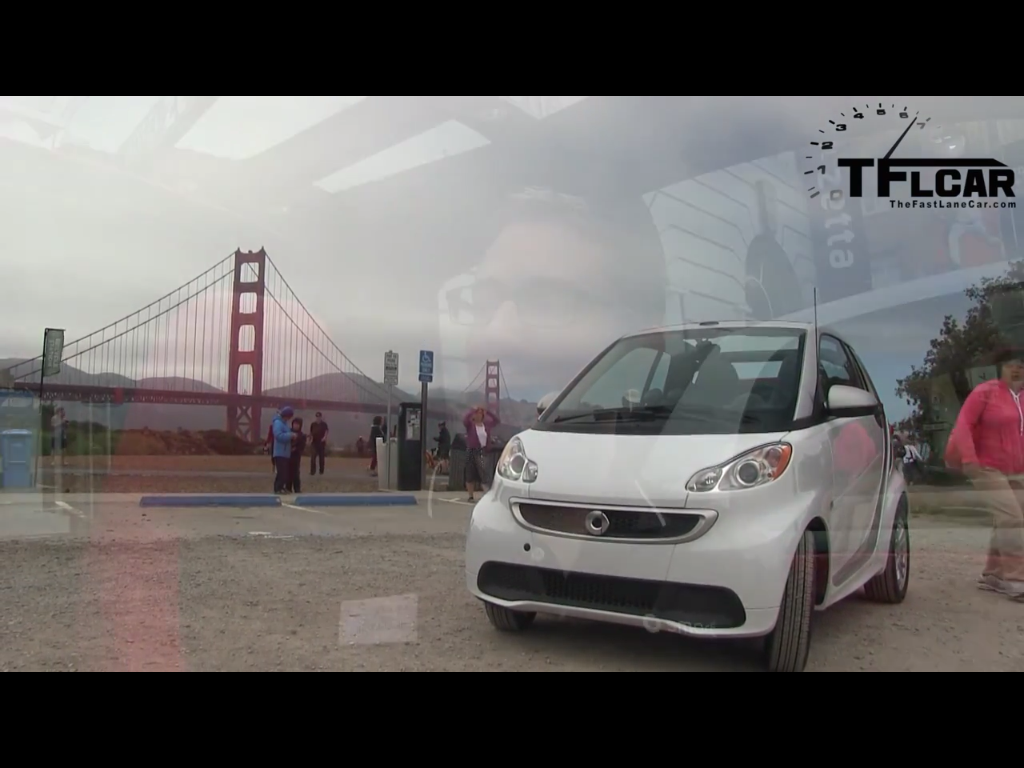
Take the 2013 Smart Electric Drive for a spin through San Francisco

This reminds me of the years I spent in San Francisco ...


"The 2013 Smart Fortwo Electric Drive is the least expensive all electric car that you can purchase in the United States. The previous generation of the tiny city car EV was only available for lease at $599.00 per month. Needless to say Smart lease only 250 total Smart EVs in the United States. Today you can lease the new 2013 Smart Fortwo Elecric Drive for just $139 per month. In another fun and informative TFLcar video we tell you every thing that you ever wanted to know about the new 2013 Smart Fortwo Electric Drive."


Downtown SF

Golden Gate Bridge

Lombard Street


Russian Hill

Marina / Crissy Field

Park Presidio

Wednesday, January 16, 2013

Nissan Gives Leaf Owners a Preview of the 2013 Model

SAN FRANCISCO — Nissan will not formally announce the 2013 version of the all-electric Leaf until early this week at the Detroit auto show, but on Saturday the company offered a sneak preview to the Bay Area Nissan Leaf Owners Association.


Nissan showing a preproduction 2013 Nissan Leaf to a meeting of the Bay Area Nissan Leaf Owners Association, the largest and most active group of Leaf owners in the United States. The San Francisco group has been active in suggesting enhancements to Nissan’s small electric vehicle.


It was an apt setting for the global unveiling of improvements — better range, faster charging and a lower starting price — intended to address shortcomings of previous versions of the Leaf.

“I can point to a half-dozen things on this 2013 car that directly resulted from meetings this group had with Nissan,” said Gary Lieber, co-founder of the owners association, informally known as the BayLeafs. “They really listened to us.”

The meeting, attended by about 60 people, took place at Luscious Garage, an auto service shop specializing in hybrid and electric cars in San Francisco. (Full disclosure: I was invited to the meeting because I lease a 2011 Nissan Leaf.)

Tim Gallagher, a Nissan spokesman, said the 2013 enhancements were “simple, small changes, a nice generational move of the car.” He said the simultaneous increase in content and the lowering of the price was made possible, in part, by the shift of production for 2013 Leafs to the company’s assembly plant in Smyrna, Tenn.

When asked if the pricing reduction was significant, Mr. Gallagher replied: “I was impressed. It’s a good number.” He declined to give the exact figure before the official announcement.

The strategy for affordability is primarily based on the advent of a stripped-down S model that comes without a navigation system or a Quick Charge port, and with only a basic radio-CD player. Premium features like the Quick Charge port, previously available only on the upscale SL model, are now included in the SV version. The SV, which was the cheapest model, is now the midrange Leaf.

New features, including LED headlamps, fog lights, 17-inch alloy wheels and leather seating, will now be reserved for the SL. Additional premium upgrades to the SL include a Bose seven-speaker audio system and “around view monitor,” which puts cameras in front, in back and on the side mirrors for parking assistance.

Nissan is adding “improvements for range management,” without actually providing a bigger battery in the Leaf. The implication is that many owners will drive farther than the 80 or so miles typically possible with the 24-kilowatt-hour battery — but the company did not offer an estimate of how much farther the 2013 Leaf would go on a single charge, either in miles or on a percentage basis.

The improvements would result from a combination of an aerodynamic tweak to the front fascia, a more efficient heater and the addition of a driver-selected B-mode that increases regenerative braking. A feature long demanded by Leaf owners, a dashboard display of the battery’s state of charge on a percentage basis, will be offered in the 2013 model.


Charging times using 240-volt power will be faster in the 2013 Leaf with an upgrade to a 6.6-kilowatt onboard charger, from the 3.3-kilowatt charger on 2012 models. That means adding about 20 miles in an hour of charging, rather than about 12 miles. A full charge from empty to full will take about four hours, instead of seven hours.

The charge port area now comes with a much-needed light, not provided on earlier models, and the ability to open the port door from inside the car or by using the key fob.

The car’s driving range will be indirectly enhanced as well, because most Bay Area Nissan dealerships will soon install Quick Chargers, Mr. Gallagher said. The Quick Charger, capable of providing 50 to 60 miles of added range in about 25 minutes, will be open 24 hours a day, seven days a week — at no cost to Leaf owners.

“I’m confident that in the next 60 days we’ll have a lot of Quick Chargers in the ground,” Mr. Gallagher said. “It’ll be great coverage across the state.”


Source: The New York Times

Please Share this Post if you Liked it !

Please Share this Post if you Liked it ! Thanks !
Related Posts Plugin for WordPress, Blogger...