Showing posts with label capacity. Show all posts
Saturday, January 23, 2016
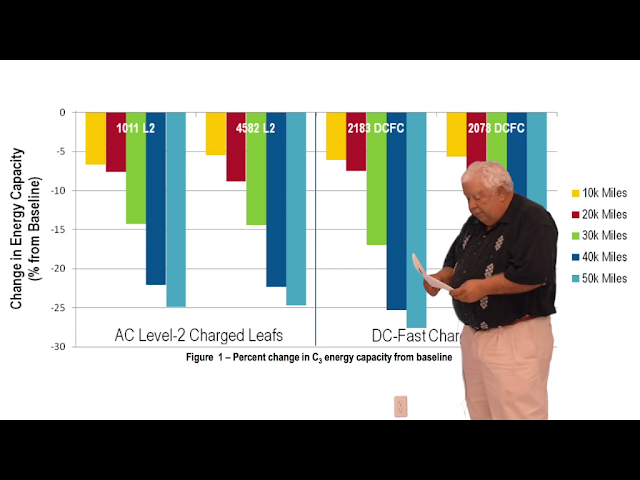
EVTV Friday Show - September 18, 2015
Libellés :
battery,
capacity,
charge,
evtv,
factory,
fast charge,
Fremont,
jack rickard,
leaf,
NISSAN,
tesla,
test
Sunday, June 1, 2014
"There will be quasi-infinite demand for battery storage if energy density and prices are good enough," Musk said
Tesla CEO Elon Musk: "We should have designed an all-original car from the beginning"
While Tesla and its CEO Elon Musk might be flying high now, back in 2008 the company went through some dark times (which I covered). Musk looked back at Tesla's early history at the World Energy Innovation Forum at the Tesla factory in Fremont, California on Wednesday and reflected on a big lesson from the early days.
Tesla should have designed an electric car from the ground up from the beginning, Musk said. Tesla's first electric car was the Roadster, which used a Lotus body and a third party powertrain from AC Propulsion. Tesla only produced a limited number of the cars and the Roadster faced a long delay when it was launching back in 2008.
"We ended up changing most of the damn car," said Musk, "so we thought later, why did we do that." Tesla was built on two false premises, Musk said: that Tesla could easily adapt the Lotus chassis, and that the powertrain from AC Propulsion would work as-is in a commercial environment.

Tesla is now a long way from the Roadster, which it no longer manufactures. Its second car, the award-winning Model S, was designed from the ground up as an electric car — the first one in the world — and driving it is a substantially different experience from driving a gas-powered car. The battery pack sits super low on the vehicle and has "Newton on its side," joked Musk. It's also got a variety of other innovations that are specific to an electric car, rather than being hold-overs from the gas-powered car.
Eventually, Musk thinks that every type of transportation — other than space travel — will go electric. In fact, he thinks that the architecture of a gas-powered car is "ridiculous" and "absurd" from an engineering perspective, he said during the onstage interview.
But if just a fraction of the world's future vehicles go electric, that will create a massive and unprecedented need for batteries. That's why Tesla has to build a battery factory itself, so it can just meet its own scale-up projections. "There will be quasi-infinite demand for battery storage if energy density and prices are good enough," Musk said.
Remember the Roadster? Tesla CEO Elon Musk looks back and says he would do it a bit differently.
While Tesla and its CEO Elon Musk might be flying high now, back in 2008 the company went through some dark times (which I covered). Musk looked back at Tesla's early history at the World Energy Innovation Forum at the Tesla factory in Fremont, California on Wednesday and reflected on a big lesson from the early days.
Tesla should have designed an electric car from the ground up from the beginning, Musk said. Tesla's first electric car was the Roadster, which used a Lotus body and a third party powertrain from AC Propulsion. Tesla only produced a limited number of the cars and the Roadster faced a long delay when it was launching back in 2008.
"We ended up changing most of the damn car," said Musk, "so we thought later, why did we do that." Tesla was built on two false premises, Musk said: that Tesla could easily adapt the Lotus chassis, and that the powertrain from AC Propulsion would work as-is in a commercial environment.
Tesla is now a long way from the Roadster, which it no longer manufactures. Its second car, the award-winning Model S, was designed from the ground up as an electric car — the first one in the world — and driving it is a substantially different experience from driving a gas-powered car. The battery pack sits super low on the vehicle and has "Newton on its side," joked Musk. It's also got a variety of other innovations that are specific to an electric car, rather than being hold-overs from the gas-powered car.
Eventually, Musk thinks that every type of transportation — other than space travel — will go electric. In fact, he thinks that the architecture of a gas-powered car is "ridiculous" and "absurd" from an engineering perspective, he said during the onstage interview.
But if just a fraction of the world's future vehicles go electric, that will create a massive and unprecedented need for batteries. That's why Tesla has to build a battery factory itself, so it can just meet its own scale-up projections. "There will be quasi-infinite demand for battery storage if energy density and prices are good enough," Musk said.
Libellés :
battery,
battery storage,
capacity,
Elon Musk,
energy storage,
gigafactory,
model s,
roadster,
tesla
Friday, May 17, 2013
New Small Electric Buses in Marseille !
During my vacation week in Marseille, I saw the new Electric Bus the city launched few weeks ago
It can take you around the harbor for 50cts only and has frequent stops
That's what I had been thinking of for the last years: replace big diesel buses with smaller fully Electric buses
Marseille did it ! and it is pretty cool ...
Disable very easy access because the bus floor is at the level of the curb and it has a wide sliding door
On-board the mini electric bus in Marseille - Video -
Behind the driver
Talking with the driver, he said they are charged at night only and that a bus charged up in the morning will be usable from 9AM to 3PM and replaced by another wave of fully charged buses doing the other shift from 3PM to 8PM
But when I asked him where the battery pack was located, he guessed wrong saying "under the seats ?", and I told him that it was actually "on the roof" - I read that online while studying the bus the night before -
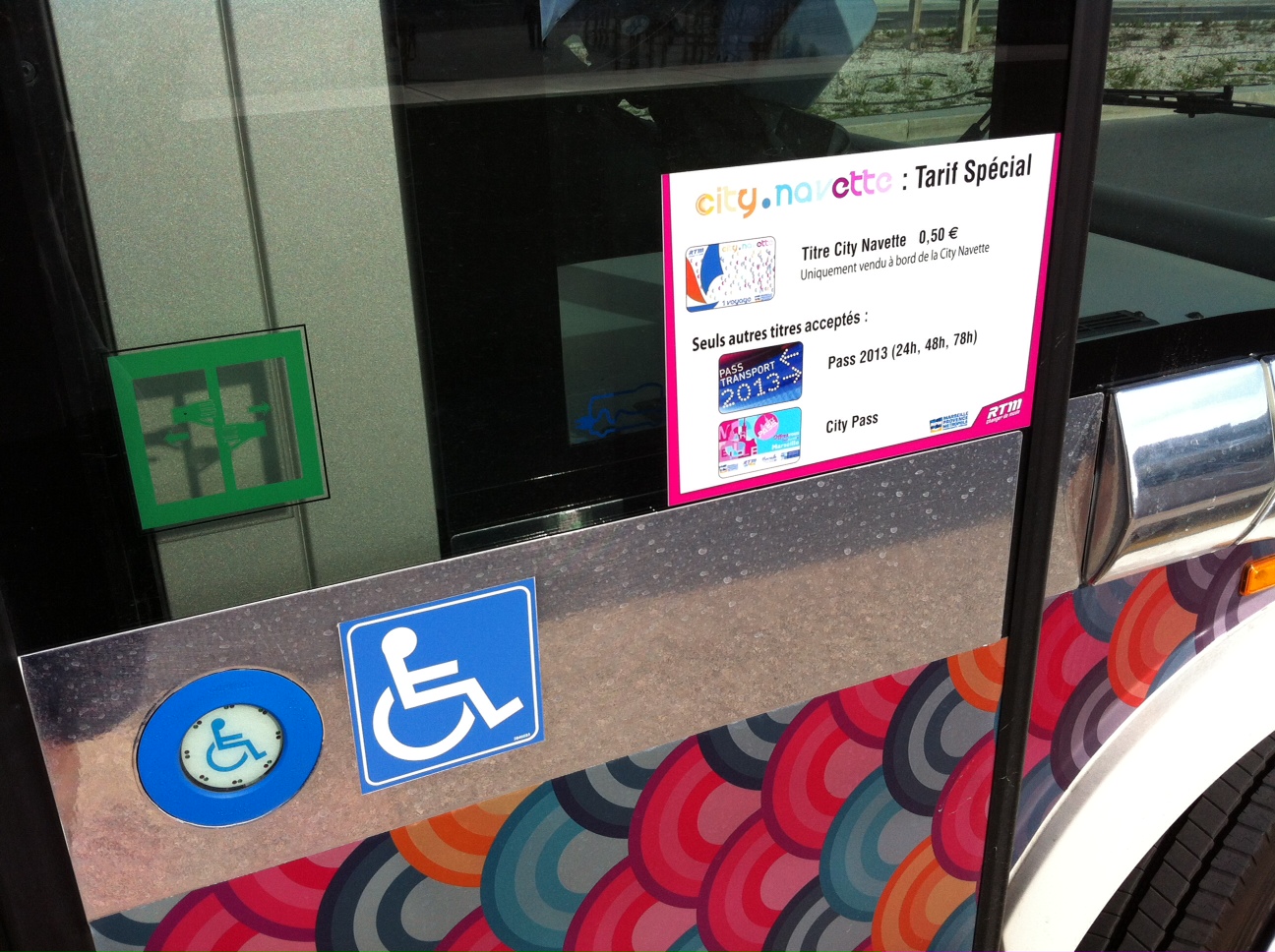
This is the 50 cents ticket
Website
Electric Bus Line going around the harbor and back
Libellés :
batteries,
battery pack,
bus,
capacity,
charge,
city,
electric bus,
marseille,
micro,
minibus,
night,
range
Pays/territoire :
Marseille, France
Monday, October 29, 2012
LiFePO4 Battery Charging Method - Don't Ruin your Expensive Cells !
and don't Burn your house !!
I learned this saturday that the new Vectrix Li and Vectrix Li+ have battery problems: These Electric Scooters here cost 11,000 and 12,500 EUR, which is a lot of money; If at this price you have problems, it is not possible ! As a result the dealer I met told me he was going to stop selling them and close his Electric Scooter business... He also told me that Vectrix may not be imported in France anymore because it is not selling ! I am very disappointed to hear that this great scooter might not be available anymore and even more knowing that it is only a Battery Management Problem Again !!
The same day I decided to write this post to try spread the word among the EV community and maybe Vectrix USA will read this too, along with other EV makers
The Method to Charge and Discharge a LiFePO4 battery pack is Very Simple :
A lot of people think they need a BMS along with a LiFePO4 battery pack, but the only thing it is doing is damage the cells !
This is not me saying this, but Jack Rickard from EVTV : he has been converting cars to Electric Drive for 4 years now and shown by practice (real world charging & driving) that this is the best way to protect these expensive cells
It seems so simple and inexpensive that after reading this some people will still not believe it, but this is the simple reality
My EV experience (since november 2009) has proven the same thing to myself too
Typical LiFePO4 Cell Discharge Curve
Here is THE METHOD:
- Bottom Balance each cell to 2.75V (Drain them with a resistor until they reach this voltage = empty)
- Connect them in series to form a string of the desired voltage
- Under Charge the string to 3.50V * number of cells with a LiFePO4 Charger
NB: A LiFePO4 Charger charges at Constant Current, then close to the pack voltage, switches to Constant Voltage and reduces Current slowly until it reaches the set pack voltage, and eventually Shuts Down Completely)
- When discharging the battery pack, set a lower limit to 3.1V * number of cells, start alerting that you are reaching the end of the pack and reduce maximum current drawn on the controller; When the pack voltage reaches 3V * number of cells, do not go below, stop the discharge at this point by disabling the controller
That's It !!
NB:
- Bottom balancing each individual cell has to be done only once
- If you have to add some cells to the pack (to get more pack voltage), you will have to "marry in" these new cells by bottom balancing ALL the cells again (old and new ones).
This Method is based on facts: Real World EV Charging & Driving, detailed below:
-Back in 2008, Jack Rickard distroyed many cells trying to Top Balance them to perfection (keeping them at a very equal voltage); When he drove his GEM EV, as he was going towards the second half of his pack capacity, he suddenly lost several cells, because they had reached a low voltage limit of 2V, and even below, going into reversal, the stronger cells driving current through the weaker cells that had past 0V
- He explained in details, with wood sticks, how each cell has its very own capacity, and if you try to top balance each cell, you will in fact reduce even more the smaller capacity cell's capacity, and as you discharge you pack, they will be the first ones to hit a lower voltage and if you continues will be damaged or destroyed
=> His Blog post: November 13th, 2009: "GET RID OF THOSE SHUNT BALANCING CIRCUITS !"
=> His explanation Video: EVTV News Friday Show November 13, 2009. Part 1 of 6. LiFePo4 Cell Battery Management. The truth about current shunt regulator battery management systems. Latest data indicates they do not protect cells, and can actually kill them:
Full length Video can be found at EVTV Video Archives by searching for " November 13, 2009 "
=> THIS IS A MUST WATCH 1 HOUR VIDEO
- Watch Jack Rickard explain the process has been using for years on half a dozen of converted cars, using the same tehcnic again here with the new build of Speedster Nippon (starts at 54:34)

- In early 2010, after 4 months of driving my Engineer 4kWh Prius PHEV Kit, I experienced several cells loss because of Cells Balancers, that were 24/7 drawing little current from the cells trying to have them all at he same exact voltage (it is also Top Balancing); Same as Jack Rickard, I lost one cell, then another, and did not understand why at this point... Replacing the damaged ones by brand new, I ended up drestroying some more and eventually almost burned my office underground parking while charging ! At this point I stopped everything, scared of the potential consequences of this unexplained problem ... and disconnected everything from my Prius for several months
I understood later, watching Jack's EVTV Show why this had happened and what caused it
- After that I started working on LiFePO4 Battery based Energy Storage for Solar at home, and have been experiencing only good things, using the cells (the remaining good ones) of my Prius PHEV Kit, for a year and a half now; So there was no weak cell, but only BMS (8S Cell Balancer) causing some cells to become weak !
Jack 's Method works !
- A lot of EV converters applied his Method, and do not have any Battery problem ever since; Many of them were at EVCCON last september
- CALB has released a new serie of great LiFePO4 cells, the CA serie, replacing (?) the SE serie
If you get these amazing cells (Jack Rickard's words after Charging them at 3C and dischanging at 12C !),
and damage or destroy them because of a bad method or BMS / shunt balancers, you will be very sad ...
CALB SE Serie

CALB CA Serie (New & Very good)

* I will had more details to this post on this subject (To Be Continued) *
August 29th, 2013
BOTTOM BALANCING & UNDER-CHARGE UPDATE
To prove you that this Method works, here are videos of regular voltage checks performed on my DIY ESS Battery Pack, Bottom Balanced and installed in January 2013:
March 2013
May 2013
July 2013
October 2013
=> Conclusion: It works: All the cells are still perfectly in balance after 6 months ...
I learned this saturday that the new Vectrix Li and Vectrix Li+ have battery problems: These Electric Scooters here cost 11,000 and 12,500 EUR, which is a lot of money; If at this price you have problems, it is not possible ! As a result the dealer I met told me he was going to stop selling them and close his Electric Scooter business... He also told me that Vectrix may not be imported in France anymore because it is not selling ! I am very disappointed to hear that this great scooter might not be available anymore and even more knowing that it is only a Battery Management Problem Again !!
The same day I decided to write this post to try spread the word among the EV community and maybe Vectrix USA will read this too, along with other EV makers
The Method to Charge and Discharge a LiFePO4 battery pack is Very Simple :
A lot of people think they need a BMS along with a LiFePO4 battery pack, but the only thing it is doing is damage the cells !
This is not me saying this, but Jack Rickard from EVTV : he has been converting cars to Electric Drive for 4 years now and shown by practice (real world charging & driving) that this is the best way to protect these expensive cells
It seems so simple and inexpensive that after reading this some people will still not believe it, but this is the simple reality
My EV experience (since november 2009) has proven the same thing to myself too
Typical LiFePO4 Cell Discharge Curve
Here is THE METHOD:
- Bottom Balance each cell to 2.75V (Drain them with a resistor until they reach this voltage = empty)
- Connect them in series to form a string of the desired voltage
- Under Charge the string to 3.50V * number of cells with a LiFePO4 Charger
NB: A LiFePO4 Charger charges at Constant Current, then close to the pack voltage, switches to Constant Voltage and reduces Current slowly until it reaches the set pack voltage, and eventually Shuts Down Completely)
- When discharging the battery pack, set a lower limit to 3.1V * number of cells, start alerting that you are reaching the end of the pack and reduce maximum current drawn on the controller; When the pack voltage reaches 3V * number of cells, do not go below, stop the discharge at this point by disabling the controller
That's It !!
NB:
- Bottom balancing each individual cell has to be done only once
- If you have to add some cells to the pack (to get more pack voltage), you will have to "marry in" these new cells by bottom balancing ALL the cells again (old and new ones).
This Method is based on facts: Real World EV Charging & Driving, detailed below:
-Back in 2008, Jack Rickard distroyed many cells trying to Top Balance them to perfection (keeping them at a very equal voltage); When he drove his GEM EV, as he was going towards the second half of his pack capacity, he suddenly lost several cells, because they had reached a low voltage limit of 2V, and even below, going into reversal, the stronger cells driving current through the weaker cells that had past 0V
- He explained in details, with wood sticks, how each cell has its very own capacity, and if you try to top balance each cell, you will in fact reduce even more the smaller capacity cell's capacity, and as you discharge you pack, they will be the first ones to hit a lower voltage and if you continues will be damaged or destroyed
=> His Blog post: November 13th, 2009: "GET RID OF THOSE SHUNT BALANCING CIRCUITS !"
=> His explanation Video: EVTV News Friday Show November 13, 2009. Part 1 of 6. LiFePo4 Cell Battery Management. The truth about current shunt regulator battery management systems. Latest data indicates they do not protect cells, and can actually kill them:
Full length Video can be found at EVTV Video Archives by searching for " November 13, 2009 "
=> THIS IS A MUST WATCH 1 HOUR VIDEO
- Watch Jack Rickard explain the process has been using for years on half a dozen of converted cars, using the same tehcnic again here with the new build of Speedster Nippon (starts at 54:34)
- In early 2010, after 4 months of driving my Engineer 4kWh Prius PHEV Kit, I experienced several cells loss because of Cells Balancers, that were 24/7 drawing little current from the cells trying to have them all at he same exact voltage (it is also Top Balancing); Same as Jack Rickard, I lost one cell, then another, and did not understand why at this point... Replacing the damaged ones by brand new, I ended up drestroying some more and eventually almost burned my office underground parking while charging ! At this point I stopped everything, scared of the potential consequences of this unexplained problem ... and disconnected everything from my Prius for several months
I understood later, watching Jack's EVTV Show why this had happened and what caused it
- After that I started working on LiFePO4 Battery based Energy Storage for Solar at home, and have been experiencing only good things, using the cells (the remaining good ones) of my Prius PHEV Kit, for a year and a half now; So there was no weak cell, but only BMS (8S Cell Balancer) causing some cells to become weak !
Jack 's Method works !
- A lot of EV converters applied his Method, and do not have any Battery problem ever since; Many of them were at EVCCON last september
- CALB has released a new serie of great LiFePO4 cells, the CA serie, replacing (?) the SE serie
If you get these amazing cells (Jack Rickard's words after Charging them at 3C and dischanging at 12C !),
and damage or destroy them because of a bad method or BMS / shunt balancers, you will be very sad ...
CALB SE Serie

CALB CA Serie (New & Very good)

* I will had more details to this post on this subject (To Be Continued) *
August 29th, 2013
BOTTOM BALANCING & UNDER-CHARGE UPDATE
To prove you that this Method works, here are videos of regular voltage checks performed on my DIY ESS Battery Pack, Bottom Balanced and installed in January 2013:
March 2013
May 2013
July 2013
October 2013
=> Conclusion: It works: All the cells are still perfectly in balance after 6 months ...
Libellés :
BMS,
capacity,
capacity loss,
cell,
cell voltage,
cell-log 8,
charge,
charger,
charging,
damage,
electric scooter,
evtv,
import,
jack rickard,
LiFePO4,
method,
vectrix,
vectrix store
Pays/territoire :
Paris, France
Subscribe to:
Posts (Atom)
Please Share this Post if you Liked it !
Please Share this Post if you Liked it ! Thanks !