Showing posts with label renewable energy. Show all posts

Friday, August 22, 2014

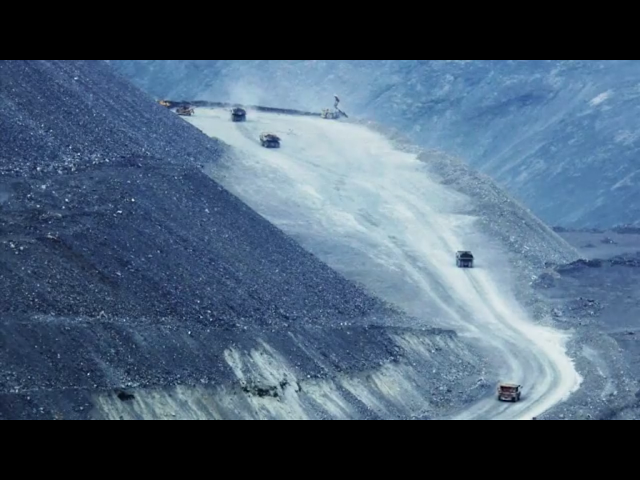
"We must put a price on carbon — now" : Leonardo DiCaprio voices climate change film - GreenWorldRising.org

"We cannot sit idly by and watch the fossil fuel industry make billions at our collective expense. We must put a price on carbon — now," DiCaprio says in his narration of "Carbon," released Wednesday 20, 2014.

Leonardo DiCaprio is lending his voice to the new short clip on fossil fuel and the mandatory transition to renewable energies, which should be accelerated a tax put on carbon emissions


Source: Politico

More here: GreenWorldRising


Sunday, March 30, 2014

Listen Up: Let's Talk Solar Grid Storage


Listen Up: Let's Talk Solar Grid Storage

To many of us old timers, the battery storage industry looks a lot like the solar industry did ten years ago. Energy storage on the grid depends on future battery cost reductions, requires sophisticated management electronics, tricky packaging, favorable government policies, coordination with utility rates and appropriate financing. Not surprisingly, we're seeing successful solar entrepreneurs from the last decade applying their finely-honed skills and tactics to build new energy storage businesses.


The synergies between solar and battery storage are obvious, but problems still exist in getting the economics to pencil out for customers. As in the solar industry, clever system designs and financing strategies can go a long way to improve customer economics and generate real sales. Although we'd like to see a solar array on every residential roof and two battery stacks in every garage, what is more likely to happen is that commercial customers will be the early adopters of combined solar and energy storage systems.


Tom Leyden, CEO of Solar Grid Storage, is building a business at the nexus of solar and battery storage. They have developed an elegantly packaged combination of battery storage, inverters and rooftop solar. Just as importantly, they offer flexible financing packages that effectively combine storage and solar as a service — with the economic benefits accruing both from grid support services as well as customer peak shaving and backup power. Please join me on this week's Energy Show on Renewable Energy World as Tom Leyden explains the current opportunities and customer demand for combined solar and grid storage systems.


Find more episodes of The Energy Show here.


About The Energy Show

As energy costs consume more and more of our hard-earned dollars, we as consumers really start to pay attention. But we don't have to resign ourselves to $5/gallon gas prices, $200/month electric bills and $500 heating bills. There are literally hundreds of products, tricks and techniques that we can use to dramatically reduce these costs — very affordably.

The Energy Show on Renewable Energy World is a weekly 20-minute podcast that provides tips and advice to reduce your home and business energy consumption. Every week we'll cover topics that will help cut your energy bill, explain new products and technologies in plain English, and cut through the hype so that you can make smart and cost-effective energy choices.

About Your Host


Barry Cinnamon is a long-time advocate of renewable energy and is a widely recognized solar power expert. In 2001 he founded Akeena Solar — which grew to become the largest national residential solar installer by the middle of the last decade with over 10,000 rooftop customers coast to coast. He partnered with Westinghouse to create Westinghouse Solar in 2010, and sold the company in 2012.

His pioneering work on reducing costs of rooftop solar power systems include Andalay, the first solar panel with integrated racking, grounding and wiring; the first UL listed AC solar panel; and the first fully “plug and play” AC solar panel. His current efforts are focused on reducing the soft costs for solar power systems, which cause system prices in the U.S. to be double those of Germany.

Although Barry may be known for his outspoken work in the solar industry, he has hands-on experience with a wide range of energy saving technologies. He's been doing residential energy audits since the punch card days, developed one of the first ground-source heat pumps in the early ‘80s, and always abides by the Laws of Thermodynamics.


Source: Renewable Energy World

Tesla battery business plan gives energy utilities strife

Tesla battery business plan gives energy utilities strife : Renew Economy
Elon Musk, the maverick CEO of Tesla Motors Inc., is not to be taken lightly. First, he came up with an elegant electric vehicle that performs as good as it looks, while offering an extended range, something other all-electric vehicles could only talk about. Now, he says, time has arrived to go mainstream, with a version that offers extended range but with a price tag that may appeal to the ordinary folks, not just the rich, who have been his clients up to now.

The biggest obstacle is that there are not enough batteries for Tesla to ramp up production. The second is that today's batteries, when you can find them, are pricey for the amount of energy they store. Now that Tesla feels confident that if it can build more, consumers will buy them, it has decided to get into battery manufacturing business, and not in a haphazard way, but by building what is referred to as a $5 billion mega-factory.

Screen Shot 2014-03-25 at 10.04.37 AM

Following the announcement, Mr. Musk, who is worth billions as stocks of his company continue to defy all laws of logic and gravity (graph on page 15), said, "Shifting to greater use of solar and wind power will challenge utility companies." In case his message did not register, he added, the shift will bring, "some amount of strife for the existing utilities, especially for those invested more heavily in fossil fuels."

Speaking before a receptive, if nervous, audience at the California Public Utilities Commission (CPUC), the state's regulator, Musk said Tesla is "working to create stationary battery packs that last long, are super safe and are compact."

His cousin, SolarCity's CEO Lyndon Rive, went even further by predicting that "There is no doubt storage will become cost effective and deliver electricity with storage at night." As if that was not enough to shock and awe, Rive added that utilities in California and elsewhere, who are resisting change, are merely delaying the inevitable.

The "Thought Leaders" session at CPUC, which normally draws 50 attendees or so, filled the largest auditorium and 2 adjacent rooms as hordes of people, no doubt including many job seekers with resumes in hand, flocked to hear Musk, a high-tech celebrity worthy of Hollywood paparazzi.

Musk and Rive, of course, can say what they want and get away with it. Both their companies are on a rapid growth path, pushing new technologies, enjoying increased sales, and facing declining costs. The utility industry, by contrast, is facing tepid or no growth, for the most part relies on technologies that have been around for decades if not longer, and facing increasing costs, especially in upgrading the aging network, the grid. While the average age of Tesla and SolarCity's workforce is under 30, utilities are mostly dealing with an aging workforce ready for retirement. Utility stocks are stable at best, if the companies are well-managed while Tesla's stocks keep on rising. The contrast between the old and the new is inescapable.

Screen Shot 2014-03-25 at 10.04.45 AM


As CEO of a major solar PV company, Rive was critical of utilities, who are "taking months to connect residential solar panels to their systems" accusing them of playing games, "because they profit from the current system."

"When you have a game- changing technology, those in the game don't want to change," Rive said. "They like the existing game, the sole source, cost-plus model."
Rive noted that it now takes 8 months for utilities in California to connect a SolarCity PV customer with an energy storage system to the grid.

As reported in the February 2014 issue of this newsletter, Hawaiian Electric Company (HECO) placed a temporary moratorium on new solar PV connections while trying to figure out how to deal with the surge of new installations.

Tesla's new battery factory, if all goes according to plan, could make it easier for customers to store their excess generation during sunny periods for later use, whether in their Tesla cars or in a storage device in the garage. Musk, who is SolarCity's chairman and the largest shareholder, has been offering Tesla batteries to selected rooftop solar customers in parts of California and New England. Once battery production soars and prices plunge, as expected, more PV customers can be fitted with storage.
Tesla's stock shot to $352.54 on 19 March 2014.


Source: Renew Economy

Please Share this Post if you Liked it !

Please Share this Post if you Liked it ! Thanks !
Related Posts Plugin for WordPress, Blogger...