
In Japan, the new PV home market represented 30 percent of the total residential PV market in 2012 or over 370 MW of PV installation. In California this market accounted for 13 percent of the total residential PV market during the same period.
In California under the New Solar Home Partnership (NSHP), which provides incentives to home builders, there has been a little over 8,000 new solar homes built and rebated between 2007 and June 2013. This program has a goal to place solar energy systems on 50 percent of new homes by the end of 2016. Comparatively, according to the Japan Prefabricated Construction Association, 58.4 percent of detached, prefabricated homes built by 10 leading manufacturers during 2011 were sold with PV. The Association is planning to boost this number to 80 percent by 2020. Key solar homebuilders include Sekisui House, Sekisui Heim, Daiwa House and Misawa Home.
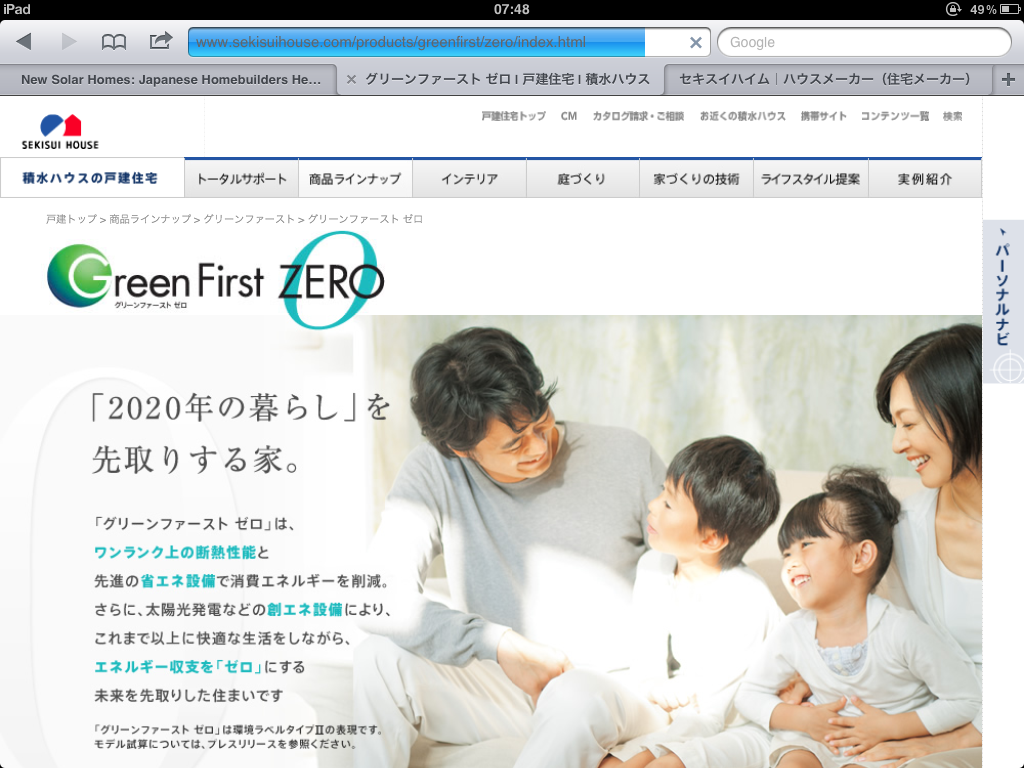
Sekisui Heim, a housing business unit of Sekisui Chemical, holds a Guinness World Record for “the most solar powered houses built.” The company has built and sold over 100,000 PV new homes between 1997 and 2011 while Lennar, which claims to be the America’s No. 1 solar homebuilder, has sold less than 2,000 solar home since 2006.
On an annual basis, Sekisui Heim sold over 9,000 PV new homes in Japan in 2012. Better yet, Sekisui House, Japan's biggest homebuilder, sold over 21,300 new solar homes during FY2012 (February 2012 through January 2013), 12.8 percent more than FY2011.
A Different Buyer Experience
In the U.S., prospective homebuyers often visit a model home at a particular homebuilder’s development site in a particular community. In Japan, homebuyers visit “Jutaku Tenjijo (Housing Exhibition Park)” where a dozen home developers showcase their latest new homes side-by-side. More new homes come with PV system as a standard feature, not an option. Some are equipped with building-inegrated photovoltaics (BIPV) to accommodate tiled roofs and aesthetic preferences, while others feature a flat-roof PV solution.

A representative from Sekisui Heim said 85 percent of all new homes the company sold last year was equipped with a PV system, closely followed by 84 percent of Sekisui House. Ichijo Co Ltd, one of the Top 10 Homebuilder in Japan, achieved the highest rate of 90 percent in 2012. In 2010 Ichijo Co. developed and started promoting “Yume-Hatsuden System,” which is a large PV system with a special financing mechanism. The financing mechanism features zero upfront costs for the PV system and owners are allowed to repay the system cost by selling their solar-generated electricity with a 1 percent interest rate.
Ichijo’s representative stated the average PV system size for its new homes is 12 kW, while the national average for solar new home is about 4 kW. The company promotes not only installing PV on rooftops, but also on a homeowner’s carport to maximize revenues received by the national FIT policy.

Fighting Rising Electricity Rates with Solar Communities
As the nation’s electricity supply becomes a serious issue, home developers have expanded their product offerings from smart homes to smart communities.
Electricity rates are going up in Japan due to the higher costs of buying imported fossil fuels in the wake of the Fukushima nuclear disaster and the subsequent shutting down of nuclear reactors for safety concerns. All but two of Japan’s 50 reactors are currently idled for safety assessments.
In May, Kansai Electric Power Co., the second largest electric utility, and Kyushu Electric Power Co. raised residential electricity rates to offset their higher fuel costs of running thermal power plants. Kansai Electric Power’s rates went up by an average of 9.75 percent while Kyushu Electric Power raised its rate by an average of 6.23 percent. Tohoku Electric Power Co. and Shikoku Electric Power Co. will raise their residential rates in August by 11.41 percent and a 10.94 percent, respectively.
To fight against rate hike and to support restoration efforts, Sekisui House has created the first net-zero-smart-house community in northeastern Japan where the devastating earthquakes and tsunami hit. The housing development is called “Smart Common Stage Mitazono,” which includes 40 Zero-Energy Homes, combining energy-efficient construction and appliances with PV, fuel-cell and storage battery systems. The 40 homes together can produce 163 MWh annually, of which 143 MWh will be sold to the utility.
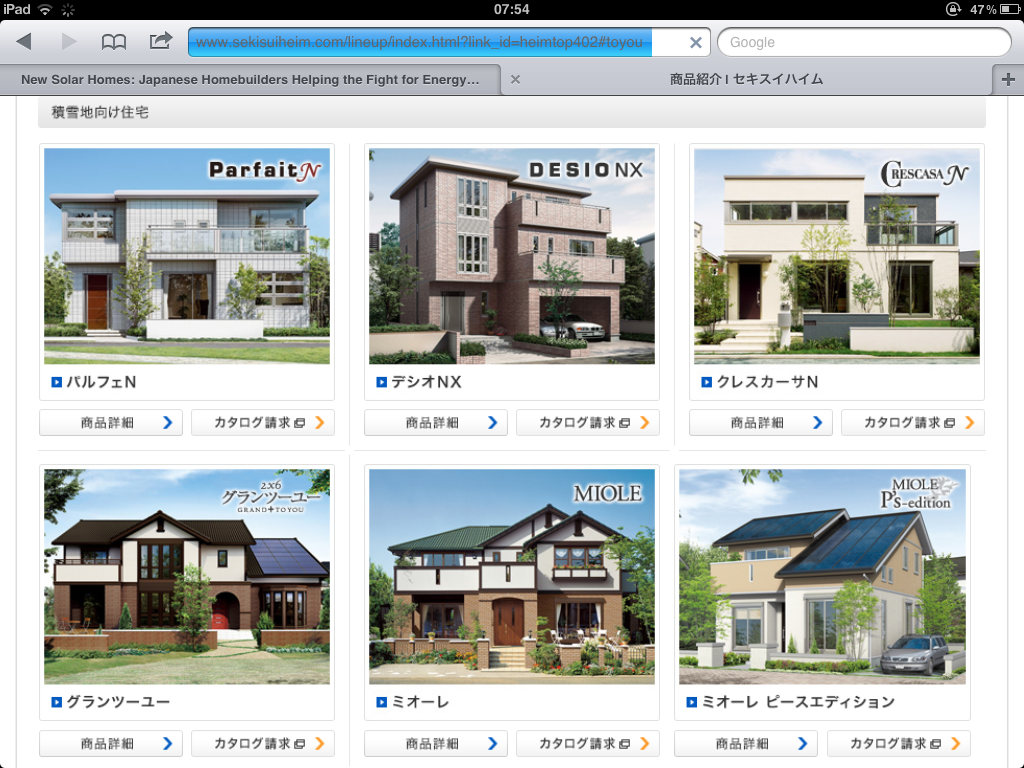
Besides the Mitazono, Sekisui House has developed 12 other smart-house communities nationwide.
Daiwa House, the second largest homebuilder in Japan, has released the nation’s first fully energy-independent town project in Osaka. The “SMA X ECO Town Harumidai” consists of 65 Zero-Energy homes, all equipped with PV, lithium-ion battery and HEMS. Besides on individual housing units, common areas such as a community center or park have PV systems. This allows the entire community to supply all necessary energy.
While the high ROI triggered by the national FIT program has accelerated the growth of the large-scale, non-residential segment, the solar new home market is driven by homeowners’ needs to live peacefully and safely without worrying about energy supply and cost of energy at their own home.
Source: Renewable Energy World


