Showing posts with label grid. Show all posts

Tuesday, January 19, 2016

Finally got 2 100W Flexible SunPower Solar Panels, after 2.5 years of wait


Finally, 2.5 years after its discovery on EVtv in October 2013, I just purchased 2 100W SunPower Flexible Solar Panels :) for 100 GBP each, plus 20 GBP of shipping (a bargain I think compared to all the ones I have seen over this period)


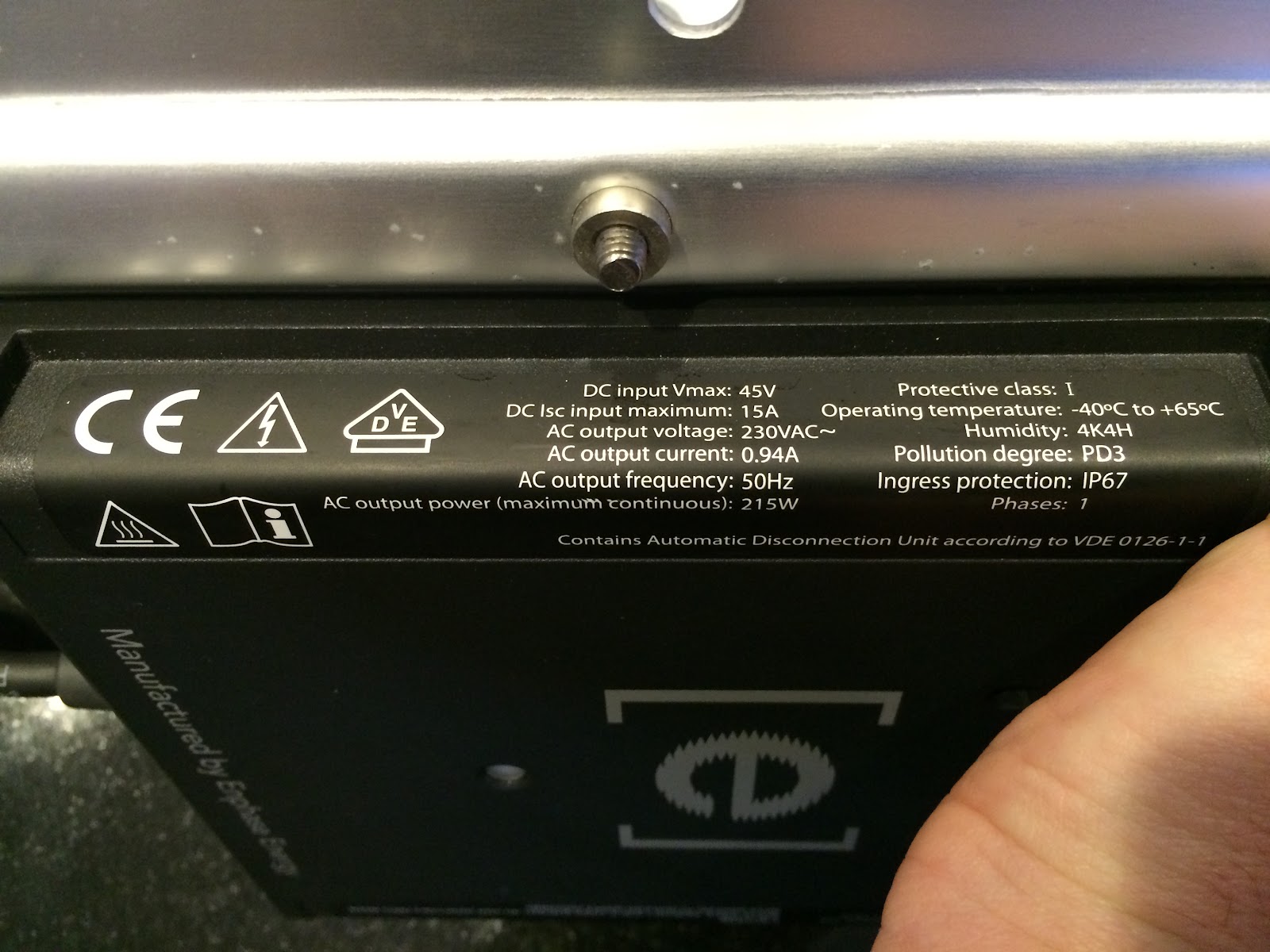
They will replace my very first lower power panels installed in 2009 but won't charge AGM batteries, they will be wired in series and plugged into an Enphase M215 micro inverter to directly feed Power into my home grid, improving low solar generation in winter hanging vertically by my windows


The 100W one is the smallest on the picture, 32 cells 4 x 8, ultra light, flexible, with holes already there to hang it ... You will understand better when I receive and install them ....

Here is the link, because I want to share with others this good deal I found today:
http://www.ebay.fr/itm/NEW-100W-12v-Energy-Semi-Flexible-Mono-Solar-Panel-100-watt-TUV-ISO-UK-/262238997891?hash=item3d0ea98d83


Saturday, May 9, 2015

Elon Musk & JB Straubel give more details about the PowerWall & PowerPack !


Elon Musk & JB Straubel gave more details about the Tesla Energy PowerWall & PowerPack during the Q1 2015 Shareholders Call !

Elon: "The response has been overwhelming, like crazy !" ... "Its has gone super viral"

- 60,000 PW reserved (38,000 customers ordering 1,5-2 per installation)
- 25,000 PP reserved (2,500 customers ordering 10 PP at once !)
=> they are sold out as of now through mid 2016, until GigaFactory can supply their first cells

- 2,500 solar companies requests to install the PowerWall, they can not even answer them for now


- 18650 cells used are generic, but some are optimized for the Daily Cycling version of the PowerWall and some for the Backup version, with different number of cycles :

  • 10 kWh Backup Power is for High Power/Energy application and cells are similar to the ones used in car (Nickel Cobalt Aluninum) : 60-70 cycles / year for 1000-1500 cycles
  • 7 kWh Daily Cycling: cells are Nickel Manganese Cobalt : 255 cycles / year for 15 years / 5000 cycles

- Daily Cycling PowerWall (several units) is for going Off Grid

- Elon: a DC-DC converter is already included in the PowerWall, and wired to the existing PV it will charge the battery pack directly, the existing DC-AC inverter is used to push to power back into the grid
  JB: the PowerWall will act like a solar panel in a way

- GigaFactory could be dedicated to Battery Manufacturing for Stationary Storage 


My thoughts on this:
So, from what they said, I understand that the PowerWall will charge directly from the solar PV array, which is a very good thing because it means less loss in converting power from DC to AC with the existing inverter and then AC to DC by the Charger that would be required to charge the battery pack
But, once fully charged, and when it's getting dark, will the PowerWall have the ability to push the right amount of voltage & current in order the satisfy the house loads only ? Or will it push full power into the existing inverter and generate full 2kW if it's a 2kW inverter ? That question remains and I would like to have even more details on that ...

Come join the new Facebook Group on Tesla Energy PowerWall & PowerPack 


More on Tesla energy ESS - Energy Storage System - on their website: http://www.teslaenergy.com or http://www.teslamotors.com/powerwall

Monday, March 23, 2015

My Mini ESS with LEAF Batteries gets an Enphase M215 Micro Inverter ! and becomes my DIY AC Battery ;)


In a way this like getting my own Enphase AC Battery ;) well, sort of ...


If you recall, I have been testing 3 LEAF Battery Modules for 6 months, then put them into a 6-bottle wine crate along with a Charger and Grid Tie Inverter to make what I called a Mini ESS - Energy Storage System -

Since November 2014, it has been running 24/7, for more than 4 months, until last weekend when a strange smell caught my attention while it was pushing power back into our grid in the morning, after its usal night low TOU rate charge cycle; It must be a vented capacitor, leaking inside .... It happened on another of the SUN-250G grid tie inverter I am using since the beginning of my Energy Storage activities

During last week I stumbled across an ad for 18 used Enphase M215 - 2 years old - Micro Inverters at 79 EUR per piece, and decided to give it a try; I already did try to use them last year but realized the US version will not work in France (split phase/single phase & 60Hz/50Hz)

I got in touch with the seller, a professional in Solar and Wind, who was nice enough to deliver 2 units for free saturday morning at home; In our email exchange I learned that they need to have a profile flashed into them before they can operate, and this is done during their first comissioning via the Enphase Engage gateway, using power line communication


So the 2 units I got have this profile already inside and he told me they should operate just fine, once they have DC through their MC4 connectors and the grid with 230V AC on the other end of the Enphase Engage cable - which I already got last year, EU version -


I quickly took my Mini ESS downstairs, unscrewed the cover, and connected the Battery pack to the  DC side using crocodile clamps and MC4 connectors, plug the AC side to a wall outlet, through a wattmeter, and turned main switch to the GTI - Grid Tie Inverter - position


After a long 2mn and 20s, and different status LED colors, it started producing 235W :) ! which is normal but I was happy to have working units now, opening my Storage experience new horizons ...


After running fine for an hour or so, the external temprature is only reaching 32°C, no fan required, no noise (you have to put your ear onto it to ear something), it's just great !


It pushed a steady power for 3 hours or so ... nice !


Sunday morning: now let's swap the 2 GTIs and make this Enphase M215 fit inside the box


After trying different positions and measuring the length of DC wires, I cut them and soldered them to their MC4 connectors


Voila ! DC side is wired and fits inside the crate :)


This new layout will leave the 10A charger outside, and I decided to hang it in the back, less vibrations this way


After testing both Charging and Discharging, I put my Mini ESS back upstairs, next to its big brother in the living room, right in time before night rate kicks in ...


It charged during the night, and this morning pushed all this stored Energy back into our home grid for 4 hours in a row, helping the heat pump warm up the apartment and breakfast consumption


Notes: After realizing it takes the M215 2mn and 20s to initialize and start producing power and I was disappointed first, because it takes only few seconds for my SUN-250G to start doing the same! Thinking over this during the weekend I tried leaving the DC side ON, and it worked, now reducing the startup time to 15s, much better !
Also there might be the fact that I am not using the Envoy GAteway, and the M215 might be waiting, trying to connect to it before producing ...

Well I still have to learn about that part, but overall this is a huge step towards more Efficiency and this is key !


All about my 2 DIY ESS : http://www.myelifenow.com/search/label/DIY%20ESS 

Follow my 2 ESS units 24/7 livehttp://wattson.energyhive.com/dashboard/diyesskit

Tuesday, March 17, 2015

SolarCity Launches Microgrid Service, Available Worldwide


GridLogic™ combines distributed solar, batteries and controllable loads to give municipalities, remote communities, military bases and hospitals cleaner, more resilient, more affordable power


Mar 16, 2015

SAN MATEO, Calif. — SolarCity® (NASDAQ: SCTY), America’s #1 solar power provider, today unveiled GridLogic, a microgrid service that combines distributed energy resources — solar, batteries and controllable load — to enable a cleaner, more resilient and more affordable way of providing power. SolarCity’s microgrid service ensures that any community anywhere in the world vulnerable to power outages and high energy costs—including remote or island communities, hospitals and military bases—can have dependable, clean power when the grid is down. GridLogic can operate either in conjunction with or independently of the utility grid.


As with all SolarCity products and services, GridLogic comes with affordable financing options, including payment programs with little to no upfront cost. GridLogic can provide electricity to communities for less than they pay for utility power with the added benefit of backup power for emergency services. SolarCity’s in-house grid engineering team will design and install each GridLogic project with a system of software-based monitoring and controls that manage the mix of distributed energy resources and utility power to maximize savings.


The first decade of the 21st century saw 3,496 natural disasters, nearly a fivefold increase over the 1970s. Severe weather events can cause prolonged power outages that cut off access to critical public resources—Hurricane Sandy alone caused more than 8.5 million power outages across 21 states. Communities around the world are seeking ways to continue to power critical resources and guarantee public safety and security in the aftermath of these events. GridLogic gives them a cleaner, more affordable way to do so.


SolarCity’s microgrid service is now available worldwide. Organizations interested in learning more about GridLogic can visit www.solarcity.com/microgrid to learn more, or contact the company directly at 877-695-7652 for a consultation.


Click here for the GridLogic Data Sheet


About SolarCity
SolarCity® (NASDAQ: SCTY) provides clean energy. The company has disrupted the century-old energy industry by providing renewable electricity directly to homeowners, businesses and government organizations for less than they spend on utility bills. SolarCity gives customers control of their energy costs to protect them from rising rates. The company makes solar energy easy by taking care of everything from design and permitting to monitoring and maintenance. SolarCity currently serves 16 states. Visit the company online at www.solarcity.com and follow the company on Facebook & Twitter.


Source: SolarCity

Sunday, December 21, 2014

Reposit Power : Store Solar Energy & Trade it with Grid

A Canberra-based company is to introduce new technology that it says could help turn electricity markets on their head – by allowing households to buy and sell electricity on the market.

The buying and selling of electricity has hitherto been the province of large or specialised companies such as electricity retailers. But Reposit Power says that homes and businesses can and should be able to trade electricity with the help of battery storage, and production facilities such as solar panels.


Reposit Power plans to install battery storage in six homes around Canberra to run a six-month pilot of its technology, known as GridCredits. The Australian Renewable Energy Agency is contributing $445,000 to the $900,000 project.

Reposit Power says GridCredits is a world-first energy storage program that will put consumers in the driving seat and will "transform the grid forever."

Spokesman Luke Osborne says the technology will allow households to "buy low and sell high" – adding a new layer of possibilities to homes that have solar and storage. He says this will enable some households to virtually eradicate their bills and still remain connected to the grid by doing what the retailers do – maximising their earnings on the market.


"A lot of what retailers do is buying services from peaking power stations. Consumer with storage and solar panels can provide the same services themselves," Osborne told RenewEconomy in an interview.

"What we are doing is when it makes sense – households can be a seller, and then buy electricity at a low price."

Reposit Power is interested in using similar technology for wind farms and solar farms and for large businesses. "This is the alternative to going off-grid – households can be energy independent, at the same time as making the whole grid cleaner," Osborne says.

"Networks should be a platform for trading and exchange of electricity, so tariffs should be structured to encourage this, not to prevent it, or that will accelerate the death spiral of the grids.

"This is about households being able to go head to head with the major companies."


Reposit Power hopes to be able to broaden its rollout by mid next year, when this initial program is complete, and when it has convinced the Australian Energy Market Operator that households or businesses can be a "reliable source of power", as AEMO requires.

ARENA CEO Ivor Frischknecht said the new technology would allow consumers to gain more value from their rooftop solar PV installations. He said that one in five houses now use solar power.

"This substantial rise has made it vital to find solutions to better manage how residential solar systems operate in our electricity grids," Frischknecht said.


"Reposit's GridCredits system can control and store solar energy. This gives consumers access to their own power overnight and at peak times, reducing their demand on the grid.

"It also allows energy to be sold back into the grid by placing bids into the market, turning residential properties into micro power plants."

Frischknecht said that storage would help network operators manage demand more effectively by delivering stored power into the grid at peak times, and Reposit's technology will also help smooth out the variable delivery of solar energy.

This in turn would allow more renewables to be connected to the grid.

Reposit Power was co-founded by energy industry veteran Dean Spaccavento and scientist Lachlan Blackhall. The company says the two "shared a vision for allowing consumers to trade their electricity while contributing to a safe and cost-effective grid."


Source: Renew Economy

Sunday, November 16, 2014

Buidling a Mini Energy Storage System - ESS - to Store More Energy at Night during Winter

You probably followed my AESC / LEAF Battery Modules adventures since last March: Ordering them from Las Vegas, Bottom Balancing them, Wiring them in Series and Testing them for month in my bedroom with a 24V 10A LiFePO4 charger and a SUN 250G Grid Tie Inverter

Here is a link to all these previous posts on the same subject : http://www.myelifenow.com/search/label/AESC+ESS+leaf

In October I finally decided to pack of this "mess" into a compact Mini ESS - Energy Storage System - and below are the steps I went through, using a Bordeaux 6-bootle wooden crate - we are in France ;) -


This small unit is now upstairs in the living and used every day and every night, mostly to store as much Energy as we can at night when Electricity is half price during 8 hours with our TOU plan from EDF

This Mini AESC / LEAF Battery Modules ESS is storing 1.5 kWh of Energy at night and is pushing it back into our home grid during the day :)


So I started with these 3 LEAF battery modules, wired in series, and tested over 6 months


The idea was to find an enclosure that fit the modules almost perfectly and I thought about a 6-bottle wine crate to do the job


Warning: be extremely careful when using metallic tools with exposed battery connections !! a short could cause massive damage to you since the power output is HUGE !


So it fit almost but the tabs were sticking out a bit, an opening would be necessary anyways to access them to be able to check the voltage and access the connections when needed

Let's cut out this window


and pill up the 3 AESC modules


Now it is time to dismount the whole charge and discharge control system and install it inside the box, on top of the modules: it is made of a dual relay programmable voltmeter, and 2 Tyco Kilovac contactors - overkill for this system, but it's always better -


I did not want to put all these components directly on top of the modules so I added a small piece of wood, cut it to fit in length and did not cover the whole surface to let the modules breathe a little even if they do not heat up at all, they just get lukewarm towards the end of the charge around 4.1V per half modules


After came the fitment of all the rest: the 250W Grid Tie Inverter, same one used in my big DIY ESS upstairs, a 10A 24V - actually 29.2V - LiFePO4 charger and all the cables and wires
The 2 Kilovacs will face each other taking minimum space like this


Then we need to rewire the modules in series, but this time with connections using new 6mm lugs, add the main breaker in the middle of the pack for safety - and long time storage -


Soldering all the cables, using 2.5mm2 solid copper, too big for carrying 10A in both charge and discharge modes on short distances, but it is always better - and I can always double or triple the current later upgrading with other chargers and grid tie inverters -


First test after rewiring everything : it works, good !


At this point I brought the Mini ESS upstairs and put it next to the big one


I quickly protected exposed connections with a plastic cover, switched on the charger and it completed its first night charge - using half price electricity -


I forgot to talk about the main switch which simply allows, OFF in the center, Charger ON upper position, and Discharge through the Grid Tie Inverter in lower position
Bot Charge and Discharge modes are cut off automatically when the upper and lower Pack voltage limits are reached : 24.9V for full down to 21.6V for empty (6 half modules with voltage from 4.15V down to 3.6V)


The next week end I looked for a way to cover the whole unit and found a plastic box cover that fit perfectly


Tall wood screws will be perfect to hold it in place leaving some space to let the warm air from both charger and GTI get out


I screwed the small plastic box cover on the connections and this should be fine to protect - small holes will be drilled to be able to check the modules voltage, even if this is not moving at all, as I learned during the last 6 months test period -
The main DC breaker here is used to break the pack in two if unusual high current is reached in case of a short circuit for example, and to avoid any drain of the voltmeter if the Mini ESS is not used for long periods of time - holidays for example -


Now it remains here in the living room, next to the other ESS which has been running for a year and a half now with solar


Here is the UStream channel where I can watch both Generation and Net Usage at home anytime remotly (link on the upper right)


and screenshots of the Wattson Anywhere portal providing graphs (link on the upper right too)


So this little unit is helping the big one by adding an extra 1.5kWh of storage at home


and they both try to keep our NEt Usage as close to 0W as possible ;)

Please Share this Post if you Liked it !

Please Share this Post if you Liked it ! Thanks !
Related Posts Plugin for WordPress, Blogger...