As many of you know, the Go Motorboard 2000X was my first EV, purchased 8 years ago back in 2007, and I enjoyed a lot riding it with the kids, commuting with it, etc

But these last years, as the original 14V 8Ah NiMH Battery pack grew older, the range and power were just not the same anymore, and we had to charge it right before using it, because it was self discharging :(


Because they are lighter, only the kids would use it, me - not so heavy with 67kg - on it, I would have to help and riding carefully not to go quickly in yellow, and red, sign of a low voltage after few kilometers ...
For several years I had the idea of replacing the battery pack, but when early January 2015 I got several 18650 cells from discarded laptops packs on my hands, I thought the time had finally come to make this move :)


So after 3 months of tidious work charging, discharging, timing them, ranking them by capacity, I finally made a new pack for the 2000X using 4 modules of 8 18650 cells in parallel - a 4S 8P configuration - with Panasonic cells; Why 8 in parallel ? because, that fits perfectly under the wooden deck, and 4 modules in series because that gives roughly the same voltage as the original NiMH pack

- Pack Voltage = 4 x 3.7V = 14.8V nominal same as 14.4V NiMH
- Pack Capacity = 8 x 2Ah = 16Ah (roughly) so we doubled the original 8Ah with NiMH !
Of course each module gathers 8 cells with a total discharge time equivalent the the others: they roughly have the same capacity

To make each module, I aranged them in 2 rows of 4 cells, and soldered each terminal to a small wire linking it the a 2.5mm2 solid copper bus wire, so we have the cell level fuse concept as what Tesla does in its battery packs (for the Roadster, Model S, PowerWall, etc)


Here is the new pack, wired into the Go Motorboard controller, using the original plug, in my "battery lab" at home:
But these last years, as the original 14V 8Ah NiMH Battery pack grew older, the range and power were just not the same anymore, and we had to charge it right before using it, because it was self discharging :(
Because they are lighter, only the kids would use it, me - not so heavy with 67kg - on it, I would have to help and riding carefully not to go quickly in yellow, and red, sign of a low voltage after few kilometers ...
For several years I had the idea of replacing the battery pack, but when early January 2015 I got several 18650 cells from discarded laptops packs on my hands, I thought the time had finally come to make this move :)
So after 3 months of tidious work charging, discharging, timing them, ranking them by capacity, I finally made a new pack for the 2000X using 4 modules of 8 18650 cells in parallel - a 4S 8P configuration - with Panasonic cells; Why 8 in parallel ? because, that fits perfectly under the wooden deck, and 4 modules in series because that gives roughly the same voltage as the original NiMH pack
- Pack Voltage = 4 x 3.7V = 14.8V nominal same as 14.4V NiMH
- Pack Capacity = 8 x 2Ah = 16Ah (roughly) so we doubled the original 8Ah with NiMH !
Of course each module gathers 8 cells with a total discharge time equivalent the the others: they roughly have the same capacity
To make each module, I aranged them in 2 rows of 4 cells, and soldered each terminal to a small wire linking it the a 2.5mm2 solid copper bus wire, so we have the cell level fuse concept as what Tesla does in its battery packs (for the Roadster, Model S, PowerWall, etc)
As usual, when the pack is made, I take time to Bottom Balance each Module, before charging or discharging it; This is performed automatically by my Low Cost Bottom Balancer, used on every project for several years
After that, I perform a full charge of the pack; For this, I used a regular laptop power supply and had to watch for the limit voltage of 16.6V (4 x 4.2V) and I eventually found the perfect one, and old Compaq one that provides 16.5V, so when the battery reaches this voltage, no more Energy is being pushed into it, and the charge safely ends ...
On the picture above, I replaced to original 3-pin charge connector with this 12V standard barrel jack one, perfect for the power supply too :)
Also I made a custom wooden extra flat support for the 4 modules, held separately in place firmly inside the aluminum body
My first test spinning the rear wheel was an anjoyable moment :
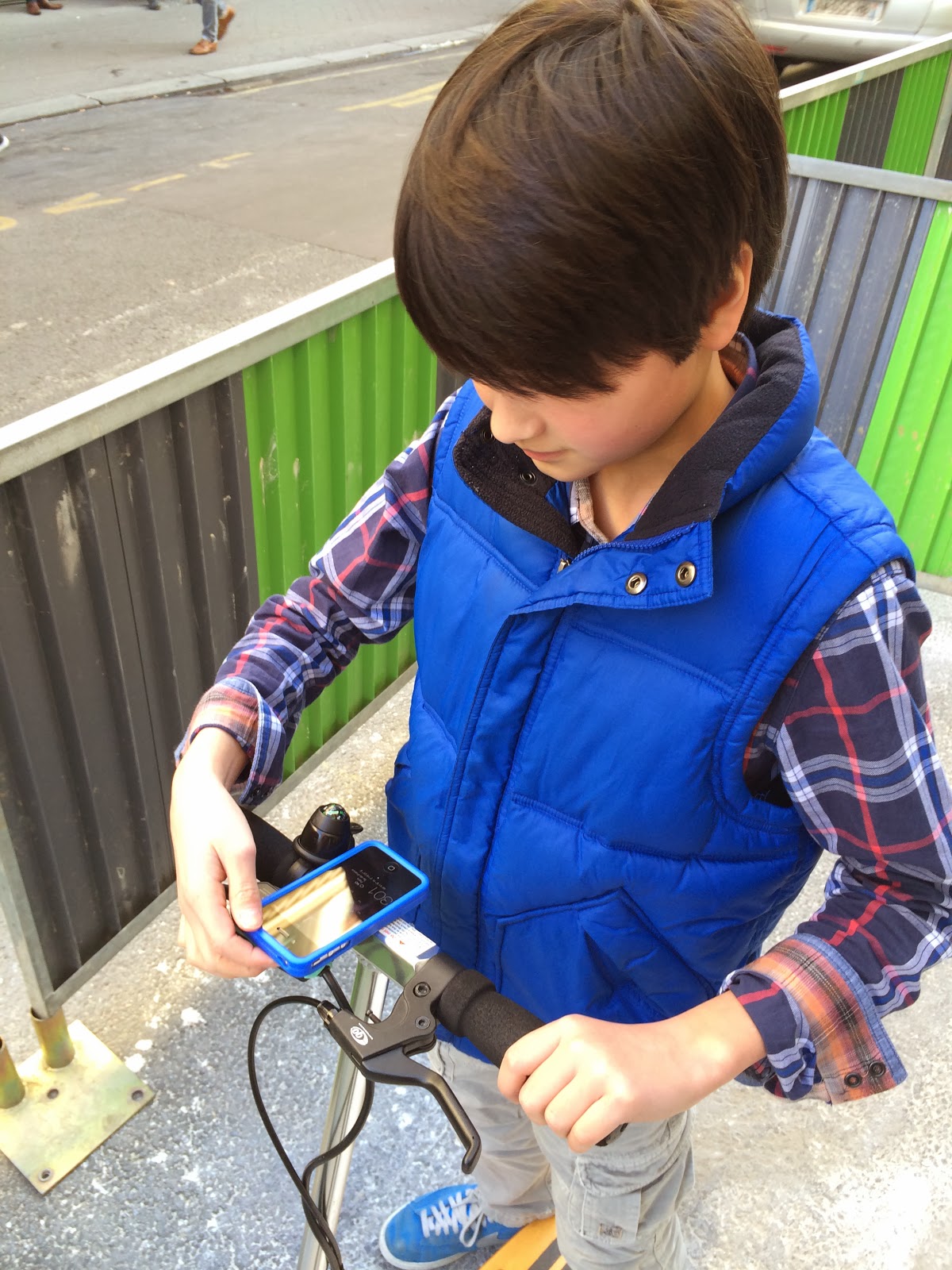
For the first few weeks, I attach a voltmeter to the handle bar to be able to follow voltage while charging, voltage drop while riding, etc
Charging

Riding

City test ride; As soon as the weather allowed it, I went outside for a ride, at night fall I remember, going around the block and more, slowly first, watching the voltage, then faster and fatser and I rediscovered the sensations I had 8 years ago using it with its brand new battery: Power and Torque were back ! that was very cool :)
BTW, so were the cells, very cool, after 20mn ride, no heat at all, simply amazing !

BTW, so were the cells, very cool, after 20mn ride, no heat at all, simply amazing !
The next day, a saturday, my daughter and I rode together - 90kg total -, all the way down to the Boulogne's cityhall, few kilometers, did some testing over there, came back up home, and still had a green light (!!); The new pack has clearly a lot in its guts !

The next day, crusing around Boulogne again, for like 1h 30mn, and still green light, incredible - I really pushed it this time -

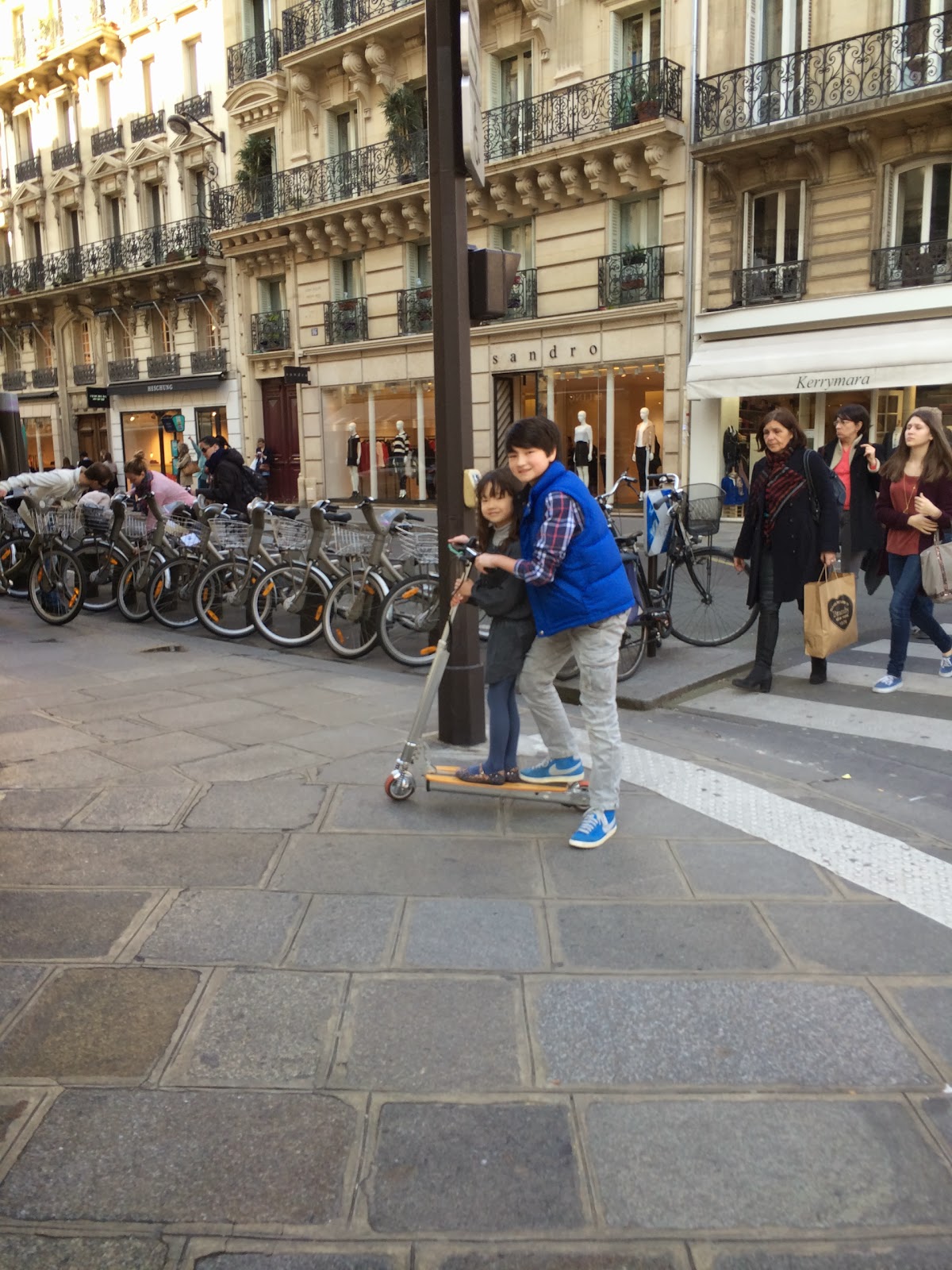
Now we take it every staurday for lunch and afternoon in Paris, and everybody gets to ride it, it's a lot of fun

So now this puppy is back to life, re-born and even better than the original !