Showing posts with label price. Show all posts

Saturday, November 15, 2014

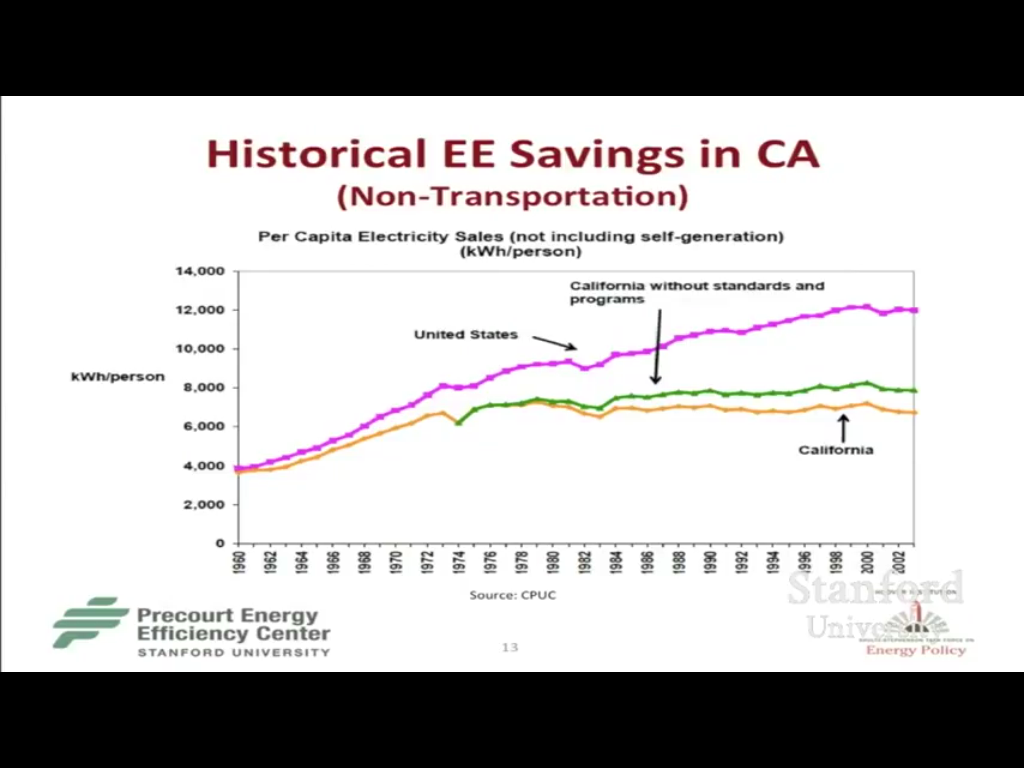
Dian Grueneich | Energy Seminar - Efficiency is Key

Dian Grueneich talks about the importance of Energy Efficiency in a Stanford University Seminar

True, the cheapest and cleanest Energy is the one you do not use ...


Monday, August 26, 2013

Battery storage take 4: Skinny connections to yield fat savings


Last week at Clean Energy Week in Brisbane there were lots of energy storage products on display. Most of them were focused on the emerging “self use” market where householders attempt to maximise the use of their own solar generated energy in preference to buying power from the grid.

Reports from Europe indicate that “Self Use” is really taking off now that feed-in tariffs are being wound back in key solar markets like Germany. Our local solar market is also preparing for the shift in market behaviour and expected surge in the uptake of energy storage systems.

It now appears that these very same energy storage systems may also be the key to managing a new direction in electricity network charges, and it’s not Time of Use tariffs.

In a disappointing move earlier this year the Queensland Competition Authority increased the standing service fee for Queensland’s 12-month-old Time of Use Tariff 12 from $0.78 per day to $1.13 per day, a dramatic 44.8% rise. Anecdotally, few people have signed up for Tariff 12 in its first year and that’s unlikely to change given that the flat rate Tariff 11 continues to have a much lower $0.50 connection per day.

Given the enthusiasm for Time of Use (TOU) tariffs by the electricity utilities in the southern states, Tariff 12 has been seen by many in the Queensland solar industry as the end game for tackling residential peak load. Why then would the Queensland Competition Authority make this new, opt-in TOU tariff so unpopular? It seems that another solution may be waiting in the wings.

It has been highlighted a number of times that in Queensland, due to the flat rate connection fees charged to residential electricity customers, there is a heavy degree of cross-subsidisation by small peak load homes to support high peak load homes. Or in other words if your house doesn’t have an air-conditioner you’re effectively subsidising the connection costs of your neighbour that does.


With utilities like Queensland’s Energex and Ergon building out their networks to cope with peak load events that occur just a few hours per year, everyone pays so that some can enjoy heating and cooling during the coldest and hottest periods. Much political attention has been given to the alleged inequality of solar homes being subsidised by households without solar power systems. This begs the question “what’s being done about the inequality of connection fees for air-conditioning owners?”

Taking a look at how other markets are dealing with peak load can be instructive because the pressures on network costs being felt in Australia are hardly unique. A recent trial conducted by electricity network operator Alliander in the Netherlands limited household grid connections to just six amps – less even than a single lighting circuit from an average Australian home.

To ensure that the participants in the trial didn’t experience a dramatic reduction in their life styles, the utility provided each home with a 5kW PowerRouter solar power / energy storage system from Dutch manufacturer Nedap. This allows the local loads of each house to actually draw up to 25 amps as required without tripping the six amp connection.

PowerRouters are already available in Australia along with other products with similar Self Use capabilities such as the locally manufactured Selectronic SP Pro.


Restricting the size of the network connection into a house delivers a range of clear benefits to utilities in terms of network augmentation and complexity as well as to customers by driving increased energy efficiency. From the utility’s point of view they don’t have to estimate peak load, they just add up the connection sizes for each customer on each suburban transformer.

For consumers, especially small ones, being given the option to pay a network connection that’s just the right size is a great opportunity to save money and stop cross subsidising high electricity users.

Considering the Queensland government’s recent investigation into “Fair and Reasonable” Solar Feed-in Tariffs, it seems like offering customers the chance to pay only for the connection size they need will deliver great social benefits as well.

A further benefit is that inefficient and high draw devices like air-conditioners, electric storage hot water systems and pool pumps will be more closely scrutinised when customers can see the implications to their bills.

Under such a scheme Time of Use tariffs become effectively obsolete and utilities can continue to charge flat rate tariffs, which are far lower risk from a technology point of view.

Combined solar power and energy storage systems offer a clear path forward to make such skinny network connections a reality and deliver savings for both utilities and consumers. These systems produce solar power during the day with excess production “banked” for evening use. The integrated energy storage also acting as a buffer to ensure the network connection is never exceeded.

Advanced capabilities available with these energy management systems also include modern luxuries like customer web portals, household consumption monitoring and daily power production summaries. In the near future it’s expected that utility fleet management will also be rolled out to placate any fears the network operators might have.

Energy management systems featuring solar power and energy storage systems are the future for household electricity and now we just need skinny connections to unleash fat savings for frugal consumers and network operators alike.


Dane Muldoon is commercial sales director of Solar Guys, a Queensland company that installs solar panels and battery storage products.


Source: Renew Economy


Monday, May 13, 2013

SolarCity Sees Energy Storage ‘Viable’ Within 10 Years, CEO Says

SolarCity Corp. (SCTY), the solar power provider led by billionaire Elon Musk, will complete about 100 energy storage systems for customers this year and plans to expand as costs decline, according to its chief executive officer.


“It’ll be a viable product in the next ten years,” SolarCity CEO Lyndon Rive said today in an interview in San Francisco. “We don’t know yet how big the next phase is going to be, but this is a long term investment, full stop,” he said. “We will solve the storage issue.”

The San Mateo, California-based company is installing 8 kilowatt-hour battery packs provided by Tesla Motors Inc. (TSLA) and combining them with energy management systems that allow for remote monitoring. Storage will be crucial to balance the U.S. electric grid as solar expands from 1 percent of total generation capacity today, according to Rive.

“The criticism that solar gets is that it’s intermittent, that you can’t depend on it, but at 1 percent it still doesn’t matter,” Rive said. “Once you get to 20 percent, it starts to matter,” he said.

Rooftop solar systems that SolarCity provides don’t have the same risk of dropping off in large amounts from the grid, though that is an issue with larger utility-scale systems, according to Rive.

“The fear of intermittency actually comes from large central solar,” he said. “We can forecast very accurately what power you’re going to produce based on the weather conditions that we see,” he said.

SolarCity has 395 energy storage “pilots” under contract, according to a filing March 27.

Musk is Tesla’s CEO as well as SolarCity’s chairman and it’s largest shareholder. Rive is his cousin.


Source: Bloomberg

Friday, January 25, 2013

Carlos Ghosn at Detroit NAIAS about the LEAF

Nissan's CEO Carlos Ghosn talks about the LEAF price drop and the production facilities opening in the US and Europe along with customers expectations being taken into account - 2013 Detroit NAIAS


デトロイトで開催された2013年北米国際自動車ショーでゴーン社長はEV販売から経済状況まで、幅広く今年の展望について語りました。

Wednesday, January 23, 2013

Nissan LEAF price dropping to 26kEUR in France

Since january 21st, Nissan has dropped the price of the LEAF in France to 26 kEUR*, that is 3 kEUR less than few days ago. 
This has probably something to do with the UK, Sunderland, new plant which is getting ready to make European LEAFs, with reduced shipping cost and no need to convert Yen into Euros ...


Source: Nissan.fr

*: including government incentive of 7,000 EUR for Electric Vehicles

Thursday, January 17, 2013

Nissan Prices New LEAF S Model At $28,800, Puts Plug-In Competition on Notice

Nissan took a huge leap forward today in pricing the entry level LEAF at $28,800. That is $6,400 cheaper (about 18% less) than the most inexpensive 2012 model on sale today. With the federal incentive applied, you are talking a very enticing $21,300, and as low as $18,800 in California once their state rebate has been discounted.

Truly, being freed of the pressure from importing the car from Japan (and the yen) has meant a much more affordable car for North America.

Both the mid-grade SV and SL also got significantly cheaper at $31,820 and $34,480 respectively. As a refresher, the old SV trim level came in at $35,200, and $37,250 for the SL, a difference of only $2,050.


LEAF S Model ($28,800)
Standard features include a 6-way manual driver’s seat, 4-way manual front passenger’s seat, trip computer (instant and average energy consumption, driving time, outside temperature and autonomy range), Automatic Temperature Control (ATC), center console storage and 3.6 kW onboard charger, a 12-volt power outlet and 16-inch steel wheels with full wheel covers.

LEAF SV Model ($31,820)
The mid-grade trim level adds the Nissan Navigation system we have been used to in the past couple years, (7.0-inch color LCD screen, CARWINGS telematics, 6-speaker audio system), but also adds Pandora® link for iPhone®, 16-inch aluminum-alloy wheels, 6.6 kW onboard charger, hybrid heater system, cruise control, auto-dimming inside mirror, and “B-mode” regenerative braking.

LEAV SL Model ($34,840)
At the top end of the lineup, added features are a (mostly just for show) photovoltaic solar panel spoiler, fog lights, auto on/off headlights, cargo cover, Quick Charge Port, leather seats, LED headlights and 17-inch aluminum-alloy wheels.


Nissan also highlights three option packages.
The Quick Charge Package (S grade only – $1,300) includes the 6.6 kW onboard charger, Quick Charge Port and RearView Monitor.
The LED Headlights + Quick Charge Port Package (SV grade only – $1,630) includes LED headlights, auto on/off headlights, fog lights and Quick Charge Port.
The Premium Package (SV and SL grades – $1,050) offers the advanced Around View® Monitor and Bose® 7-speaker audio.

There is also a $850 destination charge, and Nissan is already promoting a $199 lease deal (which includes the destination).


While this price reduction out paces that of the Japanese-spec model that was released publically a couple months ago (12% less), we have been told to likely not expect a besting of the 14% increase in range announced in Japan (228 km vs 200 km) due to US EPA testing methodology.

Apparently, the US Monroney sticker (EPA) for such data as energy usage and range, either has not yet been finalized, or Nissan is not wanting to drop that information at the this time, but will be released soon according to sources.

To see all the technical specs and a model overview, check out the full recap here. More photos of the 2013 LEAF can be found at the gallery here.


Source: Inside EVs

Monday, August 27, 2012

Vectrix or T-Max ?

I often hear people say that 8,000 EUR for the Vectrix is a very high price ! I am not that sure this is a good point because I see a lot of T-Max around and their price is even higher than this ....

I wanted to write a post about the Vectrix VX1 and the Yamaha T-Max few months ago, as my boss owns one, and we often discuss about our bikes ...
Here are pictures taken in the undergound parking at work as I was parked next to his for once  


This morning as I was parking at work, another T-Max owner came to ask me questions: "Is it electric ? How much time to charge ? Range ?" : all the questions I get all the time

But what surprised me is that, later on, as we were in line for an orange juice and chocolate croissant, we talked a lot more and he was really taken by this all electric change -he was willing to convert to electric scooter !- told me that the price of the T-Max was more than the Vectrix (8,000 EUR here for the NiMH version & 10,000 EUR for the Li-ion one) -I already knew that and that is a point of comparison between the two machines- and that all his gas expenses are becoming crazy (1,5 to 1,70 EUR / liter here !)


We can compare the Vectrix with the T-Max because they are both very powerfull maxi scooters, high-end machines made with quality in mind and using top components, also in the same price range. 
The thing is, once you paid your Vectrix, you do not have to spend anything else than electricity which is 10 times cheaper than gas; You do not have to go to a gas station anymore, to the a garage to have your oil & filter changed, etc; So in the end the Vectrix is a lot cheaper than the T-Max

But for me, the most important is that I do not rely on oil anymore, and I do no pollute, to me this is number one, and number two, I get a lot of pleasure riding this Vectrix, and I am always looking forward to use it ... it has been two years like this :-)

Thursday, June 14, 2012

Answering the 10 biggest objections to electric cars

This list of questions was created and answered by the San Francisco Bay LEAF facebook group members, from an original idea of its owner Gary Lieber


For the next wave of electric car buyers, the early followers who buy because early adopters say it's okay, they have questions and doubts about electric cars that must be satisfied.

If the early adopters of electric cars are quickly being sold their electric car, who will make the next wave of electric car purchases? The early followers, or those who are the most influenced by early adopters to buy electric cars. There is a list of common ideas around electric cars that need to be answered for the early followers to grasp, and see that the water is fine, or that maybe next years models will be good enough for them.

Too expensive: The up-front purchase cost of electric cars is clearly more than for the equivalent gasoline car. There are several counter points to consider. The most clear point is that the operational cost for an electric car is much less than the operational cost for a gas car. Electricity, as a fuel, is much cheaper than gasoline, and electric cars require much less maintenance. There's also an altruistic goal that will appeal to some, that buying an electric car encourages the car companies to manufacture more electric cars, increases electric car production volume, and if enough do so economies of scale should bring down the cost.

Limited range: Today's electric cars offer a 100 mile or so range, and the automotive style to which we've become accustomed is the illusion of infinite range that's available at the corner gas station. Electric cars simply do not provide that experience today, but is that a reason to discount them? First, understand your real driving needs, and choose a car to fit those needs. The majority of people drive 40 miles or less per day, making electric cars quite suitable for most people.

With most electric cars the long road trip isn't practical, so do not drive the electric car on long trips, yet. Most families own two or more cars, and could have one electric car and one gas car they use on long trips. Alternatively, the Chevy Volt is a quite fine plug-in hybrid with a 40 mile or so electric range, and many Volt owners are driving all electric the vast majority of the time, visiting the gasoline station every couple months or so.

Some people honestly do have daily long range drives, for example the sales or service people are out in the field every day all day long.

It takes too long to charge: The key thing to satisfy common longer range driving needs is a robust public charging infrastructure, especially public fast charging stations. Fast charging stations refill the battery pack at the rate of 160 miles per hour of charging (or more), but fast charging stations are only now beginning to be installed in the public in Chicago, the SF Bay Area, and other parts of California. Unfortunately there is a political battle brewing around fast charging standards, that could delay deployment of fast charging stations.

Currently charging stations (fast or not) are being built in urban areas. This is a necessary phase that will make each city a comfortable place to drive an electric car. The next phase will be fast charging stations along the highways between major metropolitan areas, to support long range trips.

Also consider the charging rate of the built-in charger on the car. Some have 3.3 kilowatt chargers on-board, which just is not a very fast charge rate (12 miles per hour of charging). Some electric cars, especially in the 2013 model year, have 6.6 kilowatt chargers, which give 25ish miles of range per hour of charging. The J1772 connector is designed to accommodate a 19.2 kilowatt charging rate, and if that is ever fully exploited would place the charging rate at the low end of the fast charging protocols.

The key point to understand is that the faster the charging rate, the more flexibly you can drive your electric car, and the farther you can drive in a day.

Where to charge? Can't charge at home or work? If the solution for limited range is a public charging infrastructure, its necessary to know where that infrastructure is. It's not like the infrastructure is as ubiquitous as gasoline stations. Fortunately we're not stuck blindly driving around hoping to accidentally bump into a charging station. There are a range of smart phone applications like Recargo, or PlugShare, or CarStations, (or Chargemap in Europe) and the like which displays charging station information on a browseable map. Additionally the electric cars tend to have in-dash infotainment systems that include a browseable map of nearby stations.

Some will be unable to install a charging station at their home, or their employers aren't enlightened enough to install charging stations at the office. Those are expected to be the two most common places to charge an electric car, at home or the office. Employers could take an attitude that providing electric car charging facilities is a "perk" that is unfair to the employees who do not own electric cars. While this has some validity, the ChargePoint network (Coulomb Technologies) gives an employer the ability to pass along the costs to the employees who use the charging stations.

The inability to install a station at home is a little more intractable. Some electric car owners skip installing an official charging station at home, and instead use the 120 volt charger supplied with the car. A knotty problem policy makers are working on today is those who live in "multi family dwellings" (condominiums, townhouses, apartments) because it is up to the landlord or home owners association. Landlords and HOA's can be difficult to convince to provide charging stations.

You mean I need to spend $2000 or more on a charging dock? The retail price for charging stations is $800 or more, and in most cases must be installed by a certified electrician, and maybe go through curious legal hoops like permits from the city. One hopes the cost for home charging stations will drop over time. In the mean time, some are getting along well enough with the 120 volt charger that comes with the car.

Current gas car works, don't need a new car: Each person has their own schedule for buying and replacing cars. It's a valid consideration to make, because the car you already own has an embedded energy cost and buying a new car carries with it a new embedded energy cost burden. In the bigger scheme of things, there is a huge environmental and economic benefit if you can make your car purchase last for as many years as possible.

Are you real anxious and excited to own an electric car? Go for it. Are you content to wait until you would normally replace your car? That's a perfectly valid choice as well.

How long do batteries last? Aren't they expensive to replace? Non-recyclable? Toxic side effects? The electric car manufacturers give extra long warranties on the battery pack, 8 and sometimes 10 years. Essentially that's a bet by the manufacturer that the battery pack will last the lifetime of the car. At today's prices battery packs are expensive, but the history of battery packs is every year they get a little cheaper, and can pack a little more energy. Every so often there are dramatic jumps where the cost is dramatically less, and the battery carries dramatically more energy.

It's thought that lithium ion battery packs are extremely recyclable, but that there haven't yet been enough sold to warrant building an industry of recycling factories. In a few years as the current wave of electric vehicle's begin to wear out, there will be a large enough stock of electric cars heading to car recycling yards to warrant building recycling factories.

The chemicals going into lithium ion battery packs are generally clean, however there are some toxic chemicals used in some processes. One of these is n-methyl pyrollidone (NMP) which was only recently identified as a reproductive toxicant, that is absorbed through skin and air. It is used in some steps of lithium ion battery production, as well as other industrial processes, and removed by the time a lithium ion battery pack is manufactured into a car. Governments are increasing regulatory scrutiny of NMP. Some battery makers, like Electrovaya, have other processes that do not require NMP.

Don't like change: Our society has 100+ years of history of using gasoline powered cars, meaning that it will not be simple to switch away from the gasoline station traditions to new ones. At the same time humans are resilient, and can change, if they see the need or ability to do so. In a year or two we should expect it to be easier to switch, as the purchase price drops, the range increases, and there is a better charging station infrastructure.

As the Buddha taught a few thousands of years ago, the only constant thing in the universe is that everything changes, and nothing is permanent. Our society changed from horse and buggy to internal combustion cars, our society can change again.

My Comments are written in italic
Source: Torque News

All LiFePO4 Batteries in one spreadsheet

If you want to be able to compare all LiFePO4 batteries available now (SINOPOLY, WINSTON, THUNDER SKY, CALB, GBS, HEADWAY, A123, TURNIGY), here s a great source of information on them:


Source: The Electric Chronicles (a great blog) 

Wednesday, March 14, 2012

All time high record for a liter of gas in Paris today : 2 Euros !!

I just saw this in the news during lunch:
The price for a Liter of gasoline has reached 2.02 EUR this morning in Paris
With this kind of prices, I guess people are going to look at EVs in a different way, considering that the price of electricity is really going to make them save a lot of money ...

Please Share this Post if you Liked it !

Please Share this Post if you Liked it ! Thanks !
Related Posts Plugin for WordPress, Blogger...