Showing posts with label light. Show all posts

Thursday, May 1, 2014

DIY Solar Backup In Action During Storm / Tornado

This American guy I have been following on Youtube for years about his DIY Solar Battery Storage is using it these last days because of the general power outage caused by a tornado in Northern Alabama.

This is real and happening now like he says !

"Video showing how I power up the house during a severe storm that knocked out power in northern Alabama due to Tornado's etc"


Part 2: Now he can follow the news forecast on TV


Sunday, January 12, 2014

Another Wattson purchased in the UK just arrived


I know, again, but you will soon see why I get so many ...


Royal Mail small parcel for 7,85 £ to go across the channel


Cat food cardboard box, the right size


Two Sensor Clips or CT, the previous owner must have had solar (or wind) installed

Paired and running right away ... it found friends here :-)

ESS is on, blue ambiance lights ....

Sunday, December 1, 2013

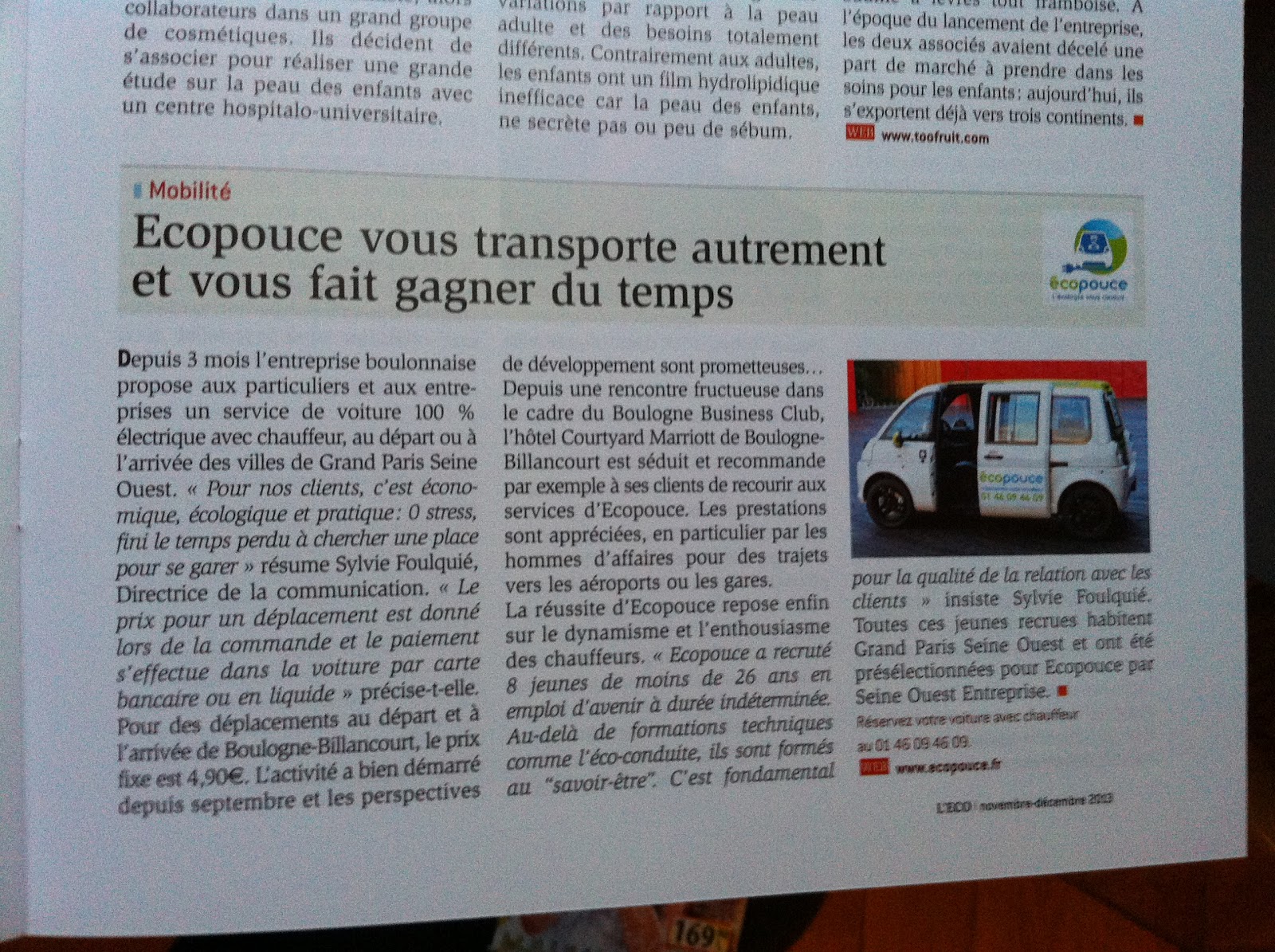
Ecopouce - Electric Transport with the Mia

Seen this week in the local newspaper, Ecopouce - you could translate by Eco Thumb - is a new small company providing local transportation using 8 Mia Electric small cars

A fixed rate of 4.90 EUR within the city of Boulogne, and 1 EUR / minute to go to any city touching Boulogne: Paris, Saint Cloud, Sèvres, Meudon, Neuilly, Suresnes, Issy Les Moulineaux


Good luck to this new fully Electric Transport Company !

2 thumbs up for this Green initiative !


LED Street Lighting the new challenge to old utility business models

LEDS, COMING TO A STREET NEAR YOU


A lot is being said about various threats to the electric utility business model. At their root, many of those threats are really a fundamental misalignment between utilities’ revenue model and their customers’ own financial needs and service preferences. More often than not, solar PV figures centrally in these conversations. But a new and unexpected threat is emerging: street lights.

For any level of government responsible for managing roadways, street lighting is a critical service. Among other services, effective and targeted lighting on roadways can dramatically improve auto and pedestrian safety.

Now, emerging technologies such as energy-efficient LED lighting are creating a dramatic opportunity for consumer-side cost savings, as well as the potential for a much broader suite of municipal services via LED-integrated smart sensors, and with it the possibility for upending a staid and overlooked component of the traditional utility service offering. Clearly, these are not your grandfather’s street lights.

In some cities, the municipality owns the streetlights and pays the utility for the energy those lights use. But in most cities around the country, the local electric distribution company provides overhead street lighting as a basic service at a flat monthly rate per light, which includes the light itself, maintenance, and electricity. Therein lies the rub—regulated utilities often have little incentive to invest in more efficient streetlights, which offer a reliable, consistent, and often lucrative revenue stream that comes at a time of day (or night) when demand is low.

Despite a seeming incentive for utilities to invest in efficiency and thus increase the profit margin between the flat monthly rate they charge municipalities and the kilowatt-hours that are bundled in that rate, installing a more efficient street lighting system typically requires approval from the state PUC, including tariff updates to reflect the new costs—a process that would erode any cost savings the utility would hope to capture.

Yet efficient streetlights could save cities and towns tons of money if these municipalities were able to capture all the inherent savings in energy and maintenance promised by the new technology. In fact, street lighting often represents the highest single energy-related expense in municipalities’ annual budget, often running into the millions of tax dollars per year.

As public revenue streams constrict in the wake of the economic recession, governments are exploring new public-private partnership models such as performance contracting and privatization to try to drive down lighting costs where the city owns the system, and are leveraging regulatory agencies to allow public buy-outs of utility-owned systems. A 2008 study by the New York State Comptroller’s Office showed that the town of Union, NY, was able to capture savings of approximately 40 percent, or $13.1 million, over the term of a 20-year bond used to buy out the street lighting system from the local utility.

LEDS, COMING TO A STREET NEAR YOU

With semiconductor-based, solid-state LED lighting, the tension between utilities and municipalities is likely to grow. LEDs offer a host of benefits: a higher-quality available light spectrum, a more narrowly directed light beam, the ability to dim to match ambient light conditions and needs (thus helping to reduce light pollution), and the fact that bugs are not attracted to LED lights as they are to the ultraviolet light cast from conventional street lights. In addition, there are significant economic benefits, including drastic efficiency improvements, much longer lifetimes with minimal maintenance requirements, and resilience to petty vandalism.

Cities everywhere are beginning the conversion to LED street lighting and reaping the economic rewards. For example, 40 percent of streetlights in Boston were converted by the end of 2012, saving the city $2.8 million annually in electricity costs alone. Including reduced maintenance costs and other savings, Boston expects a payback period of only two to three years (sooner if rebates from its local utility are factored in). Los Angeles likewise recently completed a transition of 141,000 streetlights, the largest single conversion project in the U.S. The city expects to save $7 million in electricity savings and $2.5 million in avoided maintenance costs per year. The $57 million dollar project was funded in part through a loan from the Los Angeles Department of Water and Power, which will be paid back over seven years out of electricity and maintenance cost savings. The State of Vermont providesanother example, where a partnership between electric utilities, the state’s “efficiency utility” Efficiency Vermont, and municipalities has resulted in revised utility rate structures and capital investments that will provide 8,000 MWh of energy savings.

More pressure to convert is being applied on the federal level in the wake of a U.S. Department of Energy study that found a hypothetical full conversion of existing U.S. street lighting LEDs could reduce nationwide energy demand by 8.1 Terawatt-hours—or 50 to 70 percent below the study’s base case of high pressure sodium bulbs and saving 5.7 million metric tons of annual CO2 emissions. Utilities, long incentivized by business models and rate structures that promote selling more kilowatt-hours, are less than lukewarm about this prospect.
ONLY THE TIP OF THE ICEBERG

Yet LED lighting’s energy efficiency and other benefits are only the tip of the iceberg. When married with other electronic communication devices, sensors, and software intelligence—all built upon the underlying semiconductor technology—LED streetlights could become sophisticated nodes on a potentially ubiquitous digital network (located on every street in every municipality, and on highways between cities), capable of sensing their own activities and the environment around them, and controlling their own operation and other infrastructure nearby.

Imagine: all those thousands of poles evenly spaced on nearly every street in your town, and along highways connecting you with other towns, could be not only sources of light, but interactive data nodes with the ability to provide real-time information back to city hall and emergency responders, as well as services to local residents. “Smart” street lights could monitor traffic flow, remotely get brighter or dimmer in support of first responders during an emergency, read utility meters from nearby houses, serve as Wi-Fi hot spots, and more.

If all this sounds a little futuristic, consider that the U.S. may already be late coming to the game. Last month, smart grid technology firm Silver Spring Networks and French lighting company Citelum announced a project in Copenhagen to convert 20,000 streetlights to LEDs, while also building a networked platform for other services, which may include wireless service, traffic signal controls, automated parking meters, and other “smart city” services.

Meanwhile, Christchurch, New Zealand, which suffered a devastating earthquake that leveled its downtown, is leveraging 12 percent of the $30 billion reconstruction fund—in partnership with MIT and prominent technology and analytic software companies—toward the establishment of a network of sensors and smart technology (some atop streetlights, others buried underground) that will monitor air quality, seismic activity, transit flow, pedestrian flow, and building efficiency.
A BUSINESS MODEL BETTER SUITED TO SILICON VALLEY?

With all these savings and opportunities, why has conversion to LED street lighting not taken place faster? The initial capital cost of LED fixtures is one reason. LEDs can cost several times that of traditional bulb technology, though prices are dropping rapidly with continuing strides in the efficiency of the LEDs themselves, better manufacturing techniques, and increased competition. For example, the City of Asheville, NC, completed the third phase of a three-year conversion of 8,000 streetlights in 2013. Between phases 1 and 3, the cost of their most expensive LED fixtures dropped from $765 to $472.

But even considering the plummeting cost, a full change-out of a streetlight system demands a substantial capital investment for either a utility or a community. Plus, with this technology advancing so rapidly, communities are potentially faced with making a 20-year investment in electronics that could be comparatively obsolete within 5 years.

These are timetables far more familiar to IT companies and Silicon Valley than to utilities. What was once a static service with slowly changing technology is rapidly adjusting to the hyperactive world of silicon-based electronics. Communities are seeing the benefits, while technology and lighting companies are experimenting with new business models, performance contracting, and lease arrangements.

This all raises a fundamental question: Why should this service continue to be included in the package of regulated services provided by the electric utility?

One disruptive scenario might see street lighting disappear entirely from the set of electricity services provided by the utilities. Municipalities might take lighting on themselves. Or, more likely, telecom or technology companies could move into this once sleepy market, just as Silver Spring has done in Copenhagen. For example, it is not difficult to imagine Google making the leap from running fiber throughout cities to connecting sensors and control technology with that network … and providing street lighting as they go. Or Cisco, which owns most of the patents for IP telephony, could decide to make a run at the mobile phone market with a fine-grain Wi-Fi network built into what were previously only lights on a pole. Under these scenarios, utilities would lose a reliable, likely high-margin business segment—potentially leading to a new slate of rate cases as they are forced to balance lost revenues across other customer segments.

Alternatively, the future might not be so disruptive for utilities if street lighting became an unregulated profit center, as has occurred in the State of Georgia. In that case, the utilities need only pivot to develop their expertise and partner with other companies to build and maintain networks of these devices on their existing pole infrastructure. This can open new unregulated revenue streams for both the utility and for municipalities from third-party users, expand municipal services available to citizens, improve lighting, and, with it, safety and aesthetics. All of this can exist in a competitive environment that does not restrict profitability, but still assures the lowest cost to the consumer and provides an incentive for continuous innovation.

Whatever the ownership model, a first step is to better align incentives around energy efficiency and electricity providers’ cost recovery mechanisms. That has been the lesson from Vermont, and strong efficiency mandates in Massachusetts have likewise supported the major LED rollout in Boston. In places where electricity is provided by a municipal utility such as Los Angeles, these incentives are already well aligned and change is taking place. It remains to be seen, however, if these cost- and efficiency-driven programs are also positioned to make the leap to the more expansive service potential that LED technology enables.

It may be too early to know what this will represent for the utilities, but it’s certain that there is plenty of pressure from all levels of government and from technology companies to drive change sooner than later. With every passing year, the technology improves, costs go down, and potential savings grow. The question then becomes, who is best positioned to seize this opportunity?

Guest co-author Dan Howe is the assistant city manager for the City of Raleigh, NC, and a member of RMI’s eLab.


Source: Renew Economy

Friday, September 6, 2013

e-Solex will be Made in France again soon

It was in the news yesterday, EasyBike Group, the company who took over the e-Solex brand name, after the maker of the e-Solex designed by Pininfarina back in 2006, will be manufacturing them in France, relocalising the production after Italy and China.

It is a good sign and I am happy that this cool little Electric Scooter will still be available; I rode two of them to commute and go to Paris on week ends for more than two years, but had to sell them last year; They were great in the city !


e-Solex current version PDF


Industry Minister Arnaud Montebourg visited their new office in Aubervilliers, close to Paris, and got to ride one of their Electric Bikes along with EasyBike Group CEO Grégory Trebaol, surrounded by journalists


A 2006 video presenting the e-Solex


More on the e-Solex website here

Tuesday, April 2, 2013

GO Motorboard 2000X - A Great Electric Scooter

I started using EVs with this great Go Motorboard scooter back in 2007, and it is still the best nowadays ...
It looks great, strong built, has very good acceleration, and folds up in 2s

Here my kids are using it, my song riding with his sister, like I used to years ago with him in front

They just love it :-)


Friday, January 11, 2013

Scientists Mimic Fireflies to Make Brighter LEDs


Optics Express papers detail new bio-inspired coating that increases LED efficiency by 55 percent


The nighttime twinkling of fireflies has inspired scientists to modify a light-emitting diode (LED) so it is more than one and a half times as efficient as the original. Researchers from Belgium, France, and Canada studied the internal structure of firefly lanterns, the organs on the bioluminescent insects’ abdomens that flash to attract mates. The scientists identified an unexpected pattern of jagged scales that enhanced the lanterns’ glow, and applied that knowledge to LED design to create an LED overlayer that mimicked the natural structure. The overlayer, which increased LED light extraction by up to 55 percent, could be easily tailored to existing diode designs to help humans light up the night while using less energy. The work is published in a pair of papers today in the Optical Society’s (OSA) open-access journal Optics Express.

“The most important aspect of this work is that it shows how much we can learn by carefully observing nature,” says Annick Bay, a Ph.D. student at the University of Namur in Belgium who studies natural photonic structures, including beetle scales and butterfly wings. When her advisor, Jean Pol Vigneron, visited Central America to conduct field work on the Panamanian tortoise beetle (Charidotella egregia), he also noticed clouds of twinkling fireflies and brought some specimens back to the lab to examine in more detail.


Fireflies create light through a chemical reaction that takes place in specialized cells called photocytes. The light is emitted through a part of the insect’s exoskeleton called the cuticle. Light travels through the cuticle more slowly than it travels through air, and the mismatch means a proportion of the light is reflected back into the lantern, dimming the glow. The unique surface geometry of some fireflies’ cuticles, however, can help minimize internal reflections, meaning more light escapes to reachthe eyes of potential firefly suitors.

In Optics Express papers, Bay, Vigneron, and colleagues first describe the intricate structures they saw when they examined firefly lanterns and then present how the same features could enhance LED design. Using scanning electron microscopes, the researchers identified structures such as nanoscale ribs and larger, misfit scales, on the fireflies’ cuticles. When the researchers used computer simulations to model how the structures affected light transmission they found that the sharp edges of the jagged, misfit scales let out the most light. The finding was confirmed experimentally when the researchers observed the edges glowing the brightest when the cuticle was illuminated from below.


“We refer to the edge structures as having a factory roof shape,” says Bay. “The tips of the scales protrude and have a tilted slope, like a factory roof.” The protrusions repeat approximately every 10 micrometers, with a height of approximately 3 micrometers. “In the beginning we thought smaller nanoscale structures would be most important, but surprisingly in the end we found the structure that was the most effective in improving light extraction was this big-scale structure,” says Bay.

Human-made light-emitting devices like LEDs face the same internal reflection problems as fireflies’ lanterns and Bay and her colleagues thought a factory roof-shaped coating could make LEDs brighter. In the second Optics Express paper published today, which is included in the Energy Express section of the journal, the researchers describe the method they used to create a jagged overlayer on top of a standard gallium nitride LED. Nicolas André, a postdoctoral researcher at the University of Sherbrooke in Canada, deposited a layer of light-sensitive material on top of the LEDs and then exposed sections with a laser to create the triangular factory-roof profile. Since the LEDs were made from a material that slowed light even more than the fireflies’ cuticle, the scientists adjusted the dimensions of the protrusions to a height and width of 5 micrometers to maximize the light extraction.


“What’s nice about our technique is that it’s an easy process and we don’t have to create new LEDs,” says Bay. “With a few more steps we can coat and laser pattern an existing LED.”


Other research groups have studied the photonic structures in firefly lanterns as well, and have even mimicked some of the structures to enhance light extraction in LEDs, but their work focused on nanoscale features. The Belgium-led team is the first to identify micrometer-scale photonic features, which are larger than the wavelength of visible light, but which surprisingly improved light extraction better than the smaller nanoscale features. The factory roof coating that the researchers tested increased light extraction by more than 50 percent, a significantly higher percentage than other biomimicry approaches have achieved to date. The researchers speculate that, with achievable modifications to current manufacturing techniques, it should be possible to apply these novel design enhancements to current LED production within the next few years.

The firefly specimens that served as the inspiration for the effective new LED coating came from the genus Photuris, which is commonly found in Latin America and the United States. Bay says she has also examined the lanterns of a particularly hardy species of firefly found on the Caribbean island of Guadeloupe that did not have the factory roof structure on the outer layer. She notes that she and her colleagues will continue to explore the great diversity of the natural world, searching for new sources of knowledge and inspiration. “The Photurisfireflies are very effective light emitters, but I am quite sure that there are other species that are even more effective,” says Bay. “This work is not over.”

Source: Business Wire & Green Building Elements


Coulomb Technologies and DBT - Joint Offering


When the two biggest players in the electric vehicle, EV charging station industry start working together, everyone listens. Find out what the potential of this means for EV owners.


ChargePoint, part of Coulomb Technologies and DBT are the two biggest players when it comes to charging stations in the EV and plug-in hybrid, PHEV field. Pike Research has already pitted these two manufacturers as top leaders of the EV charging stations heap. This is big news that will probably go unnoticed for some time but guess what happens when the two biggest players join hands? I’ll let you speculate.

Joint Offering, A Prelude To More? OK, this is only a joint offering but it could lead to the two companies working closer and closer together, thus pulling their weight to define the entire charging stations field. Announced at the Consumer Electronics Show in Las Vegas, DBT USA revealed its North American level II charging stations will have the option to connect to ChargePoint. Why is this important news? We’ve speculate for sometime that Coulomb Technologies, and its ChargePoint entity that describes itself as the largest global EV charging network has been moving more away from manufacturing charging stations toward managing energy. This would be another step in that direction.


Coulomb Technologies Charging Stations

ChargePoint & DBT in Numbers. How big are they? With over 10,000 units in 30 countries, ChargePoint’s number will be revealed soon but suffice it to say, its network is already present with independently owned stations in over 14 countries.

We all know what happens when two giants hold hands down the road, either a consolidation or a strategic partnership that usually defines the landscape of an industry. Think of the early computer days when Microsoft swallowed up local software makers and eventually pulled its portfolio together to offer an office suite called Microsoft Office. Those old enough will remember the problems converging Word Perfect documents, a better word processor to Microsoft’s obscure and anti-competitive behavior.


DBT Charging Station (Paris)

Will the electric vehicle, plug-in hybrid and in general alternative energy vehicle industry go through a round of consolidations, buy-outs and anti-competitive practices? It might be too early to tell but if the past and recent history are anything to gauge from, it could certainly happen. Fortunately, we are nowhere near that point in time and can hopefully learn from our past mistakes and avoid future market share stranglehold.

Will have to wait and see how the competition reacts to this news and how it will effect their products. In the meantime, DBT and ChargePoint cooperating is a healthy sign that the EV and PHEV industry is coming along nicely, building up its resources and starting strategic partnerships.


Source: Torque News

Wednesday, January 2, 2013

EVTV Friday Show - December 21, 2012

- Introducing Porsche 356 Wide Body replica - Speedster Lite with carbon fiber body, rack and pinion steering and IRS rear suspension
- CANbus fundamentals


Hybrid-Electric hunting all road vehicle


Richard  picks up another Porsche Replica chassis


and brings it back to Cape Girardeau


And a new Porsche Speedster project starts ... Speedster Lite because it is the lightest chassis Jack ever had


Stop & Start is an old technology that was already present in this SAAB before it got converted to electric drive by Eric Kriss


Some news


CANbus lesson by Jack, very interesting as usual


Please Share this Post if you Liked it !

Please Share this Post if you Liked it ! Thanks !
Related Posts Plugin for WordPress, Blogger...