Showing posts with label sunroof. Show all posts

Friday, October 4, 2013

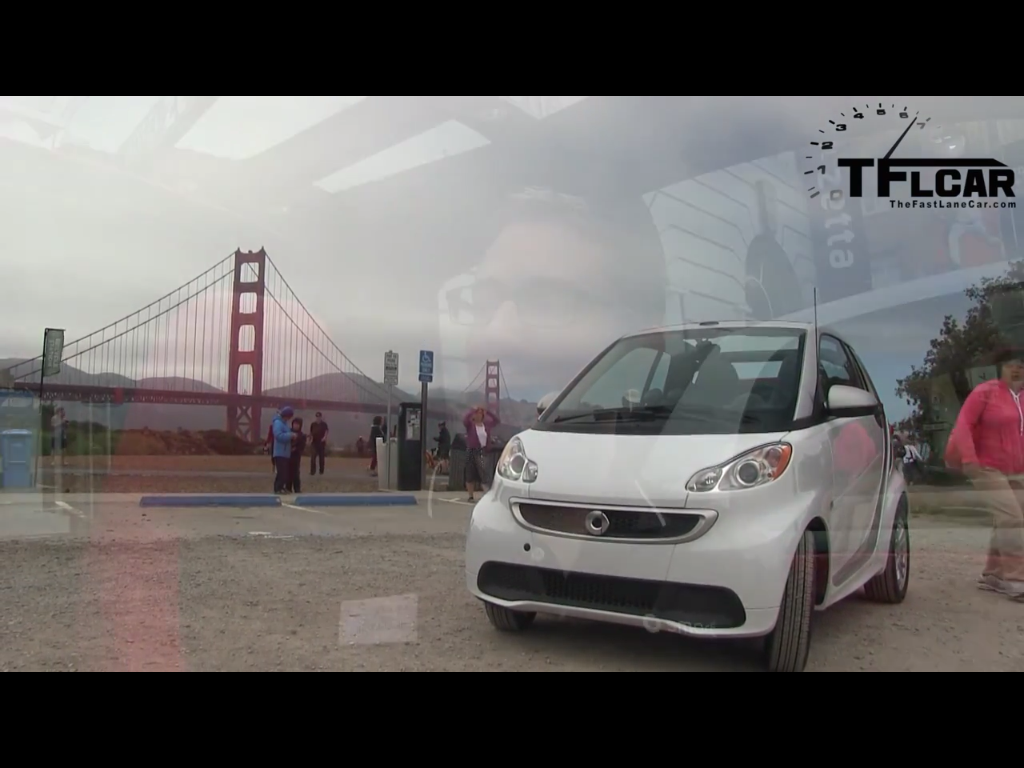
Take the 2013 Smart Electric Drive for a spin through San Francisco

This reminds me of the years I spent in San Francisco ...


"The 2013 Smart Fortwo Electric Drive is the least expensive all electric car that you can purchase in the United States. The previous generation of the tiny city car EV was only available for lease at $599.00 per month. Needless to say Smart lease only 250 total Smart EVs in the United States. Today you can lease the new 2013 Smart Fortwo Elecric Drive for just $139 per month. In another fun and informative TFLcar video we tell you every thing that you ever wanted to know about the new 2013 Smart Fortwo Electric Drive."


Downtown SF

Golden Gate Bridge

Lombard Street


Russian Hill

Marina / Crissy Field

Park Presidio

Monday, August 12, 2013

Energy Storage: Rural Electrification’s Backup


"Energy storage represents a key element to ensure the proper functioning of any system and will contribute to the positive development of the entire industry."


The Alliance for Rural Electrification (ARE)’s objective is to stimulate economic development through the promotion of off-grid renewable energy technologies for rural electrification in developing countries and emerging markets. While often grid extension is not a feasible option, decentralized solutions are often the better alternative to alleviate energy poverty: they are cost-effective over the system’s lifetime, easy-to-deploy, install and maintain and their design can be tailored to demand needs. Plus, these regions offer abundant renewable energy resources.


Despite the solid arguments to support off-grid renewables as the best solution for remote areas, there is still one open question: What happens with the electricity service when the sun stops shining or the wind doesn't blow? No doubt this is a relevant issue which may prevent local energy decision makers from including renewable energy sources in their rural electrification plans. Fortunately, present markets offer technologies that enable storing energy for its use at a later time. Many of these solutions have reached maturity and therefore are being increasingly used to improve efficiency, reliability and price-competitiveness of electricity services as well as to achieve deeper penetration of renewable energy systems.

Energy storage technologies can be applied twofold: First for off-grid systems installed in rural areas, and second for decentralized grid backup in peri-urban areas that remain under-electrified.

To ease the path to these solutions, ARE has launched the six-month “Energy Storage Campaign.” This initiative aims to inform decision makers in Africa, Asia and Latin America about the added value that energy storage offers to rural areas.

It’s All Happening

The success of the campaign has been built upon the expertise of a group of rural electrification experts. These nine members of the Alliance based in three different continents and with a wide experience on the topic have formed the ARE Energy Storage Task Force with the objective of shaping this initiative and to find answers to ‘What really matters!’

As a result, the ARE Secretariat jointly with the Energy Storage Task Force has developed the position paper Using batteries to ensure clean, reliable and affordable universal electricity access. This guide paper includes information and recommendations for decision makers, applications of the different types of battery technologies, as well as successful case studies from India, Bangladesh, Jordan, Peru and Mozambique. The position paper has a focus on electromechanical energy storage, in particular on four different families of batteries, as they remain the main technology applied to off-grid.


Energy storage represents a key element to ensure the proper functioning of any system and will contribute to the positive development of the entire industry:
Batteries will improve the system’s performance and lead to economic savings over its lifetime and thereby lower operational costs if properly designed and maintained. In this regard, it is of utmost importance to use certified equipment and observe international standards while designing, installing and operating the system in order to ensure its longevity.
The stand-by battery market is expanding rapidly in developing and emerging markets, which represent important growth niches for the sector. The increasing demand of batteries can facilitate deeper penetration of intermittent renewables in these regions. For example, whereas Africa represented the smallest market for European stand-by battery systems (2V cells and mono blocks) in 2011 with 3.5 percent of total sales, it was the region in the world which enjoyed by far the highest growth rates with an increase of 25 percent compared to the year before.
Batteries play two major roles in terms of energy management. Short-term: The battery regulates the system by absorbing or supplying power to maintain a balance between instantaneous power production and consumption. Long-term: Allows storing electricity at a period of peak production, thus avoiding wastage of energy at times when it is not required and supplying energy when intermittent primary energy resources are unavailable.
The remote areas where off-grid renewable energies operate are vast and diverse. Thanks to the existence of different chemical battery families, each of them with its own specific features, storage systems can be designed to play a wide range of roles perfectly fitting local conditions.


Not without the Public Sector

Energy storage applied to rural electrification is attracting a lot of attention these days. However, these are still young markets which need more explanation and promotion. The support from public authorities, particularly regulators, as well as power sector technical bodies -such as rural electrification agencies and public utilities-would certainly help stimulate more investments in the market. To enhance developments, ARE has formulated the following recommendations for decision makers:
Developing and enforcing a well fitted regulatory framework is critical to ensure the market’s sustainable development and consumer’s trust.
A well tailored framework should be complemented via awareness creation campaigns and technical assistance to the operations sector (manufacturers, installers, operators, recyclers).
Establishing policy targets for batteries, as it is done for renewable energies, could help stimulate the sector’s development.
The achievement of these targets should be stimulated with the establishment of specific support schemes and assistance to the financing sector.

Learning from the Past to Improve the Future

The kick-off of the “Energy Storage Campaign” was held at Intersolar Europe in June 2013, where ARE celebrated a successful workshop as official side event of the conference. Further promotion activities will include several webinars in collaboration with international organisations such as the United Nations Foundation Energy Access Practitioner Network, the creation of new papers on other storage technologies, as well as other workshops in international events, among others.

Thanks to the experience gained with the “Small Wind Campaign”, the expertise of the Energy Storage Task Force and the support of the industry, ARE expects to facilitate business dialogue between private and public sector on the advantages of energy storage.

This is not the first time ARE has launched such a campaign. Last year the focus was small wind power, and now it is the turn of energy storage, a technology that undoubtedly will make a difference in the long way towards achieving universal access to reliable and sustainable electricity in remote areas.


Source: Renewable Energy World


Sunday, August 4, 2013

New Solar Homes: Japanese Homebuilders Helping the Fight for Energy Independence


One of the striking differences between the U.S. and Japanese solar PV markets is the number of new solar homes. In Japan, homebuilders promote “smart homes” to differentiate their products and appeal to new homebuyers who are conscious about saving energy amidst rising electricity costs.

In Japan, the new PV home market represented 30 percent of the total residential PV market in 2012 or over 370 MW of PV installation. In California this market accounted for 13 percent of the total residential PV market during the same period.

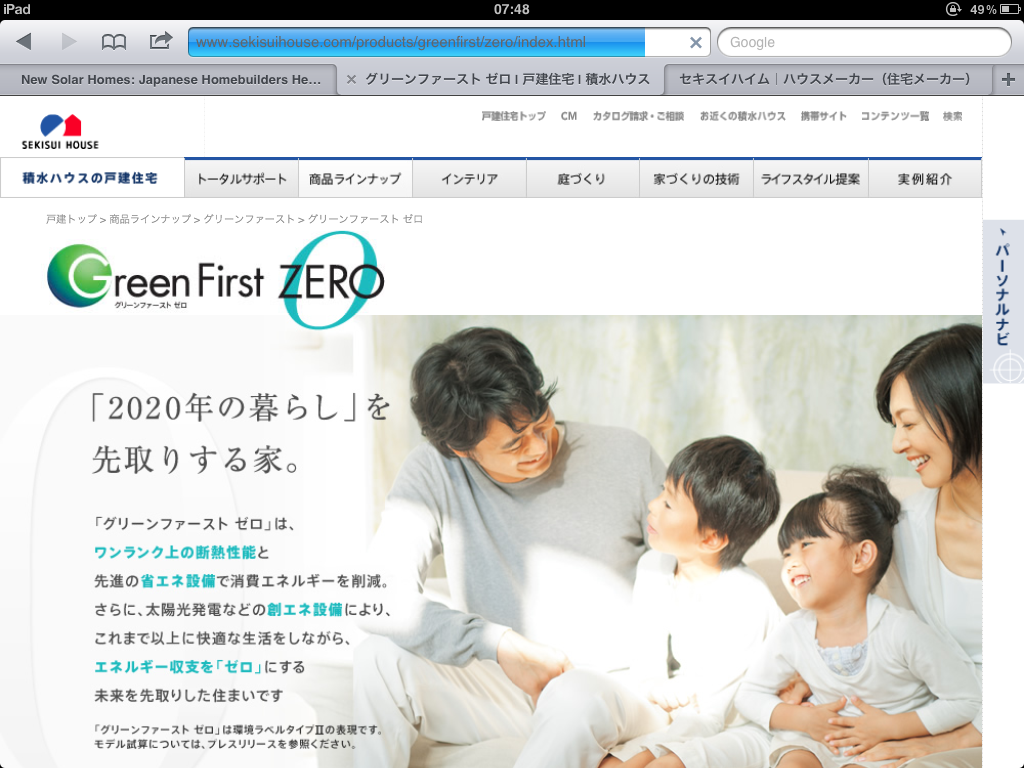
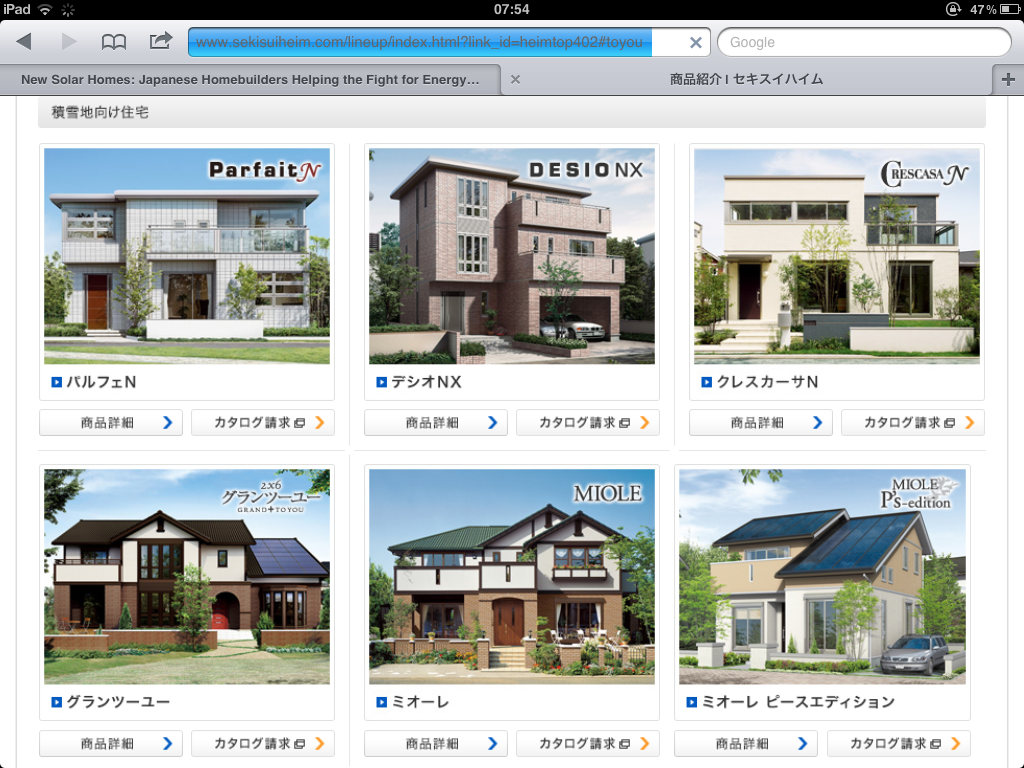
In California under the New Solar Home Partnership (NSHP), which provides incentives to home builders, there has been a little over 8,000 new solar homes built and rebated between 2007 and June 2013. This program has a goal to place solar energy systems on 50 percent of new homes by the end of 2016. Comparatively, according to the Japan Prefabricated Construction Association, 58.4 percent of detached, prefabricated homes built by 10 leading manufacturers during 2011 were sold with PV. The Association is planning to boost this number to 80 percent by 2020. Key solar homebuilders include Sekisui House, Sekisui Heim, Daiwa House and Misawa Home.


Sekisui Heim, a housing business unit of Sekisui Chemical, holds a Guinness World Record for “the most solar powered houses built.” The company has built and sold over 100,000 PV new homes between 1997 and 2011 while Lennar, which claims to be the America’s No. 1 solar homebuilder, has sold less than 2,000 solar home since 2006.

On an annual basis, Sekisui Heim sold over 9,000 PV new homes in Japan in 2012. Better yet, Sekisui House, Japan's biggest homebuilder, sold over 21,300 new solar homes during FY2012 (February 2012 through January 2013), 12.8 percent more than FY2011.


A Different Buyer Experience

In the U.S., prospective homebuyers often visit a model home at a particular homebuilder’s development site in a particular community. In Japan, homebuyers visit “Jutaku Tenjijo (Housing Exhibition Park)” where a dozen home developers showcase their latest new homes side-by-side. More new homes come with PV system as a standard feature, not an option. Some are equipped with building-inegrated photovoltaics (BIPV) to accommodate tiled roofs and aesthetic preferences, while others feature a flat-roof PV solution. 


A representative from Sekisui Heim said 85 percent of all new homes the company sold last year was equipped with a PV system, closely followed by 84 percent of Sekisui House. Ichijo Co Ltd, one of the Top 10 Homebuilder in Japan, achieved the highest rate of 90 percent in 2012. In 2010 Ichijo Co. developed and started promoting “Yume-Hatsuden System,” which is a large PV system with a special financing mechanism. The financing mechanism features zero upfront costs for the PV system and owners are allowed to repay the system cost by selling their solar-generated electricity with a 1 percent interest rate.

Ichijo’s representative stated the average PV system size for its new homes is 12 kW, while the national average for solar new home is about 4 kW. The company promotes not only installing PV on rooftops, but also on a homeowner’s carport to maximize revenues received by the national FIT policy.


Fighting Rising Electricity Rates with Solar Communities

As the nation’s electricity supply becomes a serious issue, home developers have expanded their product offerings from smart homes to smart communities.

Electricity rates are going up in Japan due to the higher costs of buying imported fossil fuels in the wake of the Fukushima nuclear disaster and the subsequent shutting down of nuclear reactors for safety concerns. All but two of Japan’s 50 reactors are currently idled for safety assessments.

In May, Kansai Electric Power Co., the second largest electric utility, and Kyushu Electric Power Co. raised residential electricity rates to offset their higher fuel costs of running thermal power plants. Kansai Electric Power’s rates went up by an average of 9.75 percent while Kyushu Electric Power raised its rate by an average of 6.23 percent. Tohoku Electric Power Co. and Shikoku Electric Power Co. will raise their residential rates in August by 11.41 percent and a 10.94 percent, respectively.

To fight against rate hike and to support restoration efforts, Sekisui House has created the first net-zero-smart-house community in northeastern Japan where the devastating earthquakes and tsunami hit. The housing development is called “Smart Common Stage Mitazono,” which includes 40 Zero-Energy Homes, combining energy-efficient construction and appliances with PV, fuel-cell and storage battery systems. The 40 homes together can produce 163 MWh annually, of which 143 MWh will be sold to the utility.


Besides the Mitazono, Sekisui House has developed 12 other smart-house communities nationwide.

Daiwa House, the second largest homebuilder in Japan, has released the nation’s first fully energy-independent town project in Osaka. The “SMA X ECO Town Harumidai” consists of 65 Zero-Energy homes, all equipped with PV, lithium-ion battery and HEMS. Besides on individual housing units, common areas such as a community center or park have PV systems. This allows the entire community to supply all necessary energy.

While the high ROI triggered by the national FIT program has accelerated the growth of the large-scale, non-residential segment, the solar new home market is driven by homeowners’ needs to live peacefully and safely without worrying about energy supply and cost of energy at their own home.


Source: Renewable Energy World

Friday, May 11, 2012

A moonroof on a LEAF ?

First time I see this: somebody in Austin, Texas had a Webasto moonroof mounted on his red LAF => Why not ? It looks like it has been well done :


Please Share this Post if you Liked it !

Please Share this Post if you Liked it ! Thanks !
Related Posts Plugin for WordPress, Blogger...