Showing posts with label heat. Show all posts

Sunday, April 20, 2014

Vacation in Marseille - EVs and Solar

Last week, we went down from Paris to Marseille, using TGV - French high speed train - at 300 km/h


We have been there several times and love it because the weather is warmer, and staying at the Vieux Port - old harbor - is pretty nice

We can do mostly everything in walking distance or using public transportation, sometimes electric, like this Solar powered free boat, going across the harbor


Two screens show the instant power Generated by Solar (around 3kW on the roof) and Used by the Motors (front and back, since it goes both directions)


The view of the harbor from it is great


Tramway, electric also and well designed


Also I saw some EVs here and there, even a famous shellfish delivers using small city EVs

Marseille City Water Service i-MiEV


A Renault Twizy parked with motorcycles here


A city small electric truck charging directly from the office outlet by the window :-)


A Smart ED, in black for once, with the a broken gas lid, did someone try to still gas here ? :-) no luck ...


New buses are Hybrid, still diesel, but at least their engine stops when they are not moving


Sunday, January 19, 2014

This is why I will not use SSR Solid State Relays instead of Tyco Kilovac contactors

Shopping for components for my DIY ESS Kit #2, I started to look into SSR - Solid State Relays - to maybe replace the expensive Tyco Kilovac contactors, one of the most pricy item in my build, and I need 2 of them for each kit ...

Looking on eBay I found a lot ...

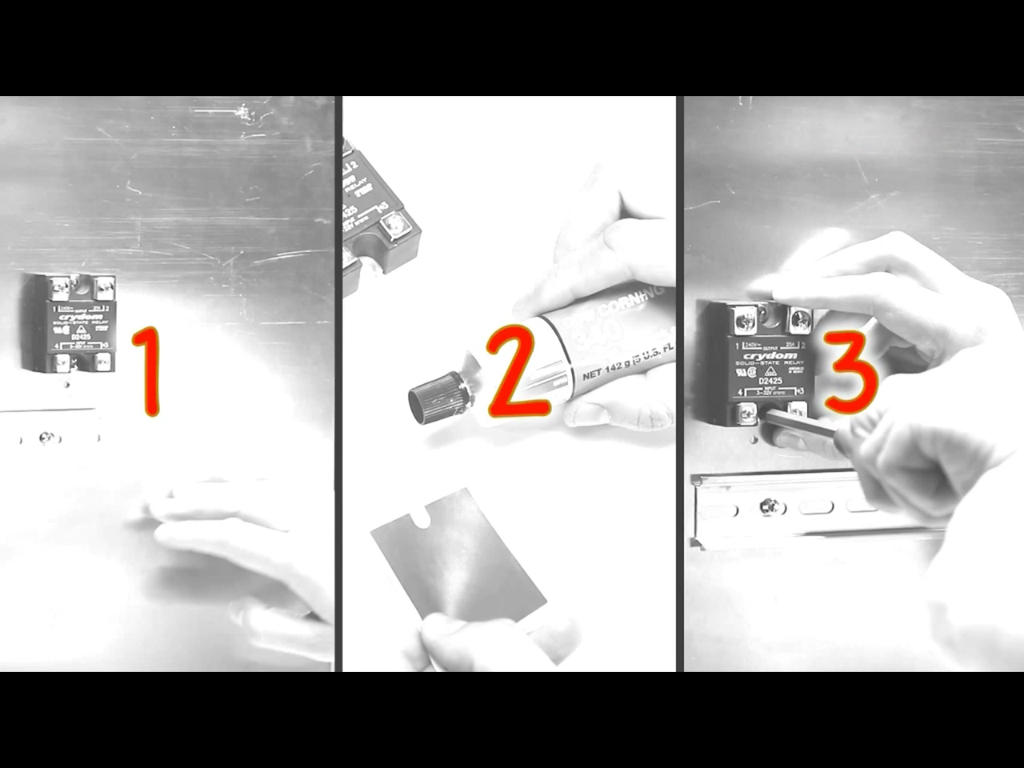
Also I found this interesting video a a SSR maker, explaining how you have to install it:

I discovered that you need to heat sink it because it will use so much power ! In the video it says the SSR is wasting 1W per Amp of current passing through it: this is huge

Unless you want to create heat, I do not see any good reason to use this; The Kilovac EV200AAANA from Tyco uses only 1.7W when the contact is closed, and for whatever amount of current passing through this contact, and it can be a lot !

So I guess I will keep using Kilovac for my build :
It is an investment but a good one for safety - reliable cut off - and efficiency - 1.7W used only -


Sunday, June 16, 2013

DIY ESS - Variable Fan Speed with PWM & Thermistor

This morning, I am experimenting and trying to find a simple solution to make the ESS Fan accelerate when the temperature in the Metal Cabinet is rising and slow down when it is back to an acceptable value

As you already know, the fan is controlled by a PWM kit that I soldered 2 weeks ago and I can adjust its speed using the PWM kit potentiometer; That is already a good step, but I would like to make it better

In the Arduino starter kit I got a year ago, there was a Thermistor and I used it between the negative and the variable output pin of the potentiometer: It looks like it is working, and you can see the pictures and video where I increase or decrease the fan speed using an ice pack and a soldering iron to make the Thermistor resistance change based on the temperature changes


Thermistor temperature

Ice pack temperature

Soldering iron temperature

Cooling the Thermistor after heating it up

Fan speed changes ...

Saturday, May 25, 2013

Heat pumps on walls, balconies, roofs, and chimney stacks in Marseille

I have a Daikin Heat Pump installed on one unused chimney stack on our building and it has been working well since 2008

I thought it was a rare installation, but not at all, as I discovered many like these in Marseille, during my last week of vacation there; It is in the south of France where the climate is warmer, so I guess most of them are actually air conditoning units 


Wednesday, January 23, 2013

Today, I am working from home

See ? in Wattson Silver's reflection  

Also notice that the heat pump is on, it is still quite cold here, close to 0°C


photo.jpg

Monday, January 21, 2013

Twizy in the Snow

Let it snow, let it snow, let it snow !

Quite a bit of snow here and some on & inside our neighborhood Twizy ... The owner had installed the plastic windows - good idea - but my son told me there was some snow inside still :-(  

No heater in the Twizy by the way, you have to be motivated to take it in this kind of weather, but it might be very fun to see how it drives and slides on these snowy streets !


Monday, December 24, 2012

Heavy Gauge Cable Terminal End Crimping Guide

Matt Hauber, ex EVTV intern, does a quick guide on the particulars of crimping extra large gauge cable in the range of 2/0 to 4/0. Quick overview of measurement and crimping techniques


Where the large gauge cable will be installed


Taking measurements for length


Cutting the cable insulation


Hydraulic Crimping Tool


Heating uo the sticky heat shrink onto the lug and the cable => no corrosion


Installing the cable onto the electic motor; Good job Matt !


Source: EV West

Friday, July 27, 2012

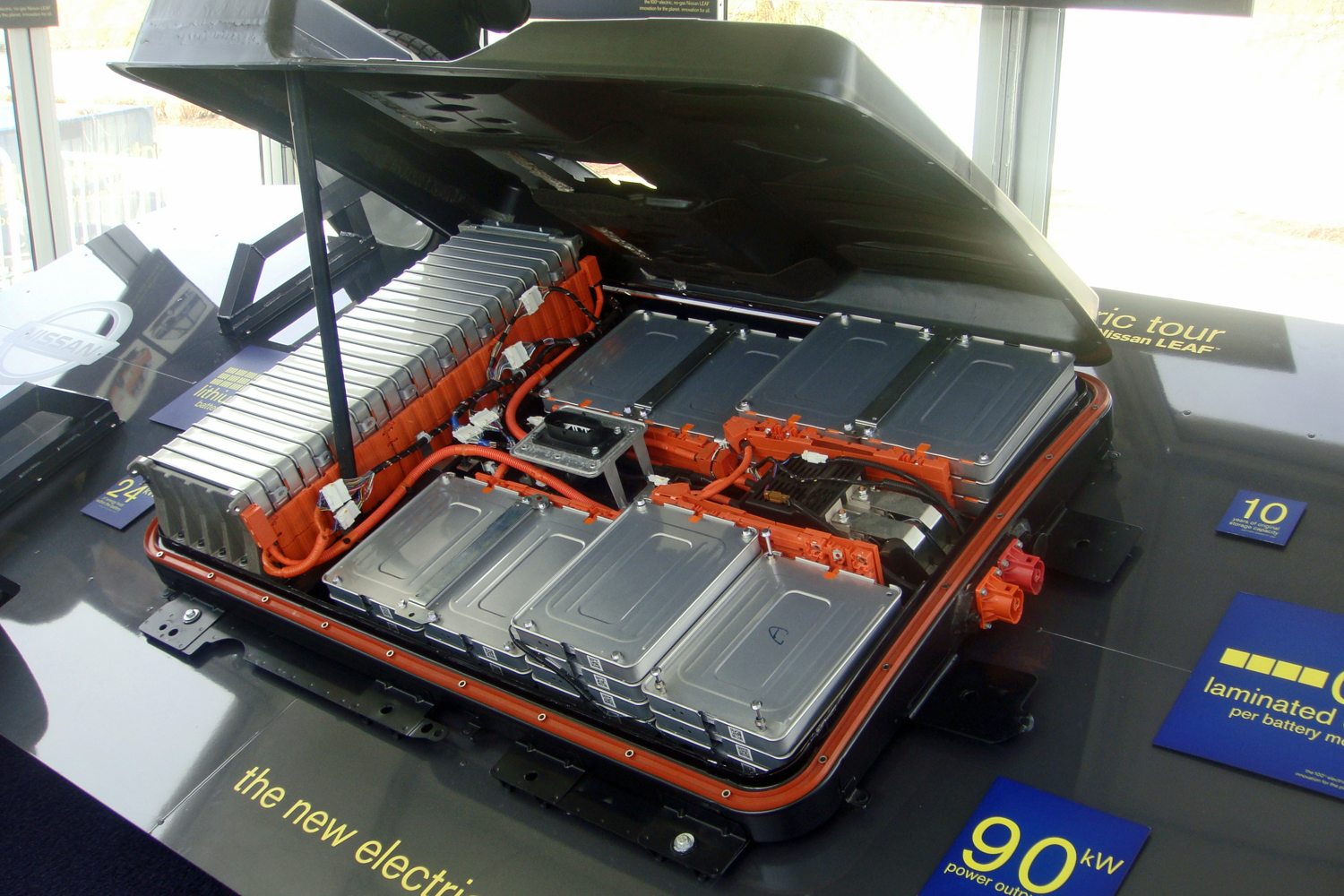
Nissan adresses the Arizona heat related battery capacity loss issue


An open letter to Nissan LEAF owners from Carla Bailo, senior vice 
president, Research and Development, Nissan Americas:

At Nissan, we consider ourselves fortunate to have such passionate 
and engaged customers—especially within our LEAF family. Recently, 
we learned from the Nissan LEAF community—and specifically from 
some Phoenix-area LEAF owners—of a growing concern about battery 
capacity loss with their electric vehicles. In fact, the MyNissanLEAF 
online owners' forum—a resource that allows owners to share their 
experiences and discuss EVs— helped bring the concern to our 
attention for which we’re appreciative.

The forum's discussion around battery capacity loss has reached a 
point where I feel it important to personally address what is being 
debated, to provide Nissan's viewpoint and, most importantly, to 
explain the actions we are taking to work with owners.

First, it is important to stress that while battery capacity loss incidents represent only a
handful of cases, we are taking them—as well as the concerns of the larger LEAF family—
very seriously.  Battery capacity loss of the levels reported may be considered normal
depending on the method and frequency of charging, the operating environment, the
amount of electricity consumed during daily usage and a vehicle's mileage and age.  But the
only way to know for sure is to examine customer vehicles, perform a thorough diagnostic
on the vehicle and battery, and better understand the real-world driving and charging
history of the owners. We are now reaching out to individual owners to start this process to
ensure that we fully understand these events and all potential causes, and pledge to provide
an update as soon as possible.

Battery data collected from Nissan LEAFs to date currently indicates that less than 0.3
percent of Nissan LEAFs in the U.S. (including vehicles in service dating back to December,
2010) have experienced a loss of any battery capacity bars. Overall, this universe of
vehicles represents a very small fraction of the more than 13,000 Nissan LEAFs on U.S.
roads. Also, data received globally from other LEAF vehicles shows that this condition
typically occurs to high-mileage cars or those in unique operating situations.

Second, I want to explain battery capacity, how it is affected by the operating environment
and usage patterns and what is considered normal battery health. All lithium-ion batteries
lose capacity with use and age.  This is normal and expected.  In general, lithium-ion
batteries exhibit a higher loss of capacity early in life, with the rate of loss decreasing over
time.  Nissan has projected that LEAF batteries will generally have 80 percent of their
capacity under normal use after 5 years, and 70 percent after 10 years.

Are there factors that could negatively affect this performance curve? Yes. A customer's
method and frequency of charging, operating environment, the amount of electricity
consumed during daily usage and a vehicle's mileage and age can all affect the rate of
battery capacity loss.  Until we know more about each customer's unique situation, it would
be premature to declare what is happening with the Nissan LEAFs in Phoenix, and whether
their performance is within the range of expectations or not. Working closely with our
owners to get to the bottom of these concerns is exactly what we’re committed to do.

Nissan engineers from our Arizona Testing Center and around the world will study each
customer case, work to discover the root cause and will determine next steps to satisfy our customers.  While we do this, we pledge to provide an update to our customers as soon as
possible.

Together, we are confident that by collaborating with our LEAF community—including the
more than 400 owners in Arizona—we will ensure that owners experience many years of
enjoyable driving as EV pioneers.

Thank you for your passion for the Nissan LEAF and the electrical vehicle movement. It is
only through your dedication and willingness to innovate that we are able to bring zeroemission mobility to the mass market.

Kind regards,

Carla Bailo
Senior Vice President, Research & Development
Nissan Americas


Source: MyNissanLEAF

Please Share this Post if you Liked it !

Please Share this Post if you Liked it ! Thanks !
Related Posts Plugin for WordPress, Blogger...