Three Tri-City-area utilities plan to start a pilot project in September to show how utilities might be able to store electricity when it's cheap and then release it back to the grid when it's in demand.
The project will help guide research that could make day-to-day storage of electricity by utilities practical, saving customers money and making better use of wind and solar power sources.
Benton PUD is an original participant in the Pacific Northwest
Smart Grid Demonstration Project led by Battelle and paid for in part by the Department of Energy.
Franklin PUD and the city of Richland also have been added to the demonstration project through their involvement with the Tri-City Development Council's Mid-Columbia Energy Initiative.
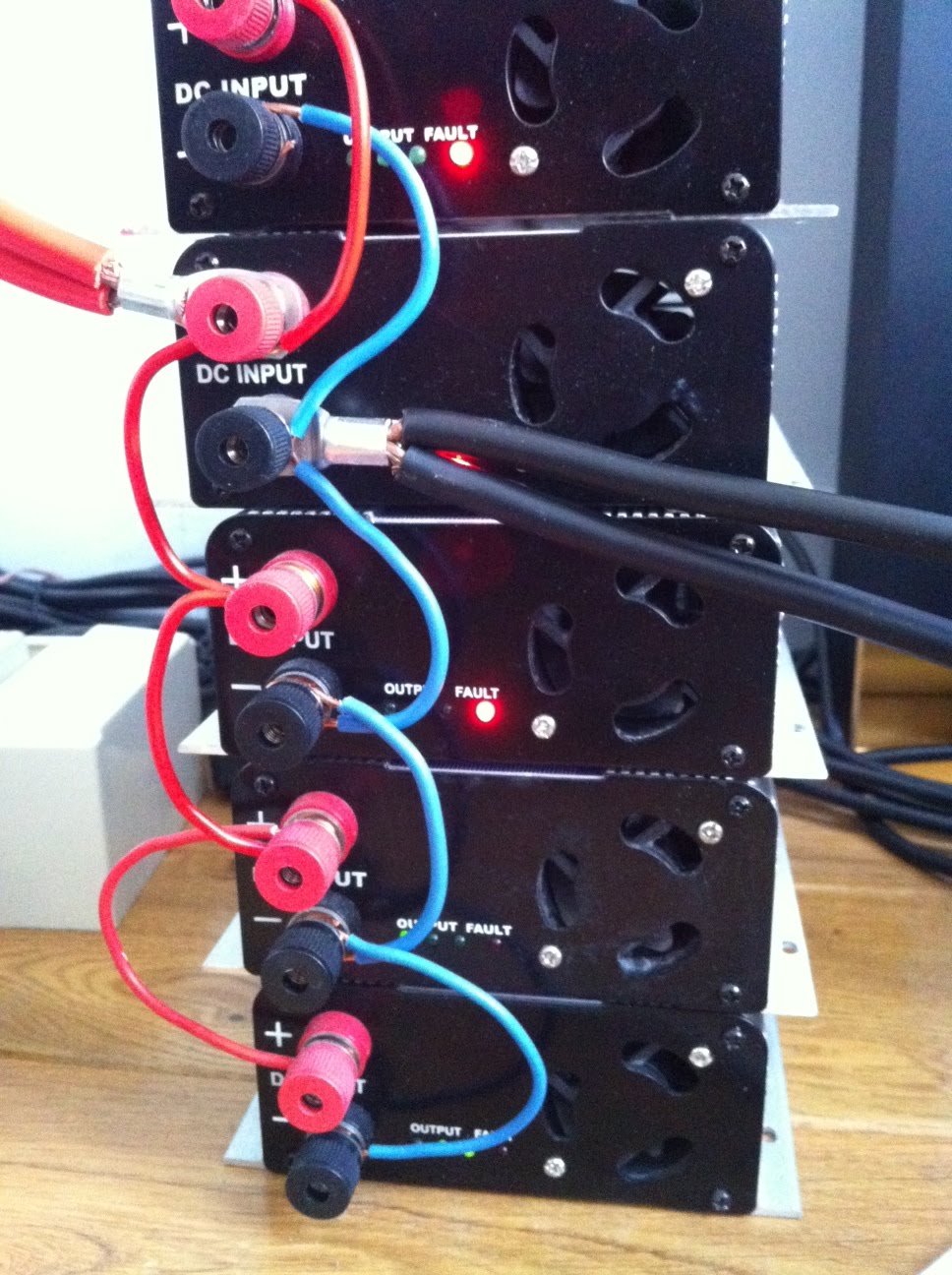
"Demand shifter" devices have been installed by all three utilities.
Each utility has a large metal cabinet, about 6 feet tall and 6 feet wide, filled with batteries to store electricity at times it is not needed.
Battelle, which operates
DOE's Pacific Northwest National Laboratory in Richland, will transmit information showing when the price of electricity increases and decreases to a computerized system controlling the demand shifters for the three utilities.
The demand shifters then can
store electricity at off-peak hours when electricity is most abundant and least expensive for the utilities. It then can release the electricity back to the grid when demand is high, such as evenings when people are home and using more electricity.
The pilot project is being done on a small scale over two years, with each utility able to store 10 kilowatts for four hours. The average house uses about 1,400 kilowatt hours a month, according to Benton PUD.
"The project should provide some really good background," said Karen Miller, spokeswoman for the Benton PUD. "We're going to learn a lot in the next two years about how energy storage can be incorporated into the utility system."
Battelle researchers plan to quantify the costs and benefits of the demand shifter. For the study, a product called
Grid.Balancer, manufactured by Demand Energy in Liberty Lake, is being used.
Anytime utilities can use energy more efficiently, it saves money for the customer, Miller said.
It also could help utilities make better use of renewable resources.
"This has the potential to help offset the intermittency of wind and solar, making them a more reliable source of energy," said Jim Sanders, general manager of Benton PUD, in a statement.
Wind only blows a third of the time.
But, should research prove successful, eventually large-scale demand shifter projects could allow electricity produced when the wind is blowing to be saved for some of the times when it is not.
In addition to the Tri-City-area project, 10 other utilities in Washington, Oregon, Montana, Idaho and Wyoming are participating in the Battelle project with different smart grid programs tailored to its customers.
Smart grids enhance power delivery through two-way communication between suppliers and consumers.
DOE provided $89 million in Recovery Act money for the project, with that money matched by BPA, utilities and five technology companies that make up the demonstration project team.
Source:
Tri-City Herald